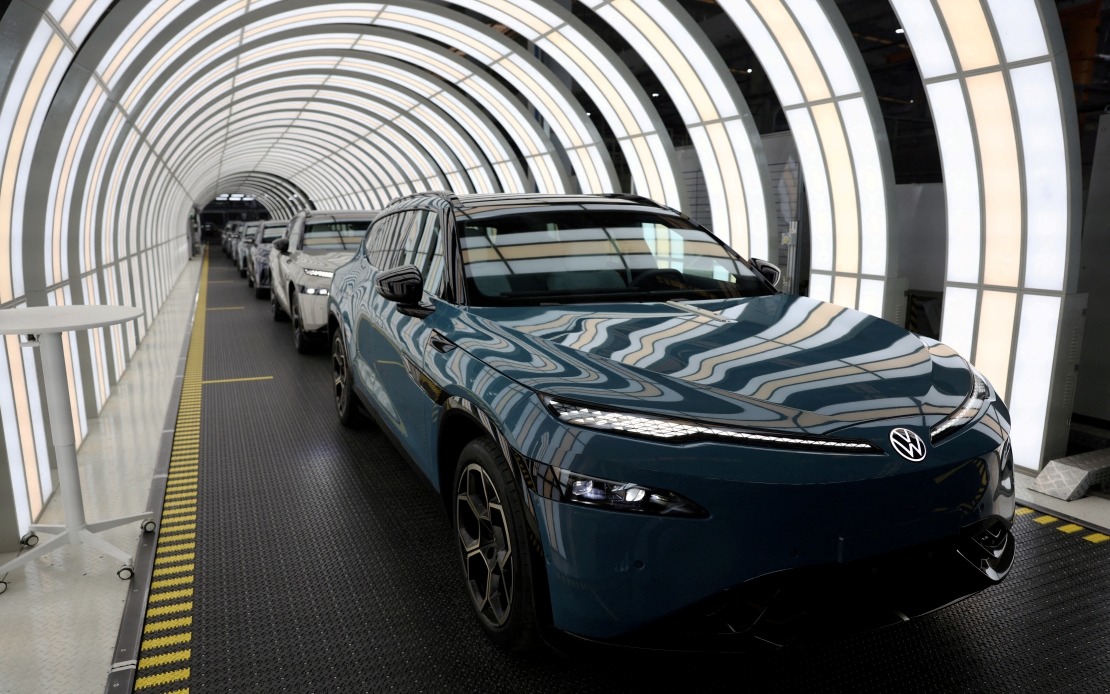
The European Union's protectionist tariff regime on Chinese electric vehicles is fundamentally reshaping manufacturing strategies across the automotive industry, with Western automakers demonstrating a clear preference for building cars closer to their primary markets rather than importing them from Asia. A comprehensive analysis by European transport advocacy group T&E reveals that this policy intervention is achieving its intended effect: reducing dependence on Chinese production capacity and encouraging investment in European manufacturing infrastructure. The shift represents a critical turning point in the global automotive transition, with implications that extend far beyond Europe's borders and could influence trade policy approaches in other regions, including Southeast Asia.
Data compiled by T&E, drawing on production and sales information from GlobalData, demonstrates the rapid scale of this reorientation. Among Western automakers analysed—including BMW, Dacia, Volvo, Smart and Tesla—the proportion of China-manufactured battery electric vehicles sold within Europe tumbled to just 23 per cent of total EV sales during the first quarter of this year, a dramatic reversal from the 38 per cent share recorded throughout 2024. This nine-month decline underscores the effectiveness of the tariff structure in compelling manufacturers to reassess their supply chain architecture and make substantive investments in continental production capacity.
Tesla's experience exemplifies this broader trend. The American electric vehicle manufacturer, which had previously relied heavily on Chinese factories to supply European customers, saw its share of China-made vehicles in Europe's overall EV market contract from 23 per cent to 19 per cent across the same period. This adjustment reflects Tesla's accelerated development of European production capacity, particularly its expansion of manufacturing operations at existing facilities designed to meet growing continental demand while circumventing the tariff penalties that apply to imported vehicles.
However, the tariff regime has not uniformly suppressed Chinese automobile imports. Manufacturers from China itself, particularly dominant players like BYD and Geely, have continued expanding their European market presence despite the protectionist measures introduced in 2024. Industry analysts attribute this counterintuitive resilience to persistent excess manufacturing capacity within China that creates financial incentives for aggressive export pricing, allowing Chinese companies to absorb tariff costs while maintaining competitive pricing advantages. The willingness of these manufacturers to absorb duty costs reflects the structural overcapacity problem afflicting China's automotive sector and their strategic determination to establish footholds in Europe's lucrative EV market before potential trade barriers become even more restrictive.
One significant exception to this pattern merits particular attention. SAIC, another Chinese automaker, has experienced precipitous declines in European sales since the tariff regime commenced, contrasting sharply with the expansion achieved by its Chinese competitors. The European Commission determined that SAIC had benefited from state subsidies across an unusually extensive portion of its supply chain, triggering the imposition of tariffs nearly double those applied to BYD and Geely. This differentiated tariff structure reflects the EU's sophisticated approach to identifying and penalising what it classifies as excessive state support, creating varying competitive conditions among Chinese manufacturers that fundamentally alter the economics of exporting to Europe.
The policy framework has simultaneously catalysed Chinese automakers to pursue a different strategic pathway: establishing manufacturing operations directly within Europe. Since the European Union initiated its subsidy investigation into Chinese EV makers in 2023, manufacturers have announced plans for ten new production facilities across the continent. This investment represents a pragmatic business response to the tariff environment but simultaneously transfers manufacturing employment and technology development activities to European labour markets and industrial clusters. For Malaysia and other Southeast Asian nations developing automotive industries, this demonstrates how tariff policy can accelerate the relocation of manufacturing capacity rather than simply suppressing trade volumes.
Chinese automakers have simultaneously adapted their product strategies in ways that current tariff schedules have not fully constrained. Manufacturers have intensified their focus on exporting plug-in hybrid electric vehicles from Chinese factories, targeting a market segment that occupies an intermediate position between traditional combustion engines and battery-electric technology. The share of the European plug-in hybrid market supplied by Chinese manufacturers has expanded dramatically from just 3 per cent in 2024 to 13 per cent in the current year, suggesting that producers are deliberately emphasising product categories where they face less tariff disadvantage. This tactical pivot illustrates how supply-side actors respond to trade policy constraints by adjusting product mix rather than abandoning markets entirely.
For Malaysian automotive stakeholders, these developments carry multiple implications. Southeast Asia remains a marginal player in global EV manufacturing, but the regional automotive ecosystem increasingly intersects with European supply chains through component suppliers and assembly operations. The EU's willingness to employ tariffs as a tool for reshaping industrial geography suggests that future trade policy may become more interventionist rather than liberalising, challenging assumptions about market-driven globalisation. Malaysian components suppliers serving European automakers may face new requirements to source from Europe rather than Asia, potentially requiring investments in local operations or partnerships.
The broader pattern reveals that tariff policy functions as a powerful mechanism for redirecting capital investment and manufacturing employment, with effects that ripple across multiple regions and industry segments. Western automakers' rapid shift toward European production demonstrates that contemporary automotive manufacturers possess sufficient operational flexibility to adjust manufacturing locations within relatively short timeframes when faced with sufficiently strong price signals. However, this flexibility operates asymmetrically: Western manufacturers can relatively easily establish new European facilities, while Chinese manufacturers must accept higher tariffs, accept reduced profit margins, or invest in European manufacturing themselves—a more capital-intensive alternative.
Looking forward, the sustainability of these trade policy interventions remains subject to significant uncertainty. If European EV production capacity expands sufficiently to meet continental demand, tariff policies may eventually ease as the primary objective is achieved. Conversely, if Chinese manufacturers establish substantial European operations, the tariff regime may face erosion as producers previously headquartered in China gain European manufacturing credentials. The outcome will substantially influence whether the current period represents a temporary disruption to globalised supply chains or the beginning of a more durable reorientation toward regional self-sufficiency in critical industries like automotive manufacturing.

