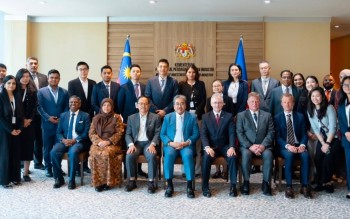
A significant European business delegation comprising more than 70 representatives from over 25 companies has spent the past three days engaged in intensive talks with senior Malaysian government officials, signalling deepening commercial and diplomatic ties between the European Union and Malaysia. The visit, conducted from August 4-6, reflects growing momentum in bilateral relations as both regions seek to strengthen economic partnerships amid shifting global trade dynamics and the shared imperative to address climate change and economic modernisation.
Chris Humphrey, executive director of the EU-ASEAN Business Council, characterised the engagement as particularly productive, noting that the delegation gained valuable direct access to policy-makers across multiple government agencies. This type of high-touch diplomacy proves essential for foreign investors seeking clarity on regulatory frameworks and government direction. The meetings encompassed substantive discussions on Malaysia's ongoing reform programme, a critical initiative that European investors view as foundational to the country's medium-term growth trajectory and investment attractiveness.
During separate sessions at the Ministry of Economy, the delegation expressed explicit support for Malaysia's green transition strategy, emphasising the commercial opportunities embedded within sustainability commitments. The conversation extended beyond environmental commitments to encompass broader modernisation themes including circular economy frameworks and digital transformation—areas where European technological expertise and capital can contribute meaningfully to Malaysia's development agenda. The receptiveness from Malaysian officials underscored government recognition that achieving sustainability targets requires substantial foreign direct investment and technical knowledge transfer.
Parallel discussions at the Finance Ministry centred on mechanisms that facilitate investment flows, including taxation frameworks, government procurement processes, and broader assessments of Malaysia's investment climate. The reported positive sentiment reflects both European confidence in Malaysia's economic fundamentals and Malaysian government willingness to address investor concerns proactively. For Malaysian policymakers, these conversations serve as valuable market feedback on policy effectiveness and help identify remaining barriers to capital inflows.
The delegation benefited from meetings with high-ranking officials including Bank Negara Malaysia Governor Datuk Seri Abdul Rasheed Ghaffour and Investment, Trade and Industry Minister Datuk Seri Johari Abdul Ghani, demonstrating the government's prioritisation of European engagement. Subsequent meetings with the Natural Resources and Environmental Sustainability Minister Datuk Arthur Joseph Kurup reflected Europe's keen interest in Malaysia's resource management and environmental governance, particularly relevant given Malaysia's significant palm oil sector and mineral wealth.
Further scheduled engagements encompass customs modernisation, a perennially significant issue for trade-dependent economies. European companies recognise that streamlined customs procedures and digitalised clearance processes directly enhance supply chain efficiency and cost competitiveness. The delegation's emphasis on combating illicit tobacco trade highlights how foreign investors can collaborate with Malaysian authorities on regulatory enforcement, transforming potential friction points into cooperative ventures that serve mutual interests.
Healthcare sector discussions reveal another strategic dimension to EU-Malaysia engagement. European pharmaceutical and medical device companies view Malaysia as a gateway to Southeast Asian healthcare markets while offering solutions to Malaysia's evolving healthcare demands. Conversations about innovative financing mechanisms and medicine availability reflect genuine commercial interest combined with acknowledgment of Malaysia's healthcare sector development needs.
The centrepiece of these discussions remains the Malaysia-EU Free Trade Agreement negotiations, which have completed four rounds and are accelerating toward a potential conclusion. The parties target finalisation by 2027, with the next negotiation round scheduled for September 21-25 in Brussels. Humphrey's confident assertion that sufficient momentum exists to complete the agreement within the next year reflects genuine optimism grounded in substantive progress. This FTA would represent a significant structural integration of Malaysian and European economies, facilitating tariff reduction, regulatory harmonisation, and enhanced market access across multiple sectors.
The economic stakes underlying these negotiations are substantial. The EU currently ranks among Malaysia's five largest trading partners, with bilateral merchandise trade reaching €48.9 billion in 2025. Malaysian exports to Europe totalled €30.3 billion while European goods imports reached €18.6 billion, revealing Malaysia's export surplus—a dynamic that has underpinned long-standing Malaysian interest in closer trade integration with Europe. Beyond trade in goods, European direct investment stock in Malaysia reached €33.1 billion in 2024, establishing Europe as a major source of capital and technology for the Malaysian economy.
This investment concentration reflects Europe's confidence in Malaysia's business environment, skilled workforce, strategic geographic position, and developed infrastructure. The delegation's assertion that Malaysia possesses compelling competitive advantages—including natural resources, connectivity, and human capital—acknowledges why Malaysia remains an attractive destination for European manufacturing, technology, and service-sector operations seeking presence in Asia-Pacific markets. For Malaysia, sustaining this investment appeal demands continuous regulatory refinement, infrastructure investment, and talent development.
The timing of this delegation visit carries significance beyond immediate commercial discussions. Malaysia's reform agenda, encompassing fiscal consolidation, regulatory modernisation, and anti-corruption initiatives, directly influences foreign investor confidence. European engagement demonstrating support for these reforms sends positive signals to other international investors while reinforcing Malaysian government commitment to structural improvements. This dynamic creates a virtuous cycle wherein reform progress attracts foreign capital, which in turn finances further development.
Looking forward, the September Brussels negotiations round will test whether negotiating teams can translate the positive political momentum evident from this delegation visit into concrete tariff schedules, rules-of-origin provisions, and regulatory alignment frameworks. FTA success would create structural incentives for expanded EU-Malaysia trade and investment while positioning Malaysia advantageously within European supply chains seeking to diversify away from China and other concentrated sourcing regions. For Southeast Asia more broadly, a successful Malaysia-EU agreement could establish templates for other ASEAN nations pursuing similar bilateral arrangements.
The broader context involves intensifying competition among trading blocs and the strategic importance of Asia-Pacific commerce. Malaysia's position as an ASEAN hub and its membership in multiple regional trade frameworks make it a valuable partner for Europe's Indo-Pacific strategy. This delegation visit, whilst focused on commercial objectives, simultaneously serves geopolitical purposes, reinforcing Europe's presence and commitment to Southeast Asian engagement at a moment when global attention increasingly centres on Asia-Pacific dynamics.

