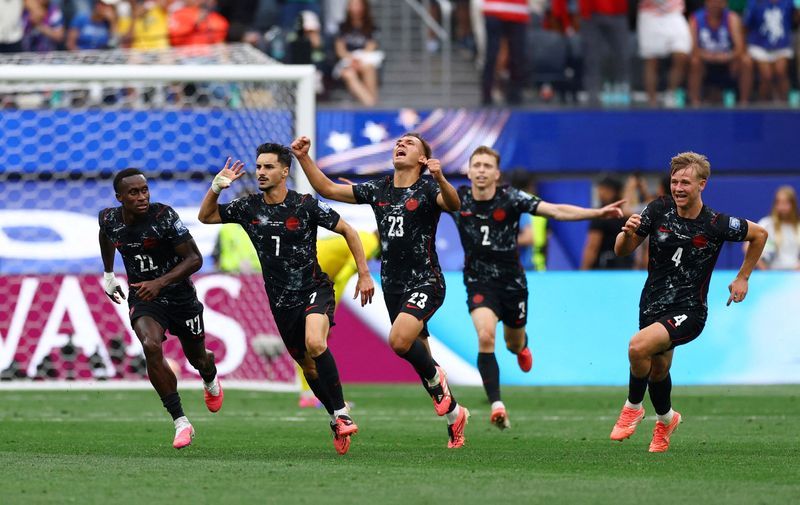
Canada has achieved a watershed moment in their football history, securing a place in the World Cup last 16 for the first time ever after Stephen Eustaquio produced a decisive strike in stoppage time to defeat South Africa 1-0 at Los Angeles Stadium. The Canadian midfielder's powerful finish from the edge of the penalty area in the 92nd minute punctured South Africa's defensive resolve in a pulsating encounter that had remained locked at 0-0 throughout regulation play. The goal came at Los Angeles Stadium on Sunday, sending the Canadian supporters who had travelled to support the co-hosts into jubilant celebration as their team finally broke through at a World Cup finals tournament.
Eustaquio's contribution arrived when the match appeared destined for extra time and a potential penalty shootout. The South African defence had been disciplined and compact throughout the match, seemingly content to test Canada's patience and willingness to maintain intensity. As the clock wound down towards the final whistle, the ball fell to Eustaquio in a dangerous position near the edge of the box, and his instinctive strike found the back of the net past diving goalkeeper Ronwen Williams. The Canadian midfielder described the moment with characteristic understatement, saying he "felt everybody shot it with me," reflecting the collective relief and joy that swept through the Canadian contingent.
Canada's journey to this moment carries particular significance for Southeast Asian readers following global football developments. The co-host nation's breakthrough in knockout football comes after three previous World Cup campaigns failed to produce comparable results. This year's competition marked only their third appearance at a World Cup finals, yet they have now progressed further than ever before. The achievement resonates with emerging footballing nations across Asia who aspire to similar continental tournaments hosted on home soil, demonstrating that hosting privileges and structural investment can help elevate a team's competitive standard.
The match itself proved cagey and fiercely contested, with both teams experiencing their first-ever knockout tournament appearance at this level. Canada created the most clear-cut opportunities, particularly during the first half when a scramble from a corner kick saw Moise Bombito direct a header goalward that Aubrey Modiba cleared off the line before Tajon Buchanan's close-range effort struck Williams directly in the chest. Shortly afterwards, Richie Laryea's tumble in the penalty area provoked passionate Canadian appeals for a spot kick, but the referee's decision stood following a VAR review, prompting frustrated reactions from the Canadian support base that had monopolised significant sections of the stadium.
Canada's coach Jesse Marsch acknowledged his team's superior chance creation but lamented their finishing efficiency throughout the encounter. Marsch told reporters that whilst Canada had manufactured opportunities consistently, they lacked the "lethal" quality required to convert dominance into an earlier advantage. His tactical approach throughout the match emphasised sustained attacking pressure, though South Africa's disciplined shape prevented them from creating the kind of clear-cut openings that define higher-scoring matches at this tournament level. Marsch's post-match comments reflected both frustration and profound satisfaction, declaring that his players had become "Canadian heroes" through their persistence and character displayed across the tournament so far.
South Africa's resilience merits considerable respect despite their disappointing exit. Coach Hugo Broos guided his nation into the knockout stages for only the first time in their fourth World Cup finals appearance, representing a significant step forward for African football on the global stage. However, their defensive approach during the match—which seemed designed to frustrate Canada and force extra time—ultimately backfired when Eustaquio's moment of quality proved decisive. The South African team created few genuine opportunities themselves, seemingly accepting that a goalless draw would be acceptable progress for a team still establishing themselves among football's elite nations.
Broos, at 74 years old, has indicated that this World Cup will represent his final tournament in charge. His cryptic response regarding his future suggested uncertainty about whether he would continue beyond this disappointing exit, though his achievements in elevating South African football to competitive knockout standards represent a foundation for his successor. For Southeast Asian nations pursuing similar trajectories—where establishing sustained World Cup participation represents an ambitious objective—South Africa's qualification into the knockout stage itself demonstrates that consistent investment and experienced coaching can produce incremental progress.
Canada's path forward presents an intriguing challenge for their development as a football nation. They will face either the Netherlands or Morocco on July 4 in Houston for a quarter-final berth, representing uncharted territory for a programme that has struggled to establish competitive consistency across previous decades. The fact that Canada required three days' rest after a disappointing 2-1 defeat by Switzerland in their final group match, combined with having to travel away from home for their knockout encounter, underscores the practical challenges facing co-host nations that share tournament responsibilities.
The victory carries broader implications for football development in North America, where Canada has emerged as a legitimate contending force competing alongside long-established regional powers. Malaysian and regional Southeast Asian football observers should note that Canada's progress demonstrates how strategic investment, experienced coaching appointments, and fixture scheduling advantages can accelerate a nation's competitive development. The Canadian Football Association's emphasis on establishing a strong domestic league structure and securing quality coaching staff has yielded tangible results on the world's largest stage.
Canada's supporters who filled the Los Angeles Stadium stands provided vital atmospheric support throughout the match, creating an environment where the co-hosts genuinely possessed home advantage despite technically playing away from Canadian soil. This factor cannot be overlooked when assessing how the tournament structure has benefited the Canadian squad, offering familiar time zones and proximity to their supporter base throughout their group-stage campaign. Future World Cup hosts in Asia should study how Canada has leveraged these structural advantages while simultaneously meeting the organizational demands of co-hosting responsibilities.
The stoppage-time drama that unfolded at Los Angeles Stadium will be remembered as a defining moment in Canadian football history, representing not merely a single victory but a symbolic breakthrough in a long journey towards establishing themselves as consistent World Cup competitors. Eustaquio's finishing quality, combined with his teammates' sustained pressure throughout the match, created the conditions whereby one moment of precision could alter the trajectory of their tournament. As Canada prepares for their quarter-final encounter, the question no longer concerns whether they belong at this elite level—Eustaquio's strike answered that decisively—but rather how far they can progress before this historic campaign concludes.

