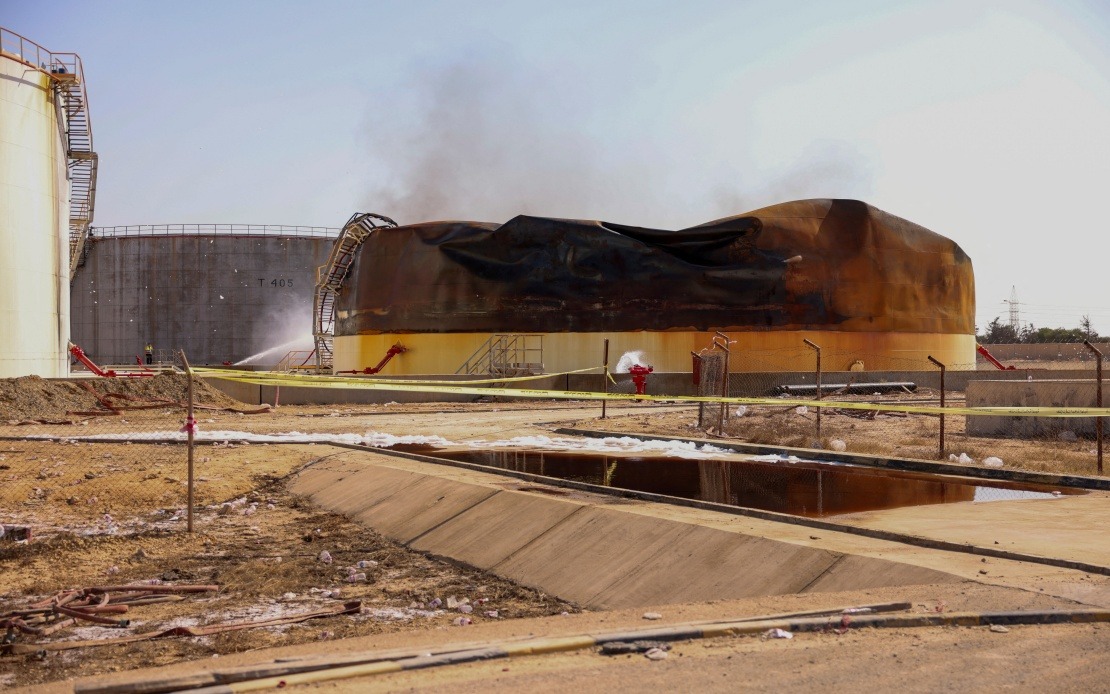
Libya's energy infrastructure suffered another significant blow on Saturday when an explosion near the Zawiya power plant in the western region disabled multiple electricity generation units, according to the state-owned General Electricity Company of Libya (GECOL). The incident represents an escalation in threats to the nation's already fragile utility systems, coming just one week after a series of drone strikes targeted the same area.
GECOL mobilized technical teams to assess the damage and investigate the circumstances of the explosion, which struck near the facility's perimeter. The company indicated that several generation units were rendered inoperable as a direct result of the blast, though specific details about the scale of capacity loss were not immediately disclosed. The utility provider acknowledged the disruption to citizens while pledging to work continuously on restoring normal operations.
The timing of this incident underscores deepening vulnerabilities in Libya's power sector, which has struggled for years under the weight of civil conflict and institutional fragmentation. Western Libya, where Zawiya is located, has emerged as a particular flashpoint for infrastructure attacks, suggesting coordinated targeting of energy facilities that are critical to both civilian life and economic function. The explosion's occurrence mere days after the previous drone strikes indicates a pattern rather than isolated incidents.
The drone attacks that preceded Saturday's explosion targeted multiple components of Zawiya's infrastructure ecosystem. Oil storage tanks, desalination plants, and power generation equipment were all struck in what appeared to be a coordinated campaign. These facilities form the backbone of service delivery to civilian populations and underpin regional economic activity, making their disruption consequential for both immediate humanitarian conditions and longer-term development prospects.
Investigations into the recent attacks remain ongoing, with authorities attempting to trace the origin of the drone operations and identify those responsible. No group has publicly claimed responsibility for either the previous strikes or the Saturday explosion, leaving open questions about motivation and provenance. The lack of attribution complicates Libya's response options and raises concerns about potential escalation, particularly given the strategic importance of Zawiya as an economic and infrastructure hub.
For Malaysian observers monitoring regional stability, Libya's deteriorating security situation holds significance beyond its borders. The North African nation's instability has implications for energy markets, Mediterranean security, and migration patterns that affect Southeast Asia indirectly through global trade routes and geopolitical realignment. Moreover, the targeting of critical infrastructure as a conflict tactic mirrors approaches witnessed elsewhere in unstable regions, offering cautionary lessons for infrastructure protection strategies.
The interruption to electricity supply carries cascading effects throughout Zawiya and surrounding areas. Desalination facilities dependent on reliable power face operational constraints, complicating freshwater provision in a water-scarce region. Medical facilities, schools, and commercial enterprises reliant on consistent electricity face disruption, with vulnerable populations bearing disproportionate burdens during outages. GECOL's commitment to gradual restoration suggests a phased approach, implying that full normalization may require considerable time.
Libya's electricity sector has operated under severe strain for years, characterized by aging infrastructure, inadequate maintenance capacity, and chronic underinvestment. This background makes the system particularly susceptible to disruption from attacks. Each significant incident further erodes existing capacity, making overall system reliability worse and complicating long-term recovery planning. The cumulative effect of repeated infrastructure damage is a progressive degradation of service quality that becomes increasingly difficult and expensive to reverse.
The security dimensions of this incident extend beyond immediate physical damage. The apparent ease with which drone operations can be conducted against defended infrastructure points to significant gaps in air defense capabilities or early warning systems. Whether these gaps reflect technical limitations, resource constraints, or coordination failures remains unclear, but their existence suggests ongoing vulnerability to future attacks. The targeting of multiple facilities simultaneously demonstrates operational sophistication that may require upgraded defensive measures.
GECOL's public apology and commitment to continued operations reflects institutional awareness of its responsibility to the Libyan public, even amid challenging circumstances. However, the company's capacity to deliver reliable service remains constrained by factors beyond its direct control, including security conditions, funding limitations, and the broader political instability that pervades Libya. Resolving these challenges requires coordination across government agencies, security forces, and international partners.
The broader implications for Libya's trajectory are concerning. Infrastructure repeatedly targeted becomes increasingly difficult to defend and maintain. Investment in repairs becomes harder to justify when facilities face ongoing threats. Economic activity dependent on stable electricity supply begins migrating elsewhere. These dynamics create vicious cycles that undermine state capacity and citizen welfare simultaneously. Breaking such cycles requires addressing underlying drivers of conflict and insecurity—challenges that have proven intractable in Libya's context for over a decade.

