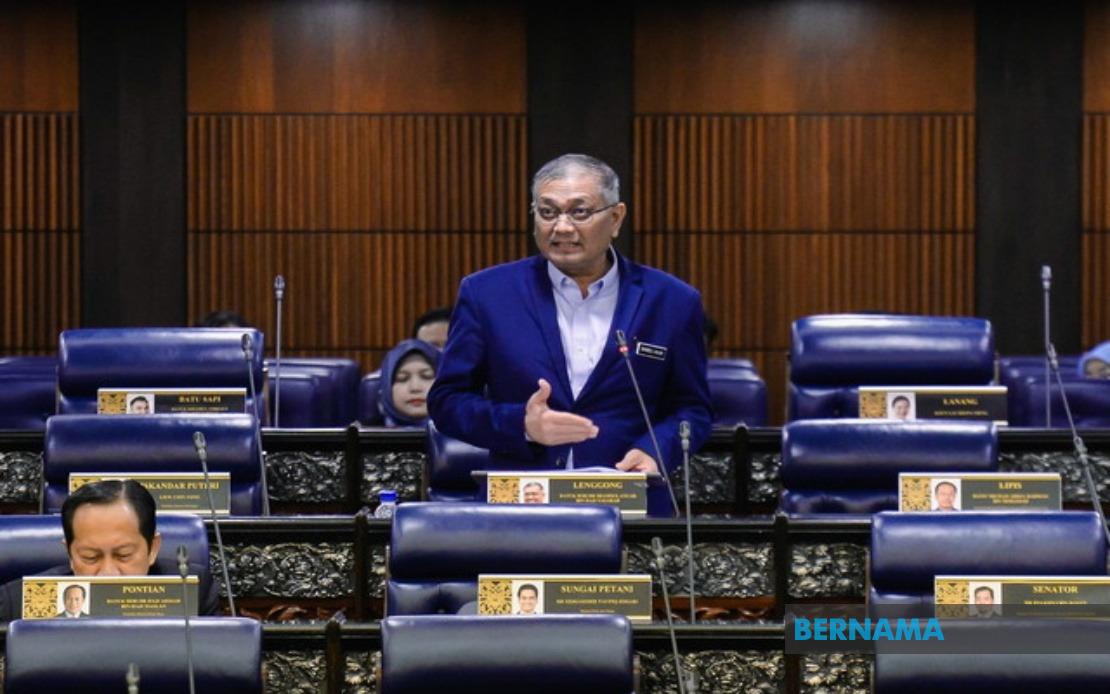
The Home Ministry has moved to defend the practice of extra drills and field duties within the Royal Malaysia Police, characterising them as legitimate disciplinary mechanisms rather than forms of physical punishment. Deputy Minister Datuk Seri Dr Shamsul Anuar Nasarah made the clarification during parliamentary proceedings on July 14, responding to concerns raised by lawmakers about the appropriateness and consistency of such measures following a fatal incident involving police personnel.
The statement represents an important regulatory positioning at a time when public scrutiny of internal police discipline methods has intensified. The ministry's emphasis that field duties serve to instil discipline, build character and facilitate behavioural change reflects an attempt to distinguish between corrective measures and punitive harm. Such clarification matters considerably for Malaysian readers concerned with police conduct standards and the welfare of law enforcement personnel across the nation.
According to Deputy Minister Shamsul Anuar, the practice operates under specific regulatory framework outlined in Paragraph 32 of the Inspector-General of Police's Standing Orders, known as PT KPN A110 on Discipline, which applies exclusively to minor offences. This regulatory anchoring suggests the measure is intended for low-level infractions rather than serious misconduct, though the precise nature of what constitutes a "minor offence" in this context remains subject to operational interpretation by commanding officers.
The incident prompting parliamentary inquiry involved the death of a police officer in Sepang during May, which catalysed broader questions about the implementation and safety protocols surrounding extra drills. Rather than defend the controversial incident directly, the ministry pointed to procedural enhancements introduced subsequently. The Police Integrity and Standards Compliance Department issued a new administrative directive dated June 29 that mandates use of a health assessment form when implementing such disciplinary measures. This addition represents a substantive safeguard, though critics might question whether health assessments alone adequately protect personnel from excessive demands.
Existing regulations establish clear temporal parameters for field duties, stipulating they cannot exceed four hours daily or continue beyond five consecutive days. These limitations ostensibly prevent the measures from becoming systematically onerous or physically damaging. However, enforcement of these boundaries ultimately depends on supervising officers exercising appropriate judgment and restraint. The ministry emphasised that supervising personnel bear responsibility for ensuring duties are conducted prudently, with due consideration for individual health status, physical condition, environmental factors and other safety considerations.
A critical dimension of the ministry's defence addressed allegations that extra drills disproportionately affect junior-ranking officers. Shamsul Anuar explained that Paragraph 32 was specifically designed as an alternative to formal disciplinary proceedings for junior police personnel, implying the measure represents a less severe option than traditional administrative action. This rationale suggests differentiated approaches depending on rank, though the minister contested suggestions of rank-based favouritism. He argued that senior officers fall under different legal provisions applicable to their service category, thus creating distinct disciplinary frameworks rather than inconsistent application of identical standards.
The clarification regarding rank-based disciplinary treatment carries significant implications for perceptions of fairness within the police force. Malaysian readers and civil society organisations have long expressed concerns about hierarchical accountability in enforcement agencies, where junior officers appear more vulnerable to disciplinary action while senior personnel enjoy greater protection. The ministry's explanation that different ranks operate under different regulatory regimes technically acknowledges this distinction whilst stopping short of addressing whether such differentiation itself represents equitable treatment.
Parallel concerns about bullying and ragging within the police organisation prompted supplementary questions from lawmakers. Deputy Minister Shamsul Anuar responded by asserting that disciplinary measures cannot be implemented arbitrarily by individual superior officers. Rather, he maintained that every disciplinary action undergoes strict procedural scrutiny before implementation. This procedural safeguard, theoretically, should prevent superior officers from weaponising the extra drills mechanism for personal intimidation or revenge. Whether such safeguards function effectively in practice remains a question for ongoing oversight.
The regulatory framework described by the ministry reflects attempts to balance disciplinary necessity with personnel welfare. By framing extra drills as character-building and behavioural correction rather than punishment, officials seek to position the measure within broader institutional development objectives. Malaysian public discourse increasingly demands transparency regarding internal police mechanisms, particularly given heightened attention to officer welfare and institutional accountability. The ministry's articulation of safeguards suggests responsiveness to these concerns, though sceptics might note that clarifications typically follow incidents rather than preceding them.
For Malaysian readers and regional observers, this exchange illuminates the tension between maintaining institutional discipline within large paramilitary organisations and protecting individual welfare rights. The police force employs approximately 100,000 personnel and faces constant operational demands, creating genuine leadership challenges in maintaining standards. Simultaneously, officer deaths and injuries demand rigorous examination of practices that, however well-intentioned, may carry unintended health consequences. The ministry's positioning suggests evolution toward more stringent oversight, with health assessments adding protective layers to existing temporal and supervisory constraints.
The parliamentary discussion also reflects broader questions about how enforcement institutions balance accountability with operational effectiveness. Southeast Asian police forces routinely implement disciplinary measures ranging from formal warnings to suspension, and extrajudicial practices occasionally surface in regional news coverage. Malaysia's approach, involving regulatory documentation and procedural safeguards, demonstrates institutional commitment to structured discipline frameworks. Whether these frameworks adequately protect officers whilst maintaining necessary internal cohesion remains subject to ongoing evaluation by oversight bodies, parliament and civil society monitors engaged with police accountability issues.

