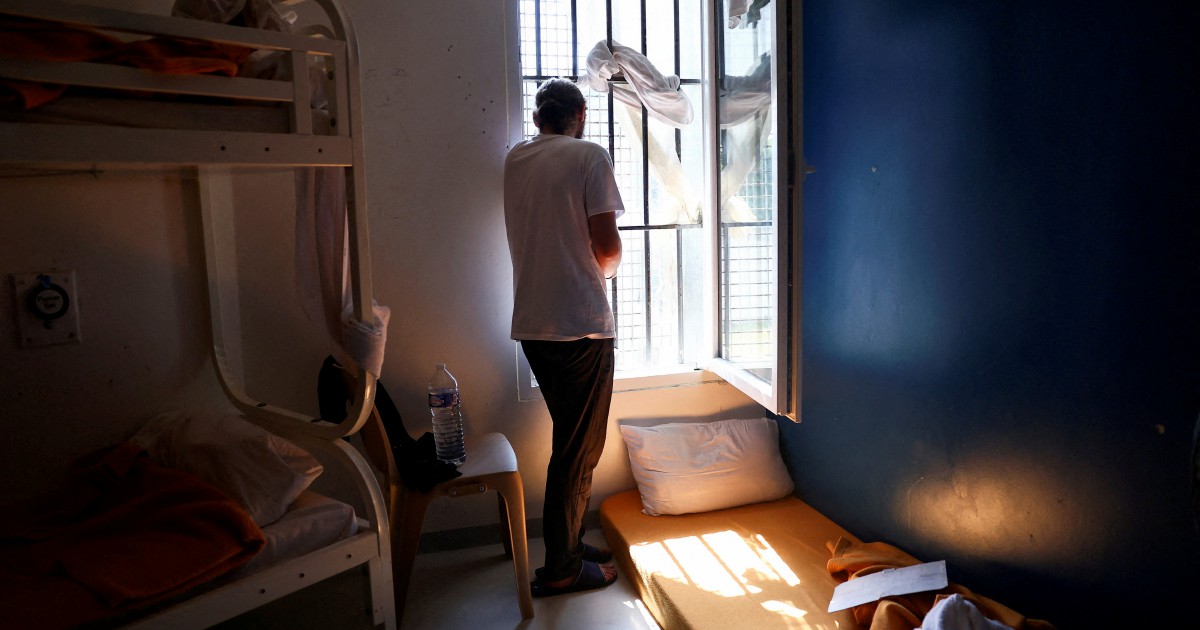
Recent heatwaves sweeping across Europe have cast an unwelcome spotlight on one of the continent's most intractable social problems: the deteriorating conditions within its aging prison infrastructure, where overcrowding has reached crisis levels. On days when outdoor temperatures climbed past 37 degrees Celsius, a French inmate resorted to soaking towels and draping them around his cell window bars in a desperate attempt to manage the oppressive heat—a poignant illustration of the daily reality facing thousands of prisoners locked behind bars during periods of extreme weather.
The incident encapsulates a broader systemic failure affecting correctional facilities across Western Europe. Prison systems in France, Italy, Spain, and other nations have long struggled with capacity issues, but the combination of aging infrastructure and climate stress has created an untenable situation. Many European prisons were constructed decades ago, with ventilation and cooling systems designed for cooler historical climates. As global temperatures continue their upward trajectory, these facilities have become increasingly unsuitable for human habitation during summer months, yet the financial and political resources required to modernise them remain inadequate.
French prisons have emerged as a particularly acute example of this crisis. Facility overcrowding has been documented at rates exceeding 110 per cent of official capacity, meaning that cells designed for one or two individuals frequently house three or more prisoners. During heatwaves, these confined spaces become unbearably hot, with temperatures inside cells substantially exceeding ambient outdoor readings due to poor ventilation and the greenhouse effect created by concrete and metal fixtures. Prisoners report struggling to sleep, experiencing heat exhaustion, and facing elevated risks of violence and psychological deterioration as tempers fray under extreme conditions.
The humanitarian implications extend beyond simple discomfort. Medical experts have warned that prolonged exposure to extreme heat in prison conditions poses genuine risks to inmate health, particularly for older prisoners, those with chronic illnesses, and individuals on psychiatric medications that increase heat sensitivity. The combination of overcrowding and inadequate climate control creates conditions that legal experts argue may constitute cruel and inhuman treatment, potentially violating international conventions that European nations have ratified. Prison oversight bodies and human rights organisations across the continent have increasingly raised alarms about these conditions, yet substantive reform has proven slow.
Political responses have been inconsistent and often inadequate. While some European governments have acknowledged the problem, translating recognition into concrete action has proved challenging. Prison reform requires substantial capital investment, and construction or renovation projects typically take years to complete. Additionally, prisons generally lack political appeal—few elected officials gain votes by championing prisoner welfare, meaning budget allocation tends to be squeezed during austerity periods. This creates a vicious cycle in which facilities continue ageing without significant modernisation, and populations within them continue growing as crime policies remain relatively punitive.
The broader context involves changing demographics and crime patterns. Europe's population is ageing, and this trend extends to incarcerated populations as well. Older prisoners have greater medical needs and are more vulnerable to heat stress. Simultaneously, mandatory minimum sentences and restrictions on early release in some jurisdictions have contributed to larger average sentence lengths, swelling prison populations beyond what infrastructure can reasonably accommodate. Migration and asylum-related detention have added additional pressure on some national systems, particularly those bordering external European Union frontiers.
For Malaysian and Southeast Asian observers, the European prison overcrowding crisis offers instructive parallels and contrasts. While Southeast Asian nations face their own documented prison overcrowding challenges, the European situation demonstrates how even wealthy, developed democracies struggle to maintain humane incarceration conditions when political will and adequate financing are lacking. Malaysia's prison system, operated under the Prison Department, has similarly grappled with capacity pressures, particularly at facilities like Kajang Prison. The region's tropical climate compounds the problem—extreme heat is constant rather than seasonal, yet cooling infrastructure remains limited in many facilities.
Climate change adds a forward-looking dimension to this analysis. If European prisons are becoming uninhabitable during temporary heatwaves, Southeast Asian facilities operating in permanently hot conditions face an even more severe baseline challenge. As global temperatures continue rising, the problem will intensify rather than resolve. This makes investment in prison infrastructure not merely a humanitarian concern but an increasingly pressing public health and security issue, as deteriorating conditions correlate with increased prison violence, escape attempts, and post-release recidivism.
The French situation has prompted some tentative policy responses, including experimental cooling measures in certain facilities and discussions about reducing population density through various sentencing reforms. However, these interventions remain limited in scope and resources. European human rights bodies have begun pushing harder on the issue, suggesting that unless substantial reforms occur, several national prison systems may face legal challenges at international courts.
The fundamental challenge is that prison reform requires sustained political attention and spending commitment across multiple election cycles—precisely the conditions that democratic governments struggle to maintain for unpopular causes. Heatwaves have provided a temporary window of public attention, but whether this translates into systematic change remains uncertain. For prisoners enduring extreme conditions behind bars, the outlook depends largely on whether governments begin treating prison modernisation as an infrastructure priority equivalent to hospitals, schools, and transportation networks—a conceptual shift that has yet to fully materialise across Europe.

