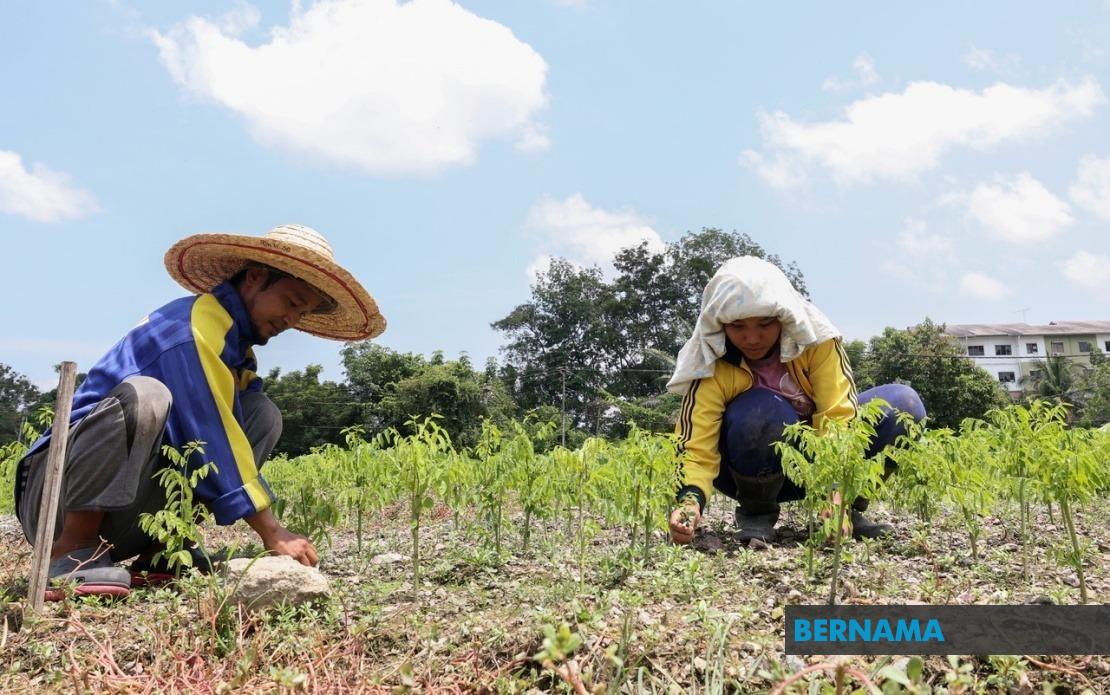
Malaysia's agricultural sector is facing mounting pressures as an extended period of extreme heat grips 17 regions across the country, with Sabah emerging as a particularly vulnerable hotspot. The phenomenon, which extends across Peninsular Malaysia, Sabah, and Sarawak, has disrupted farming operations and threatened food security at a critical time for the sector. The Malaysian Meteorological Department's issuance of Level 1 hot weather alerts across multiple districts underscores the severity of conditions affecting rural communities and commercial agricultural enterprises.
In Sandakan, the situation reflects broader challenges confronting growers throughout the affected zones. Vegetable farmer Firyanus Salamba describes a stark transformation in cultivation demands, noting that moisture retention has become the central preoccupation for farmers managing sensitive crops. The shift from conventional watering practices to intensive irrigation regimes represents a fundamental recalibration of agricultural operations in response to climatic stress. This escalation in labour and resource intensity carries significant economic implications for small-scale farmers operating on thin margins.
The practical impact of the heat becomes evident when examining specific crop performance. Okra, sweet shoots, and mustard greens now require three daily watering cycles—morning, afternoon, and evening—compared to the single irrigation event sufficient under normal meteorological conditions. Yet even this tripled intervention fails to prevent yield deterioration. Chilli plants, traditionally cultivated across East Malaysian regions, have proven particularly susceptible to the extreme conditions, with survival rates declining substantially and forcing some growers to reconsider crop selection strategies.
The ornamental sector faces parallel difficulties. Flower nursery operators, who traditionally maintained more flexible watering schedules, now implement mandatory twice-daily irrigation protocols to preserve plant viability. Without such intensive management, flowering plants rapidly wilt and perish in sustained high temperatures, threatening both inventory and market supply. These operational adjustments cascade through supply chains affecting retailers and consumers dependent on consistent horticultural product availability.
MetMalaysia's technical classification provides crucial context for understanding alert thresholds. The Level 1 cautionary alert designation applies when daily maximum temperatures sustain 35 to 37 degrees Celsius for at least three consecutive days, indicating that temperatures in affected regions have persistently exceeded thresholds associated with agricultural stress. This represents not a brief climatic fluctuation but an extended pattern requiring sustained adaptive responses from farming communities.
The geographic distribution of affected areas reveals significant regional clustering. Peninsular Malaysia bears the heaviest burden, with 11 zones across multiple states experiencing the alert status. In Perak, the affected districts include Larut and Matang, Kuala Kangsar, Kampar, and Batang Padang. Kelantan's Kuala Krai faces similar pressures, while Pahang contends with heat stress across Kuantan, Raub, Temerloh, and Pekan. Selangor's Hulu Selangor and Gombak regions round out the Peninsular contingent.
Sabah's vulnerability emerges through five affected districts: Telupid, Tenom, Sandakan, Pitas, and Beluran. This concentration across East Malaysia's premier agricultural state raises particular concern given the region's role in supplying both domestic markets and contributing to national agricultural output. Sarawak reports one affected area in Marudi, adding another dimension to the multi-state character of this meteorological event.
For Malaysian food security considerations, the confluence of reduced yields across multiple crop types and regions carries implications extending beyond individual farm economics. Vegetable production, particularly staple crops such as leafy greens and heat-sensitive varieties, typically contributes substantially to domestic consumption patterns. When production contracts across multiple geographic zones simultaneously, market prices may experience upward pressure, potentially affecting household food budgets during periods when families already face elevated living costs.
The sustainability implications also warrant examination. Intensified irrigation requirements consume groundwater and surface resources at accelerated rates during seasons when water availability may already face seasonal pressure. Farmers lacking adequate water infrastructure or competing with other users for limited supplies face compounded difficulties. In regions dependent on specific seasonal rainfall patterns, prolonged dry periods combined with elevated temperatures create conditions where agricultural viability itself comes into question.
The broader climate adaptation challenge becomes evident when considering that such heat events may represent an emerging pattern rather than exceptional anomaly. Agricultural extension services, government policy frameworks, and farming communities must collectively evaluate long-term resilience strategies. These might encompass crop variety selection favouring heat-tolerant cultivars, irrigation infrastructure investment, mulching and shade management techniques, and potentially temporal shifts in planting and harvesting calendars.
For Malaysian consumers, particularly in urban areas, the indirect effects of agricultural heat stress may manifest through market availability and pricing of fresh produce. The heat wave serves as a visible reminder of the complex dependencies linking meteorological conditions, farming communities, and household food security. Regional collaboration through organisations like ASEAN may facilitate knowledge-sharing regarding adaptation strategies across Southeast Asian agricultural sectors experiencing similar climatic pressures.
Looking forward, the capacity of farming communities to absorb recurring heat stress without intervention support remains questionable. Government agricultural agencies, meteorological services, and farming associations will likely face increasing pressure to develop coordinated heat mitigation strategies. These interventions could include subsidised irrigation equipment, real-time weather advisory systems, crop insurance mechanisms, and financial assistance for farmers implementing adaptive agricultural technologies.

