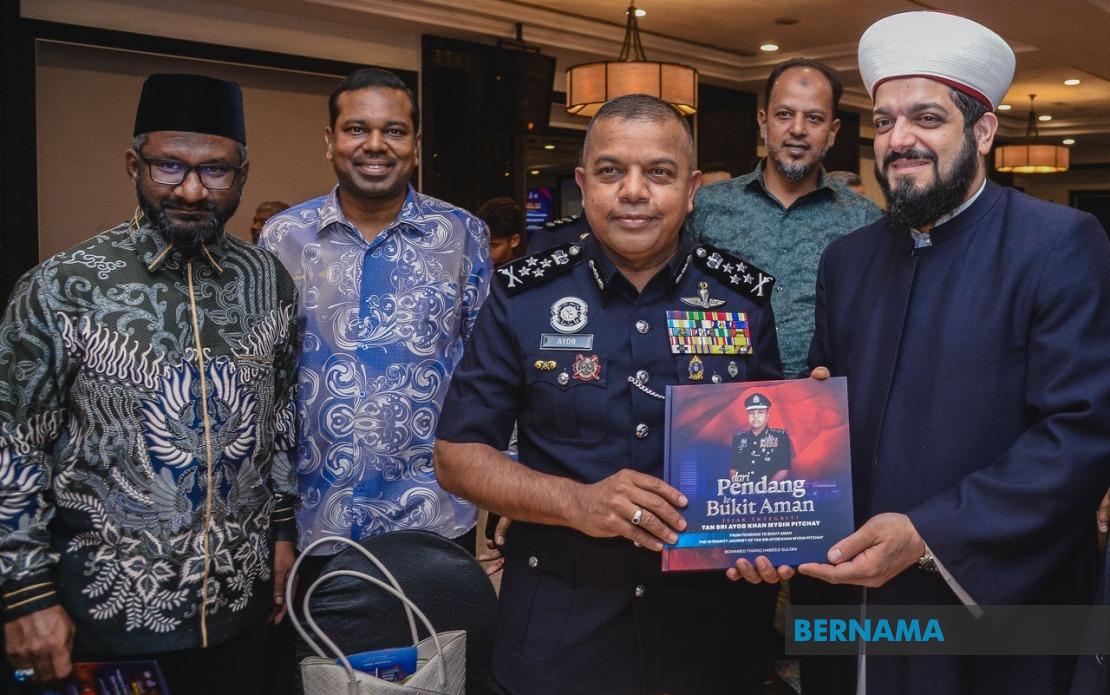
Malaysia's law enforcement agencies are grappling with a fundamental shift in how extremist and militant organisations identify and radicalise vulnerable individuals. During remarks made in Kuala Lumpur on July 23, Deputy Inspector-General of Police Tan Sri Ayob Khan Mydin Pitchay highlighted that the evolving threat landscape demands constant vigilance and technological adaptation from security forces, as recruiters exploit digital spaces to bypass traditional detection methods.
The modernisation of extremist recruitment strategies represents a troubling departure from earlier approaches that relied on in-person engagement. What once transpired through private religious study circles, known locally as usrah sessions, has now migrated almost entirely onto the internet. This transition underscores a critical vulnerability in Malaysia's security posture: the difficulty of monitoring radicalisation when it occurs across encrypted platforms and within gaming environments that authorities have historically overlooked.
Particularly concerning is the exploitation of mainstream gaming platforms to identify and cultivate potential recruits. Video games such as Roblox, which boasts hundreds of millions of players globally and substantial user bases across Southeast Asia, have become unexpected recruitment grounds. These platforms offer extremist operators multiple advantages—large concentrations of younger audiences, community features that facilitate private communication, and relative anonymity that masks identities and intentions from both law enforcement and parents.
Ayob Khan emphasised that the ideological drivers behind extremism have undergone profound transformation. The motivations fuelling recruitment are no longer anchored primarily in religious doctrine or interpretation, but increasingly in visceral emotional responses and accumulated grievances. Anger, resentment, and personal trauma have become potent catalysts that extremist recruiters deliberately cultivate and weaponise. This psychological dimension renders prevention considerably more complex, as traditional counter-narrative strategies focused on theological rebuttal prove inadequate against emotionally-driven radicalisation.
Recent arrests involving teenagers have illustrated this troubling pattern, revealing how young Malaysians can be rapidly mobilised toward violence through exposure to extremist propaganda tailored to their emotional vulnerabilities. The deputy police chief suggested these cases demonstrate a shift in modus operandi that extends beyond ideology into the realm of exploiting personal grievances and psychological susceptibilities. This complexity demands that security agencies develop enhanced capacity to identify psychological red flags rather than relying solely on surveillance of theological content.
The implications for Malaysia's counter-terrorism infrastructure are substantial. The Royal Malaysian Police must transition from reactive postures—responding after attacks occur or arrests are made—toward genuinely proactive strategies capable of disrupting recruitment pipelines before radicalised individuals undertake violent action. Ayob Khan explicitly cautioned that passivity invites catastrophe, arguing that failure to stay ahead of evolving threats constitutes a fundamental intelligence failure that could result in domestic attacks.
This warning carries particular weight in Southeast Asia's security context. Malaysia, as a religiously diverse nation with significant Muslim and non-Muslim populations, faces distinctive vulnerabilities to sectarian violence and communal tensions that extremist organisations deliberately exploit. The cross-border nature of online recruitment means that Malaysian nationals can be radicalised by foreign operatives, while simultaneously, Malaysians can serve as recruiters for international militant networks. The removal of geographical barriers has effectively expanded the threat surface exponentially.
Ayob Khan specifically urged the Special Branch's Counter-Terrorism Division (E8) and allied security units to intensify their vigilance and detection capabilities. This mandate requires not merely technological investment in monitoring systems but also human intelligence operatives capable of infiltrating online gaming communities and identifying recruitment activity. The challenge is formidable: distinguishing between legitimate gaming discourse and extremist grooming requires cultural competence and continuous training.
The law enforcement response must also extend beyond purely security-focused interventions. Collaboration with technology companies operating gaming platforms is essential—these private entities possess user data, communication logs, and technical capabilities that governmental agencies alone cannot access. Establishing formal mechanisms for information-sharing between Malaysian authorities and international tech platforms could significantly enhance early detection of recruitment networks. Similarly, digital literacy programmes targeting parents and educators can improve community-level awareness of radicalisation indicators within gaming environments.
The cyber dimension of this threat also necessitates updating Malaysia's legal and regulatory frameworks. Current legislation may inadequately address recruitment activity conducted through games or social media, creating prosecutorial challenges. Authorities must clarify legal boundaries and ensure that law enforcement possesses both statutory authority and technical tools necessary to investigate online extremism without impinging on legitimate privacy protections.
Moreover, the shifting nature of extremist motivation toward emotional and psychological drivers suggests that counter-deradicalisation programmes require substantial revision. Effective rehabilitation of individuals who have been radicalised through emotional manipulation demands psychological intervention alongside ideological rebuttal. Malaysia's detention and rehabilitation facilities should incorporate trained counsellors and mental health professionals capable of addressing trauma, anger management, and other psychological vulnerabilities that extremist recruiters deliberately exploit.
For Malaysia and the broader region, Ayob Khan's public warning serves as a clarion call for comprehensive reassessment of counter-terrorism strategies. The traditional security architecture, calibrated for physical threats and clearly identifiable militant organisations, is proving inadequate in an environment where recruitment occurs invisibly across digital networks and ideology coexists with emotional exploitation. Meeting this challenge demands enhanced intelligence capabilities, technological sophistication, private sector collaboration, legal clarity, and rehabilitative innovation working in concert. The alternative—remaining passive while extremist operatives capitalise on technological advantages and psychological vulnerabilities—risks precisely the domestic security catastrophe Ayob Khan warned against.

