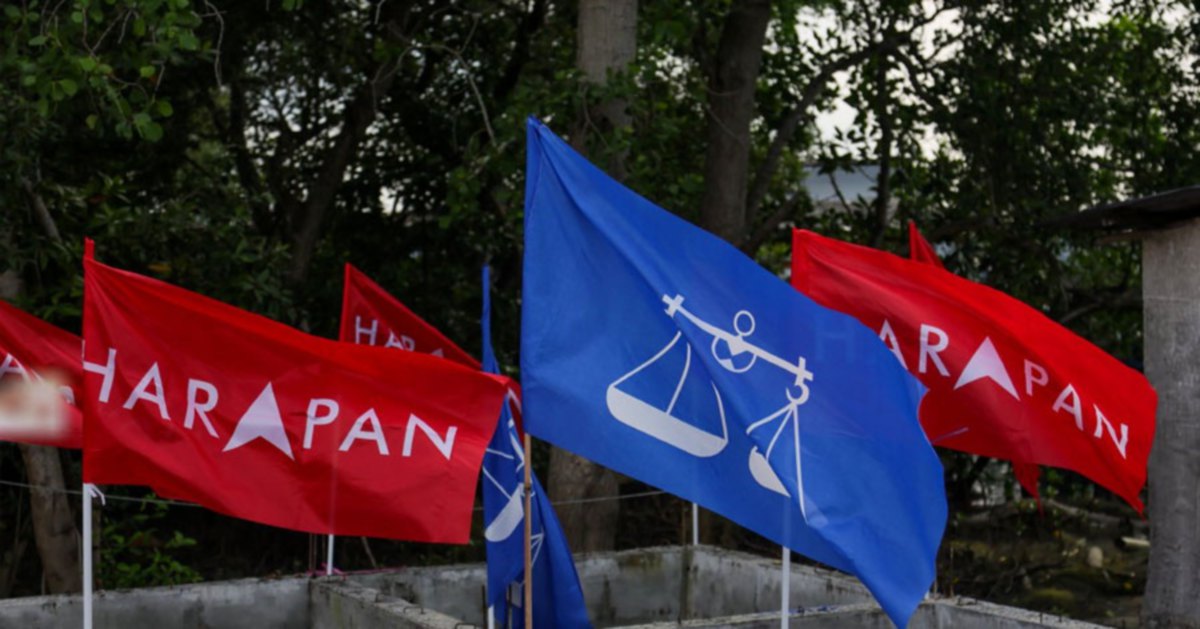
The Pakatan Harapan coalition is maintaining active internal dialogue as negotiations with Barisan Nasional over seat distribution continue gathering pace. Datuk Seri Fahmi Fadzil, serving as communications director for the opposition-turned-coalition partner, publicly confirmed yesterday that Datuk Seri Amirudin Shari, the coalition's election director, had convened with Datuk Seri Anwar Ibrahim, the coalition chairman, in what appears to be a routine coordination meeting amid the ongoing seat allocation discussions.
The confirmation of this meeting carries symbolic weight within Malaysia's political sphere, where coalition mechanics and inter-party coordination typically occur behind closed doors. The public acknowledgment suggests that Pakatan Harapan is signalling transparency and stability to its grassroots members and the broader electorate, particularly as the coalition navigates the delicate process of dividing parliamentary and state seats with Barisan Nasional—a partnership that remains novel in Malaysian political history given the two coalitions' historical adversarial relationship.
Amirudin Shari's role as election director positions him as a critical figure in these negotiations, responsible for assembling and optimising the coalition's candidate slate across multiple constituencies. His meetings with Anwar Ibrahim, who holds supreme authority within Pakatan Harapan, typically involve strategic assessments of candidate viability, constituency competitiveness, and the tactical deployment of party resources. Such gatherings become more frequent and significant when coalition-level negotiations are at advanced stages, suggesting that seat discussions between Pakatan Harapan and Barisan Nasional have progressed beyond preliminary exchanges.
The timing of Fahmi's confirmation merits scrutiny. Rather than allow speculation to fester within party circles or among media outlets, the rapid public verification of the meeting demonstrates a deliberate communications strategy. In Malaysian politics, where rumours of internal discord can rapidly destabilise coalition arrangements, proactive disclosure of high-level meetings serves to reassure coalition members that leadership remains unified and actively engaged in securing the best possible terms for the alliance.
For Malaysian voters and political observers, these seat negotiations represent one of the most consequential pre-election activities occurring beyond the public eye. The distribution of winnable seats between Pakatan Harapan and Barisan Nasional will substantially influence the composition of the next Parliament and, by extension, which party and personalities gain ministerial positions. Amirudin's involvement in these discussions indicates that both coalitions are conducting their negotiations through established party hierarchies rather than through ad hoc or informal channels, lending the process greater legitimacy and institutional weight.
The broader context of PH-BN coordination remains complex and sometimes contested within their respective party bases. Pakatan Harapan's traditional support base includes voters who spent years opposing Barisan Nasional under previous administrations, making some rank-and-file members apprehensive about seat concessions. Barisan Nasional, conversely, must demonstrate to its constituencies that it negotiated seats of adequate quality and quantity to justify coalition partnership. These internal pressures make transparent leadership communications—such as Fahmi's confirmation—increasingly valuable for managing party discipline and coalition cohesion.
The confirmation also reflects how Anwar Ibrahim continues consolidating his authority within Pakatan Harapan as coalition chairman. Regular consultations with key operatives like Amirudin Shari reinforce the coalition's hierarchical decision-making structure and ensure that election strategy flows from centralized planning rather than autonomous party actions. This institutional approach typically produces more disciplined campaign execution and reduces the likelihood of contradictory messaging between coalition partners.
Seat negotiations between major coalitions typically involve complex trade-offs extending beyond simple numbers. Parties evaluate which seats are genuinely winnable, which constituencies represent strategic priorities, and which candidates can effectively represent the coalition's interests. Amirudin Shari's background as an experienced political operative—his previous roles and demonstrated understanding of Malaysian electoral dynamics—positions him well to navigate these multidimensional discussions and advocate effectively for Pakatan Harapan's interests.
Looking forward, Malaysian observers should anticipate that further confirmations of high-level meetings may be strategically released as negotiations reach critical junctures. These public disclosures serve multiple purposes simultaneously: they signal to coalition partners that progress is occurring, they reassure grassroots supporters that their parties remain engaged in securing optimal outcomes, and they implicitly communicate to external stakeholders—including rival coalitions and international observers—that the partnership maintains institutional coherence and strategic focus.
The meeting confirmation ultimately underscores how Malaysian electoral politics operates at multiple levels simultaneously. While candidates campaign visibly and parties mobilize supporters openly, the underlying architecture of coalition seat allocation, strategic positioning, and leadership coordination proceeds through channels visible primarily to insiders. Fahmi's brief but significant confirmation lifts one corner of this institutional curtain, offering the public a glimpse into how contemporary Malaysian coalitions actually function during pre-election periods.

