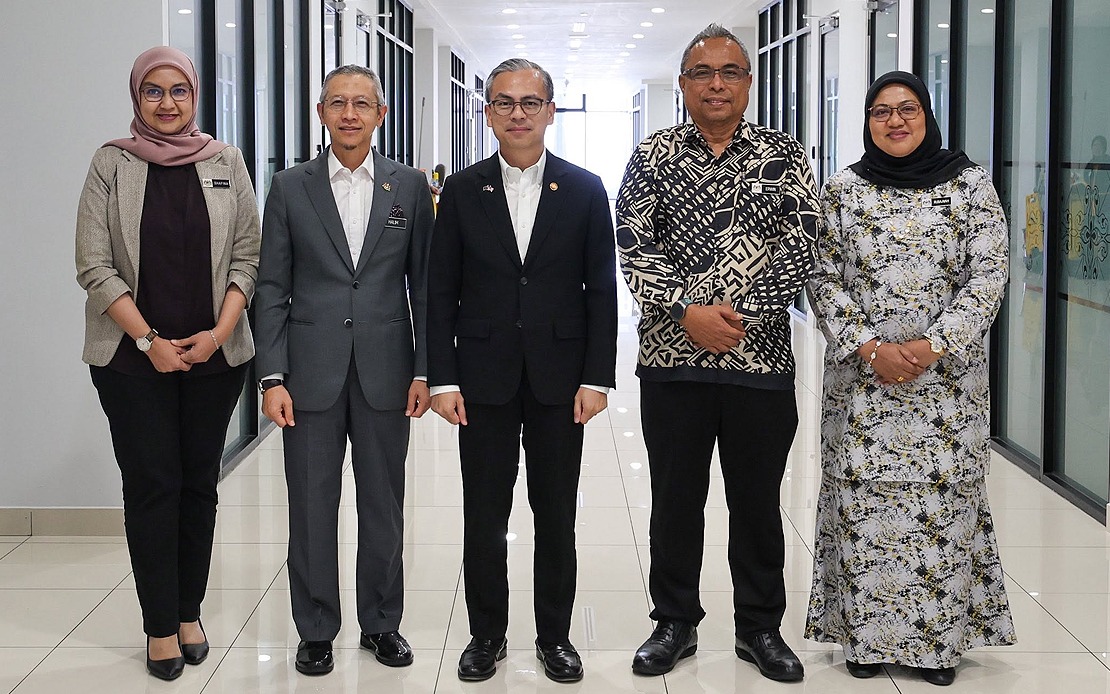
Communications Minister Datuk Fahmi Fadzil has extended warm congratulations to Erwin Khairul Ahmad following his appointment as the new director-general of the Information Department (JaPen), marking a significant leadership transition at the government agency responsible for public communications. The ministerial recognition comes as part of a broader reshuffle that also sees Wan Saidatul Shafina Mohd Amin elevated to the position of deputy director-general overseeing digital content operations within the same department.
The formal appointments underscore the government's commitment to strengthening institutional leadership within key information dissemination bodies at a time when effective public communication has become increasingly critical. Both appointments were officially presented by Tan Sri Wan Ahmad Dahlan Abdul Aziz, the director-general of the Public Service Department (JPA), signalling that the transitions have followed established civil service protocols and merit-based selection procedures.
In his statement, Fahmi emphasised the significance of these leadership roles, calling upon the newly appointed officials to carry forward their responsibilities with steadfast dedication and principled judgment. His remarks stressed the need for maintaining institutional excellence and sustaining the department's capacity to function as a reliable conduit for government information reaching Malaysian citizens across diverse platforms and demographics.
The emphasis on the Information Department's role as an effective medium for public information delivery reflects contemporary challenges facing government agencies in an era of digital transformation and competing narratives. JaPen's mandate to ensure accurate, timely dissemination of official information has grown more complex as traditional and social media channels fragment audience attention and create opportunities for misinformation to circulate rapidly.
Fahmi's public recognition of outgoing director-general Julina Johan acknowledged her tenure and contributions to the department's operations and development. This gesture of appreciation towards departing leadership, a standard practice in Malaysian civil service culture, reflects institutional continuity and respect for service rendered despite transitions in personnel.
The appointment of Wan Saidatul Shafina as deputy director-general with specific responsibility for digital content represents a strategic decision to strengthen the department's capacity in online information management. This designation suggests the government recognises that digital platforms have become primary channels through which citizens access official information, requiring dedicated leadership and strategic planning within the information apparatus.
For Malaysian public administration, these transitions represent routine but consequential changes that ripple through government communications infrastructure. The Information Department operates under the purview of the Communications Ministry and plays a crucial supporting role in government messaging on policy announcements, national initiatives, and public health campaigns.
The appointments also arrive during a period when Southeast Asian governments broadly are reassessing how they engage with citizens through digital channels while maintaining information accuracy and combating harmful online content. Regional comparisons show that countries like Singapore, Indonesia, and Thailand have each undertaken restructuring of information agencies to adapt to evolving media landscapes.
From a Malaysian perspective, the leadership changes at JaPen hold particular relevance for how government initiatives are communicated to the public, from economic policy announcements to social development programmes. The effectiveness of these new leaders in their roles will influence public understanding of government decisions and the broader health of institutional communication.
Erwin Khairul Ahmad assumes his responsibilities at a juncture when questions of information governance, digital literacy, and public trust in official sources remain prominent across the region. His background and approach to leadership will likely shape how JaPen adapts its operations to contemporary communication demands and technological capabilities.
The simultaneous appointment of Wan Saidatul Shafina reflects recognition that digital content strategy requires dedicated institutional attention rather than remaining a secondary function within a traditionally structured department. This structural acknowledgment suggests evolving thinking within government about how information operations should be organised to maximise reach and engagement with digitally connected populations.
For observers of Malaysian governance, these personnel movements offer insight into how government institutions are positioning themselves for evolving communication requirements. The Ministry of Communications under Fahmi's leadership appears to be signalling that information delivery remains a priority area requiring capable leadership and strategic investment.
The formal presentation of appointment letters by the Public Service Department director-general underscores the constitutional and administrative framework through which Malaysian civil service transitions occur, maintaining institutional integrity while enabling necessary leadership renewal across government agencies.

