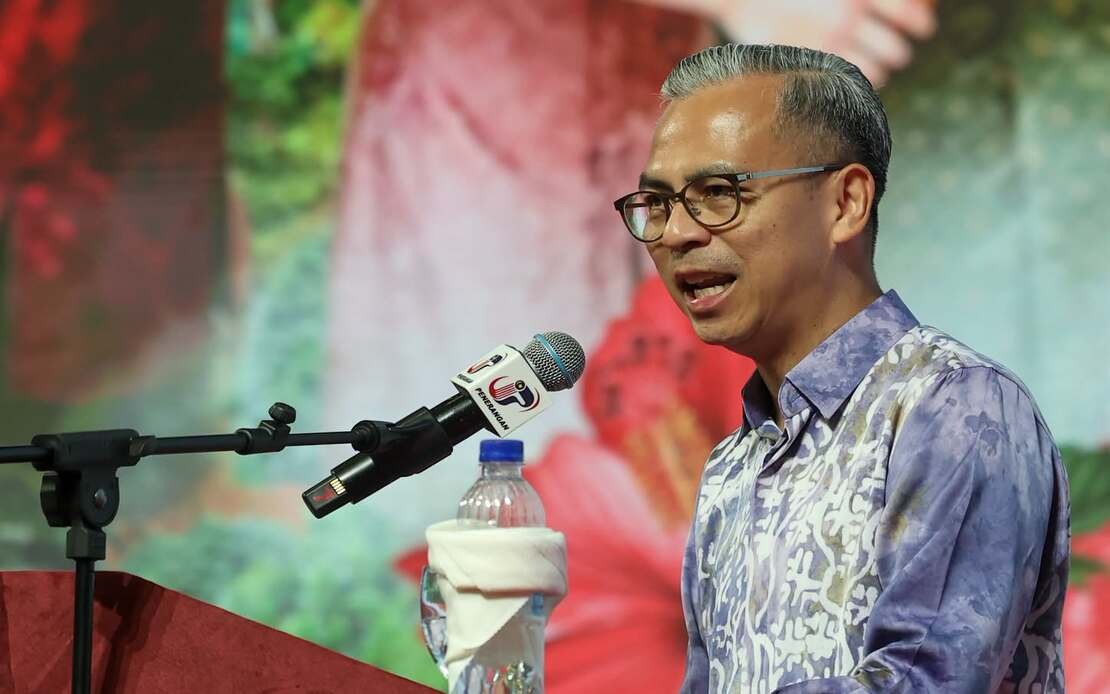
Communications Minister Datuk Seri Fahmi Fadzil has expressed strong appreciation for musician Faizal Tahir's composition of 'Aku Berjanji', which has been designated as the theme song for Malaysia's 2026 National Day and Malaysia Day (HKHM) celebrations. The announcement represents a significant moment in the country's patriotic calendar, with the song receiving its debut public performance during the official launch of the 2026 National Month and Fly the Jalur Gemilang Campaign held in Ipoh on July 19.
Through his social media statement, Fahmi publicly recognised Faizal Tahir's artistic contribution to the national commemorations, specifically commending the composition for embedding powerful themes of national cohesion, collective identity, and patriotic sentiment. The minister's endorsement underscores the government's continued emphasis on leveraging cultural production as a vehicle for promoting national unity during significant ceremonial periods. Such musical selections have historically served Malaysian commemorative events, functioning as unifying cultural touchstones that resonate across diverse communities.
The campaign launch itself was led by Prime Minister Datuk Seri Anwar Ibrahim, reflecting the government's priority placed on building momentum for the upcoming celebrations. By officially unveiling both the theme song and the broader campaign simultaneously, the administration seeks to galvanise public enthusiasm early, allowing citizens adequate time to participate in flag-flying initiatives and patriotic activities throughout the nation. This deliberate timing strategy demonstrates recognition that successful national campaigns require sustained engagement rather than last-minute mobilisation.
Fahmi's intervention extends beyond mere congratulations, incorporating a broader civic message that addresses contemporary challenges to national symbolism. He explicitly urged Malaysians to display the Jalur Gemilang with appropriate respect, emphasising that physical flags must be maintained in excellent condition and installed correctly. This seemingly straightforward instruction carries deeper significance within Malaysian discourse, where proper flag treatment is intertwined with expressions of national dignity and respect for constitutional symbols.
The minister's caution regarding artificial intelligence-generated imagery of the national flag represents a notably forward-looking governmental concern. By specifically warning social media users against using AI technology to create representations of the Jalur Gemilang, Fahmi acknowledged the dual-edged nature of modern digital tools that can simultaneously enhance or potentially compromise national symbols. The concern highlights how technological advancement has introduced new vulnerabilities to national iconography that traditional regulations never contemplated, requiring contemporary governance to adapt rapidly to emerging challenges.
Faizal Tahir's selection for this prominent cultural assignment reflects the continued importance placed on established Malaysian musical talent in reinforcing national narratives. As a renowned composer and performer with significant standing in the local music industry, his involvement lends credibility and artistic substance to the campaign. The artist's ability to infuse 'Aku Berjanji' with culturally resonant messaging demonstrates how professional creative talent can effectively translate governmental aspirations for national unity into emotionally compelling artistic expression.
The campaign framework itself—combining musical composition, flag-flying initiatives, and coordinated public messaging—illustrates a comprehensive approach to national celebration that engages multiple dimensions of citizenship. Rather than treating National Day observance as a single annual event, the government's strategy positions the 2026 celebrations as an extended season of sustained patriotic engagement. This extended approach recognises that meaningful national unity requires ongoing cultural reinforcement beyond symbolic ceremony.
For Malaysian audiences, particularly in an era marked by complex political dynamics and social fragmentation, the emphasis on unity messaging carries particular resonance. Faizal Tahir's composition arrives at a moment when national cohesion remains a central governmental priority, with official communications consistently highlighting inclusivity and collective identity as essential national values. The artist's musical contribution thus occupies space within broader state discourse aimed at strengthening social fabric through shared commemorative practices.
The minister's specific reference to exercising caution with AI-generated imagery points to evolving governmental concerns about digital sovereignty and cultural representation in increasingly virtual public spaces. As artificial intelligence capabilities expand, the protection of national symbols from potentially distorted or inappropriate digital representations has emerged as an unexpected frontier in safeguarding national dignity. This concern demonstrates how traditional governance frameworks must continually adapt to address challenges posed by technological innovation.
Looking toward 2026, the establishment of 'Aku Berjanji' as the official theme establishes a cultural anchor for the entire celebration season. Through repeated performance, broadcast, and public engagement, the song will likely become widely recognised among Malaysian audiences, functioning as a musical embodiment of the government's patriotic messaging. Faizal Tahir's artistic work thus transcends entertainment value, becoming a functional component of state communication strategy.
The appointment of a major cultural figure to create the theme song also reflects sophisticated understanding of how effective national messaging operates within contemporary media environments. Rather than relying solely on governmental pronouncements, the integration of respected artistic talent ensures that patriotic messaging achieves cultural authenticity and popular resonance that official rhetoric alone might struggle to accomplish. This collaborative approach between government and established cultural producers represents contemporary best practice in national communication.

