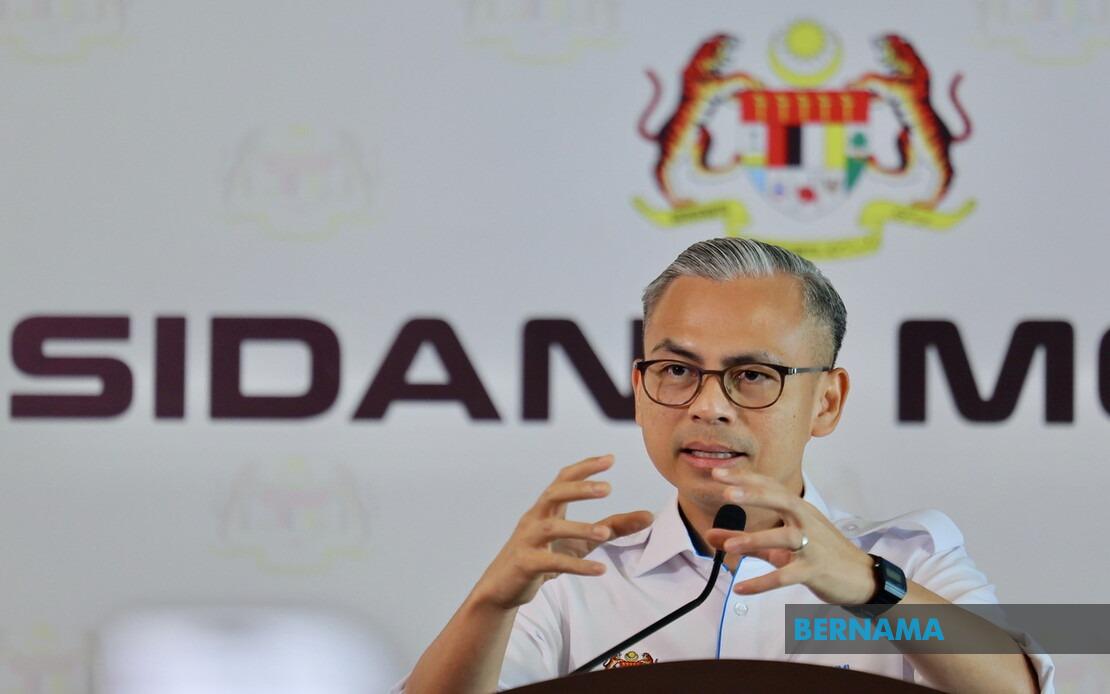
Communications Minister Datuk Seri Fahmi Fadzil has issued an appeal for national cohesion and patriotic spirit as Malaysia prepares to commemorate its National Day and Malaysia Day celebrations. In a message distributed through official channels, Fahmi stressed that the foundations of the nation rest upon the considerable sacrifices made by previous generations, whose struggles and determination secured Malaysia's independence. This historical debt, he contended, imposes a contemporary responsibility on current citizens to preserve and advance the legacy left in their hands.
The minister's remarks underscore a critical dimension of Malaysia's post-independence narrative. The sacrifices referenced encompass not merely the political negotiations that culminated in independence, but the broader social and communal efforts that established the conditions for national cohesion across the country's diverse populations. Fahmi's framing positions historical memory as a foundation for present-day action, suggesting that genuine patriotism requires understanding and appreciating the complex historical processes that shaped the nation.
Fahmi emphasised that maintaining national strength fundamentally depends on the continuous cultivation of unity among Malaysians across all demographic divides. His statement explicitly references race, religion, culture, and background as categories that must not become barriers to collective identification with national interests. This rhetorical emphasis reflects ongoing efforts within Malaysian political discourse to reinforce the notion that national identity transcends particularistic loyalties, a principle that remains contested in contemporary Malaysian society.
Central to his message is the concept of mutual respect as a precondition for social harmony. Fahmi framed this not as a mere aspirational ideal, but as something essential to national stability and progress. The emphasis on harmony aligns with official Malaysian governance philosophy, which treats social peace as foundational to economic development and international standing. His articulation suggests that without deliberate commitment to respectful coexistence, the material benefits of national development remain fragile and vulnerable to disruption.
The minister anchored his message within the 2026 National Day and Malaysia Day theme, "Malaysia MADANI: Kesejahteraan Dinikmati," which translates to prosperity being enjoyed by the population. This thematic framework shifts the conversation from abstract patriotism toward concrete outcomes, specifically the distribution of developmental benefits across Malaysian society. Fahmi's interpretation suggests that true national progress cannot be measured solely by aggregate economic growth, but must be assessed through the lens of inclusive access to prosperity's fruits.
Fahmi articulated a vision of shared responsibility for national development, positioning prosperity not as something delivered by state institutions to passive citizens, but as a collective endeavour requiring active participation and commitment from all segments of society. This formulation carries particular significance in a Southeast Asian context where wealth inequality and regional disparities have generated political tensions. By framing prosperity as a shared responsibility, Fahmi implicitly acknowledged that state-led development alone has proven insufficient to address distributional concerns.
The minister expressed confidence that Malaysia would maintain its trajectory as a unified nation capable of commanding respect internationally. This forward-looking orientation suggests awareness of Malaysia's position within global and regional hierarchies, where national coherence directly correlates with diplomatic influence and economic competitiveness. The implicit message suggests that sectarian divisions or communal fractures would diminish Malaysia's capacity to advance its interests within increasingly complex geopolitical and economic environments.
Fahmi's invocation of togetherness and shared responsibility introduces a collectivist framework that stands in tension with competing visions of Malaysian society that emphasise particular group interests or historical grievances. His call for a "more inclusive, prosperous, peaceful and harmonious Malaysia for all" represents an aspirational statement that acknowledges diversity while attempting to subordinate it within a framework of national interest. The repetition of "all" throughout his message serves to reinforce this inclusive rhetoric.
The broader context of these remarks involves Malaysia's ongoing navigation of social cohesion in a society marked by constitutional arrangements that recognise particular communal identities while theoretically subordinating them to national citizenship. The MADANI philosophy itself represents an effort within contemporary Malaysian governance to articulate an encompassing vision of national development that transcends prior frameworks. Fahmi's articulation of this message positions the upcoming commemorations as occasions for renewing commitment to principles of unity rather than as opportunities for celebrating particular historical narratives.
As Malaysia approaches these significant national observances, the emphasis on patriotism and unity carries resonance beyond ceremonial significance. These annual commemorations provide crucial moments for political leadership to articulate national values and expectations, shaping public discourse around belonging, citizenship, and shared purpose. Fahmi's message represents an attempt to harness these occasions toward reinforcing overarching national identity frameworks.
The communications minister's call for igniting patriotic spirit reflects recognition that national cohesion requires active cultivation rather than passive acceptance. This framing acknowledges that patriotism in diverse societies necessitates conscious effort and deliberate commitment from political leadership and citizenry alike. The upcoming celebrations thus serve not merely as retrospective acknowledgements of historical achievements, but as opportunities to reinvigorate contemporary commitment to national values and collective progress.

