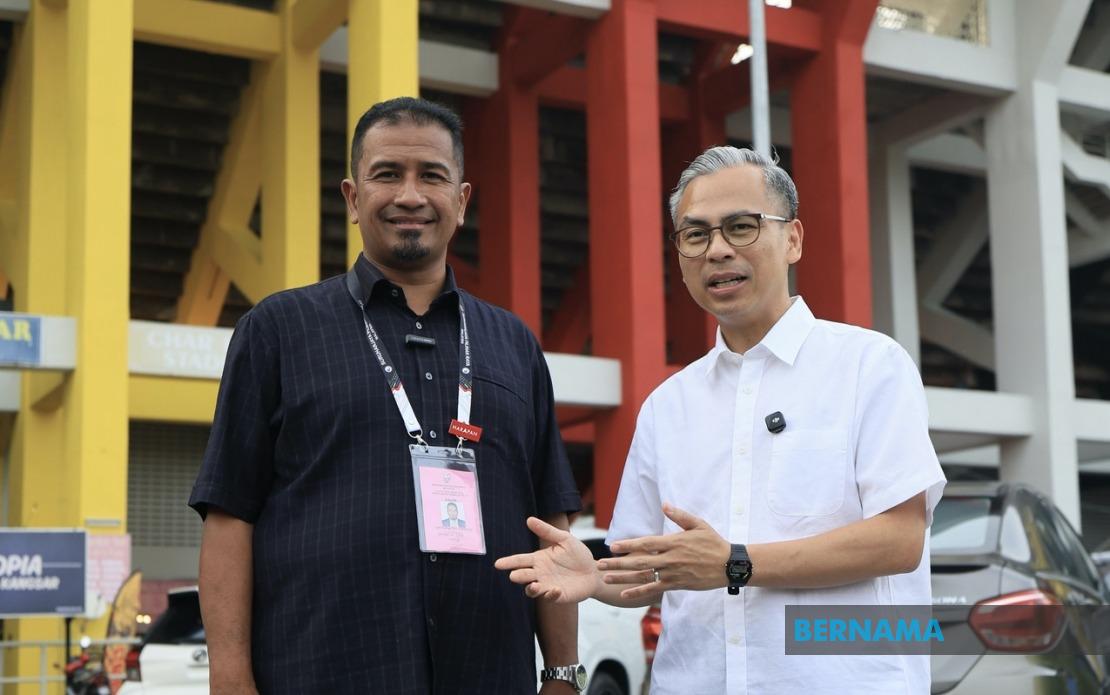
The Negeri Sembilan state election campaign has taken a troubling turn with reports of physical vandalism against opposition candidates' promotional materials, prompting a senior government official to step in with a public plea for ethical conduct. Communications Minister Datuk Seri Fahmi Fadzil made his appeal after learning that Dr Azizul Hakim Mahdi, the Pakatan Harapan candidate contesting the Rantau state seat, had his billboards damaged during the early stages of the campaign race. The incident underscores growing tensions in what was supposed to be a contest centred on policy disagreements and competing visions for the state's future.
When Fahmi raised the matter with reporters in Seremban on July 22, he framed the vandalism as a serious breach of electoral conduct standards. He noted that beyond the physical destruction of campaign materials, social media posts had circulated purporting to show individuals actively engaged in damaging the billboards, creating a documented record of the alleged misconduct. Rather than demand immediate punitive action, Fahmi adopted a measured approach, calling on law enforcement authorities to investigate the incidents thoroughly and apply the full weight of applicable laws. The vandalism itself constitutes an offence under Malaysian electoral regulations, and Fahmi's acknowledgment of this legal dimension signals that authorities may pursue formal charges against those responsible.
The broader concern articulated by Fahmi reflects a fundamental principle underlying competitive democracy: that disagreements between political parties should be resolved through persuasion and debate rather than destructive acts designed to silence opponents. His statement called upon all participating parties to elevate their campaign discourse, moving away from personal attacks and sabotage tactics toward substantive discussion of ideas and empirical facts. This appeal carries particular weight coming from a minister representing the ruling Pakatan Harapan coalition, suggesting that the government itself recognises the damage that uncivil campaigning inflicts on public confidence in democratic institutions.
Fahmi's comments came while accompanying Nur Azman Mohamad, the PH candidate for the Sikamat state seat, through a campaign walkabout at Paroi Stadium in Seremban City Council. This setting symbolised the type of grassroots engagement that Fahmi believes should characterise the election effort, with candidates directly engaging voters face-to-face rather than relying solely on physical advertising or digital propaganda. The emphasis on community interaction suggests a preference for campaigns that build genuine connections with constituents and allow voters to assess candidates based on their responses to pressing local issues.
Assessing the campaign's trajectory halfway through its first full week, Fahmi expressed qualified satisfaction with proceedings while acknowledging that intensity would almost certainly escalate as voting day approached. He employed a vivid automotive metaphor, suggesting that many participants were still operating in lower gears, conserving energy for the final sprint. This observation proved prescient; with early voting scheduled for July 28 and the Election Commission having set August 1 as polling day, the campaign calendar compressed the traditional contest into a particularly concentrated period. The short timeframe typically forces parties to accelerate their efforts and deploy resources strategically, knowing that the window for persuasion remains narrow.
Prime Minister Datuk Seri Anwar Ibrahim's campaign activities on that same day reinforced the leadership's commitment to the election contest. Fahmi noted that the Prime Minister had already attended four or five campaign events, with expectations that other senior government figures would intensify their participation in coming days. This leadership engagement serves multiple purposes beyond merely promoting individual candidates; it signals to the electorate that the government takes the election seriously and has invested institutional resources in supporting its preferred outcome. For voters in Negeri Sembilan, such high-level participation offers opportunities to engage directly with national leadership and press them on both state and national issues.
The Negeri Sembilan state election carries significance extending beyond the state's borders, as outcomes often influence broader perceptions of political momentum and voter sentiment across Malaysia. State-level contests serve as crucial testing grounds for party organisations, campaign messaging, and ground-level organisational capability. Success or failure in Negeri Sembilan can provide valuable intelligence for larger electoral contests while potentially affecting morale within party structures. The reported vandalism incidents and Fahmi's response suggest that political competition in the state has reached a sufficiently heated level to prompt concerns about rule-breaking and the integrity of the democratic process.
The incident also reflects ongoing challenges within Malaysian politics regarding the boundary between aggressive campaigning and conduct that undermines democratic norms. While robust political competition naturally generates tension and heated rhetoric, physical destruction of opponents' materials crosses a qualitative threshold that most observers would regard as unacceptable. Fahmi's framing of the issue as one requiring legal intervention rather than merely political criticism indicates that such conduct will not be tolerated or normalised. For electoral authorities and law enforcement, the documentation of vandalism through social media posts provides potential evidence for investigation and prosecution.
Moving forward, the remainder of the Negeri Sembilan campaign will likely test whether Fahmi's appeal for ethical conduct gains traction among all participating parties and their supporters. Campaign intensity typically rises as polling day approaches, bringing with it increased pressure on candidates and volunteers to secure victory. How parties and their grassroots supporters respond to this pressure will determine whether the election proceeds as a substantive contest over policy and leadership, or deteriorates into a cycle of personal attacks and destructive tactics. The communications minister's intervention represents an institutional effort to guide the campaign toward the former model, though ultimate success depends on the choices made by political operatives throughout the state.

