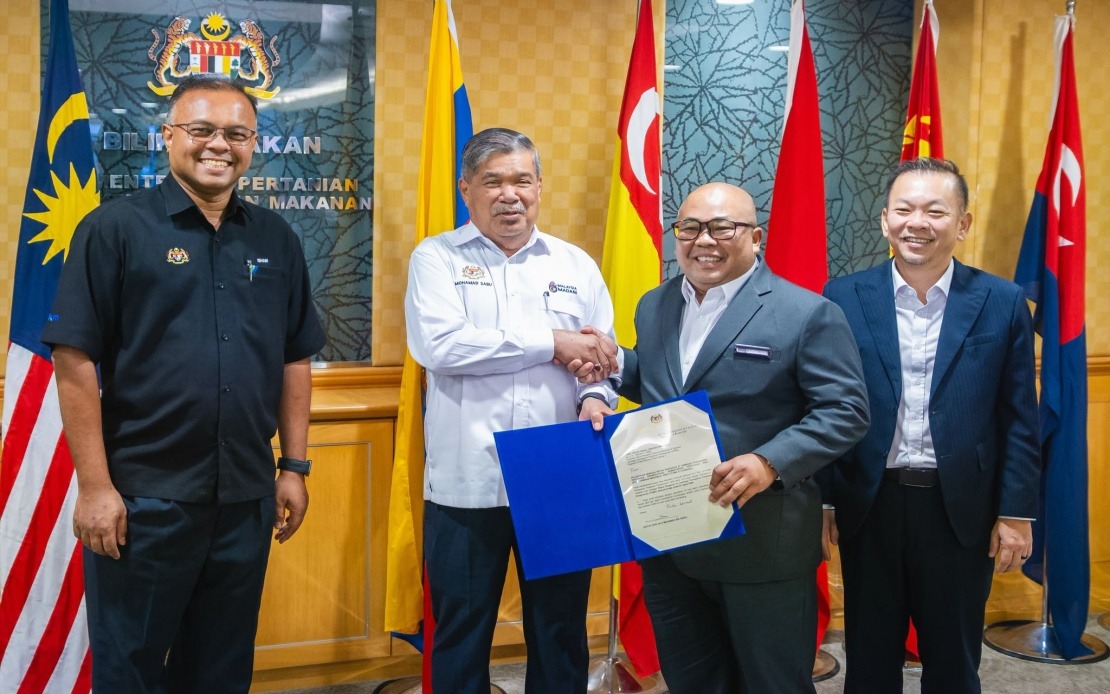
Faisal Iswardi Ismail has assumed the top position at the Federal Agricultural Marketing Authority, with his appointment taking effect from August 1. The elevation of the deputy director-general for food security and operations was formally confirmed when Agriculture and Food Security Minister Datuk Seri Mohamad Sabu presented the appointment letter following a Cabinet meeting in Kuala Lumpur on August 5.
The appointment represents a natural progression within FAMA's leadership structure, bringing to the helm someone with established experience in the agency's critical food security and operational functions. Ismail's previous portfolio directly oversaw the coordination of food supply chains and market operations, positioning him with intimate knowledge of the authority's strategic priorities and operational challenges.
In announcing the decision, Mohamad Sabu extended his congratulations to Ismail and highlighted the significance of the role within Malaysia's broader agricultural development framework. The minister emphasised that FAMA operates at the nexus of several interconnected national priorities, serving as a crucial intermediary between producers and markets while simultaneously supporting rural livelihoods and economic resilience.
The FAMA directorship carries substantial responsibility across the domestic agricultural ecosystem. The authority functions as the principal government agency tasked with facilitating the commercialisation of local farm produce, from fruit and vegetable exports to processed food products. In an era of heightened global food security concerns and volatile commodity markets, the director-general must navigate complex logistics, quality assurance protocols, and market access negotiations that directly impact thousands of farming families across Malaysia.
Modern FAMA operations extend beyond traditional commodity marketing into supply chain strengthening and value addition initiatives. The authority has increasingly engaged with agribusiness entrepreneurs seeking to develop branded Malaysian agricultural products for domestic and international consumption. Ismail's appointment during this period signals ministerial commitment to continuity in strategic direction while potentially introducing fresh perspectives on emerging challenges such as climate adaptation in agriculture and digital transformation of market systems.
The emphasis in Mohamad Sabu's statement on strengthening the agricultural supply chain reflects ongoing government focus on building resilience against disruptions. Recent global experiences have underscored vulnerabilities in food systems, prompting policymakers across Southeast Asia to reconsider dependencies on imports and invest in domestic production capacity. FAMA's role in this recalibration has expanded considerably, requiring leadership capable of balancing commercial efficiency with national food security imperatives.
Farmer income enhancement, identified by Mohamad Sabu as a core FAMA mandate, remains contentious in Malaysian agricultural discourse. Despite government support programmes, smallholder farmers consistently struggle with margin compression driven by middleman costs and price volatility. FAMA's success in narrowing the gap between farm-gate and retail prices, while maintaining market efficiency, will significantly influence both rural prosperity and urban food affordability—twin policy objectives often in tension.
Ismail's transition from deputy to director-general also carries implications for succession planning at the agency. FAMA's institutional depth depends on a strong pipeline of qualified personnel capable of managing increasingly technical dimensions of agricultural commerce, from pesticide residue certification to traceability systems and digital marketplace platforms. How the ministry addresses the vacancy created by Ismail's promotion will reflect its confidence in developing talent within the agricultural bureaucracy.
The timing of this leadership change coincides with Malaysia's deeper engagement in regional agricultural trade frameworks. As ASEAN nations negotiate trade agreements and coordinate food security responses, FAMA's director-general serves as a key interface between domestic producers and regional market opportunities. Ismail's mandate will likely include exploring value chain collaborations across Southeast Asia while protecting local farmer interests against larger regional competitors.
Mohamad Sabu's invocation of traditional blessings—requesting that "all affairs be made easy" for Ismail—reflects the acknowledgment that the role demands not merely administrative competence but sustained commitment to reconciling multiple stakeholder interests. Agricultural development inherently involves balancing farmer welfare, consumer affordability, environmental sustainability, and commercial viability. No directorship at FAMA can succeed without dexterity across these domains and political astuteness in managing competing pressures from commodity groups, retail associations, and rural constituencies.

