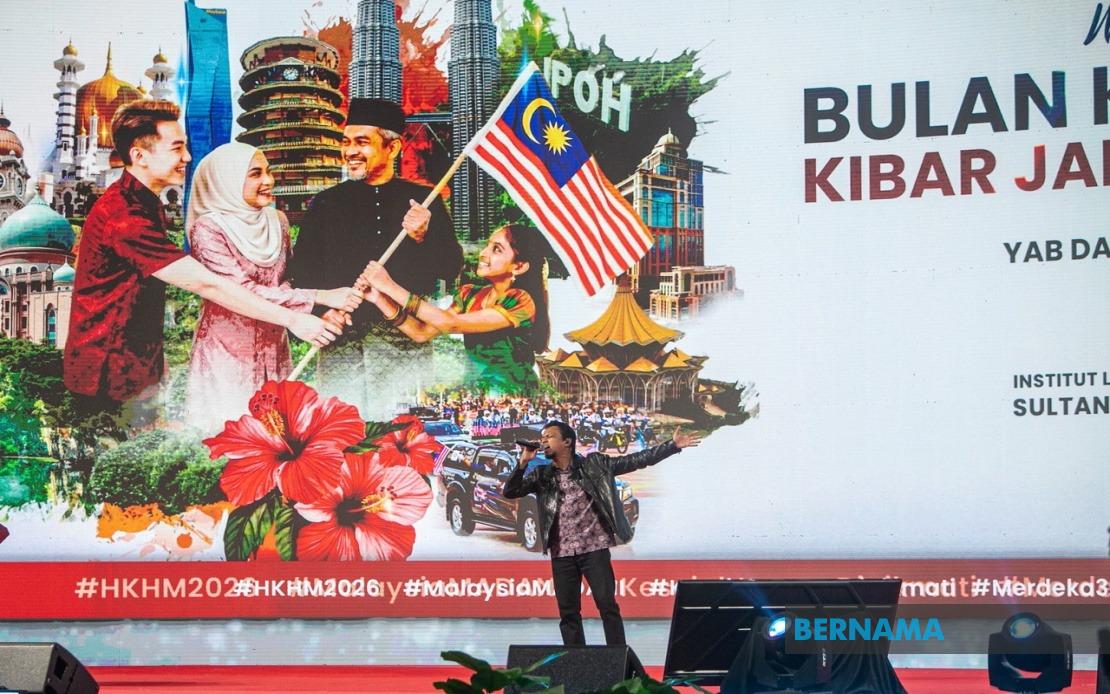
Singer-songwriter Faizal Tahir has been honoured with the selection of his composition 'Aku Berjanji' as the official theme song for Malaysia's National Month celebrations in 2026. The track was publicly unveiled at the launch of the National Month and Fly the Jalur Gemilang Campaign 2026, held at the Sultan Azlan Shah Ministry of Health Malaysia Training Institute in Kuala Lumpur today.
The two-minute-29-second song represents a collaborative effort between Faizal and his production team, with approximately one month dedicated to its creation and refinement. The artistic concept of developing a composition centred on national pride and patriotic sentiment crystallised around May, according to the musician. The finished product integrates themes of collective strength, national cohesion, and fervent love for Malaysia as a means of preserving the country's independence and standing.
Faizal expressed his gratification at being entrusted with this responsibility, particularly given his extensive history in the Malaysian entertainment sector. Speaking to journalists after the ceremonial event, he noted that this achievement marks a meaningful contribution nearly two decades into his professional career. The selection underscores the enduring relevance of music as a unifying cultural force in national discourse, and Faizal anticipates that his composition will resonate with Malaysians from diverse backgrounds.
The choice of 'Aku Berjanji' reflects an intentional strategy to employ popular music as a vehicle for reinforcing national identity during Malaysia's annual patriotic commemorations. By commissioning contemporary artists whose work already enjoys widespread appeal, organisers aim to ensure that patriotic messaging reaches younger demographics and urban populations who might otherwise engage peripherally with traditional ceremonial formats. This approach acknowledges the significant role that entertainment figures and popular culture play in shaping civic consciousness within modern Malaysia.
Faizal Tahir's trajectory in Malaysian popular music provides relevant context for this appointment. His prominence in the domestic music industry was substantially elevated following his runner-up finish in the reality television programme 'One In A Million' in 2006, a platform that historically served as a launching pad for emerging vocalists. His subsequent career developments and continued relevance in the competitive local music market made him a logical choice for crafting content that needed both artistic credibility and mainstream appeal.
The National Month campaign itself carries symbolic weight in Malaysia's annual calendar, providing an opportunity for citizens to reflect on shared values and collective aspirations. The Fly the Jalur Gemilang initiative specifically encourages public displays of the national flag and overt expressions of patriotism. Through musical accompaniment, the campaign gains an additional dimension of emotional resonance, as songs can distil complex notions of national pride into memorable melodic forms that become embedded in public consciousness throughout the celebratory period.
For the broader Malaysian music industry, the commissioning of established local artists for official national projects provides both validation and economic opportunity. It signals continued investment in homegrown talent rather than reliance on imported compositions or international performers, thereby strengthening the domestic creative sector. This approach also carries subtle political messaging, reinforcing the government's commitment to nurturing Malaysian cultural industries and positioning them as essential components of national soft power.
The selection process for national theme songs typically involves consultation among government ministries, cultural authorities, and entertainment industry stakeholders. The appointment of Faizal Tahir suggests that his artistic credentials and demonstrated ability to craft commercially accessible yet substantive compositions met rigorous evaluation criteria. The composition's thematic focus on unity and patriotic dedication aligns with broader messaging priorities for the 2026 National Month celebrations.
Faizal's emphasis on the unifying potential of music reflects a broader understanding within Malaysian cultural policy that arts and entertainment serve functions beyond mere entertainment value. Music possesses unique capacity to transcend linguistic, religious, and ethnic boundaries that can otherwise segment Malaysian society, making it a particularly effective medium for articulating inclusive visions of national identity. By positioning 'Aku Berjanji' as a vehicle for bringing Malaysians together through artistic expression, organisers leverage the inherent emotional and social dimensions of popular music.
The unveiling of the theme song at an official government training institute rather than a conventional entertainment venue signals the formal, institutional nature of the patriotic initiative. The Sultan Azlan Shah Institute's association with public health administration adds an interesting institutional context, suggesting that patriotic messaging and civic consciousness-building are understood as integral to broader government communications across multiple sectors.
Looking forward, the prominence given to 'Aku Berjanji' throughout the 2026 National Month period will likely significantly enhance Faizal Tahir's profile both domestically and potentially within Southeast Asia. Extensive broadcast on national media, government-endorsed promotion, and integration into official ceremonies will provide unparalleled exposure. This symbiotic relationship between government and entertainment industry figures demonstrates how cultural projects serve mutual interests in maintaining national cohesion while simultaneously advancing the professional ambitions of participating artists.

