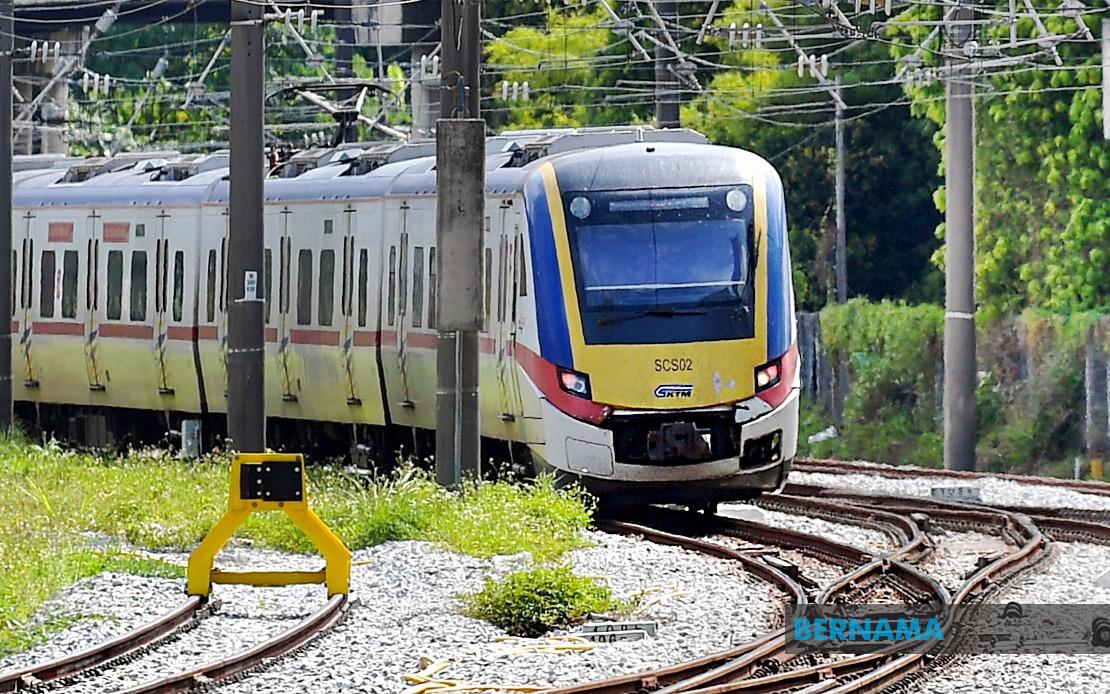
The morning commute in Malaysia's most densely travelled railway corridor turned chaotic when a wooden structure from an uncontrolled construction site collided with the overhead power system near Batang Benar station on July 23. The incident promptly disabled both KTM Komuter and Electric Train Service operations across a significant stretch of the Klang Valley network, leaving tens of thousands of commuters scrambling for alternative transport as KTMB initiated immediate remedial measures.
Keretapi Tanah Melayu Berhad confirmed that the wayward structure struck the overhead line infrastructure located between Batang Benar and Labu stations, severing the electrical supply needed to move trains along this critical commuter corridor. The damage proved substantial enough to force a complete suspension of all train movements across the affected section, preventing services from operating according to their normal timetables and leaving the rail operator with limited options for managing the transport bottleneck that inevitably followed.
The operational ramifications cascaded across the network immediately. Komuter services originating from Pulau Sebang and destined for KL Sentral now terminate prematurely at Seremban Station, whilst trains running towards either KL Sentral or Batu Caves only commence operations from Bangi Station onwards. This effectively quarantined the segment between Bangi and Seremban, rendering those stations completely isolated from train service until power restoration could be accomplished. The disruption affected one of Malaysia's busiest transportation arteries, creating significant hardship for the hundreds of thousands who depend on rail connectivity for their daily economic activities.
KTMB responded by establishing a coordinated shuttle bus network to maintain connectivity between the stranded stations. Three dedicated buses were assigned to circulate between Seremban, Tiroi, Batang Benar, Labu and Bangi, offering commuters an interim solution despite the inevitable delays and congestion such arrangements produce. For longer-distance passengers relying on the ETS system, seven additional shuttle buses were positioned at major terminals including KL Sentral, Bandar Tasik Selatan, Kajang and Seremban, though such ground-based solutions cannot match the efficiency of electrically powered trains moving at speed across longer distances.
The operator also extended financial protection to affected ETS passengers, announcing that those choosing not to continue their journeys from their original departure stations would receive complete reimbursement of ticket fares. This decision, whilst reducing passenger losses, represented a significant financial hit for KTMB and acknowledged the genuine hardship imposed upon travellers forced into entirely changed circumstances through no fault of their own. The gesture underscored the severity of the disruption and KTMB's recognition that compensation could not truly restore the time and inconvenience lost by affected commuters.
Investigations into the incident quickly identified systemic failures in construction site safety protocols. KTMB attributed the incident directly to a Public Works Department contractor engaged on a wayleave project who demonstrably failed to observe mandatory safety procedures required when working adjacent to active railway infrastructure. The contractor had neglected to furnish a comprehensive work schedule and failed to communicate to KTMB the precise timing of bridge construction activities on the day of the incident, creating conditions where monitoring and protective measures could not be adequately implemented.
The regulating framework governing such operations demands rigorous coordination. According to KTMB's established Site Entry Permit Standard Operating Procedure, when construction works receive full approval and all documentation is submitted, three technical representatives must physically remain on-site throughout the operation. These specialists—drawn from the Regional Engineer, Signalling and Communications, and Electrification departments—serve critical monitoring functions intended to prevent exactly this category of incident. The contractor's failure to trigger this mandatory oversight protocol directly enabled the structural collapse.
The incident exposes persistent vulnerabilities in the enforcement of construction safety standards around critical infrastructure assets. Despite established procedures and documented protocols, third-party contractors continue to operate without adherence to required safeguards, suggesting either insufficient penalties for non-compliance or inadequate supervision mechanisms. For Malaysia's rail network, which sustains millions of daily journeys and carries enormous economic significance, such lapses represent unacceptable risks that demand corrective intervention at both the contractual and regulatory enforcement levels.
KTMB's technical teams immediately mobilised repair operations focused on restoring the damaged overhead line system, the essential prerequisite for resuming electrical train operations. The restoration timeline remained uncertain during the initial operational period, though the operator committed to expedited remediation efforts. Such overhead power infrastructure typically requires specialist equipment and trained personnel, meaning repairs cannot be rushed despite the pressing operational demands to restore service.
The disruption highlighted Malaysia's ongoing vulnerability to single-point failures within its transportation infrastructure. Unlike diversified networks with redundant capacity, the Klang Valley rail system lacks alternative routes capable of absorbing traffic displaced by individual line failures. When major corridors become disabled, the entire system strains under concentrated demand, with ripple effects extending across the metropolitan region's road networks as diverted commuters seek alternative transport modes. This structural limitation suggests that future planning must prioritise network redundancy to enhance resilience against both accidents and planned maintenance requirements.
For commuters navigating the disrupted system, KTMB directed passengers toward official social media platforms and on-site station staff for the most current service updates. Given the unpredictability of restoration timelines during complex infrastructure repairs, such communication channels proved essential for helping travellers make informed decisions about journey planning and alternative routing. The incident underscored how modern transport disruptions amplify demand for real-time information systems capable of rapidly disseminating accurate updates across multiple platforms.
The broader implications extend beyond the immediate operational inconvenience. The incident demonstrates that construction activities near railway infrastructure require substantially stronger enforcement mechanisms, clearer contractor accountability, and potentially financial penalties sufficient to deter non-compliance with established safety protocols. As Malaysia continues expanding rail networks and undertaking major infrastructure projects, ensuring that construction works do not jeopardise operational safety must become a non-negotiable priority addressed through both contractual terms and active regulatory oversight.

