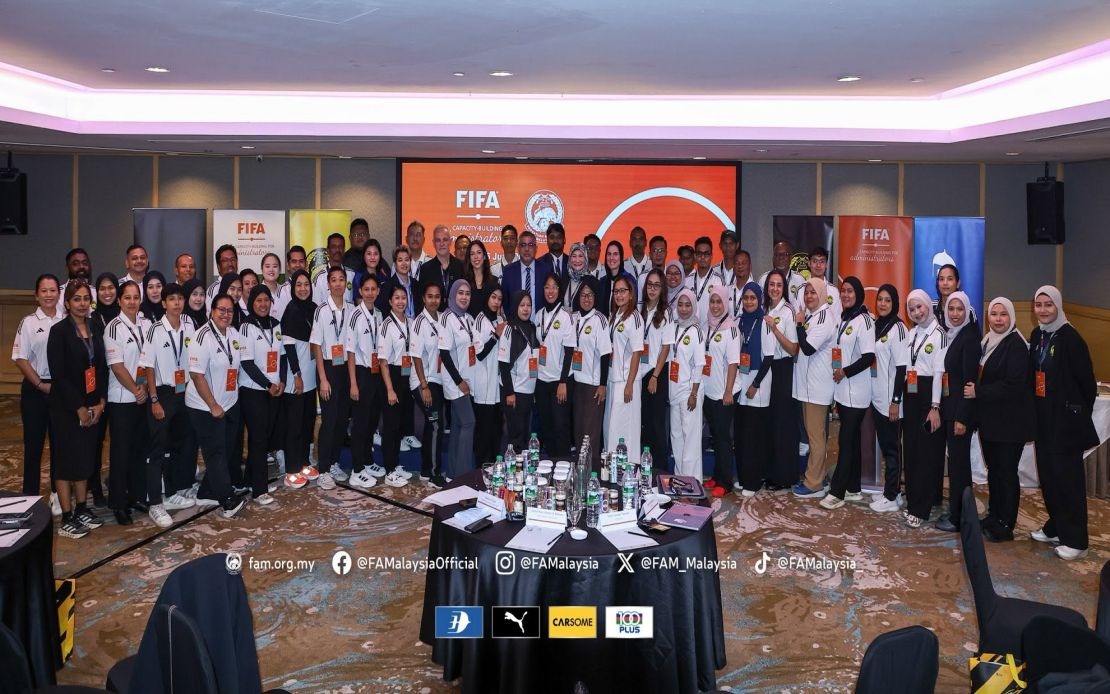
The Football Association of Malaysia has initiated a comprehensive development programme designed to bolster the administrative backbone of women's football in the country. Conducted jointly with FIFA, the Capacity-Building For Administrators 2026 programme represents a strategic pivot towards professionalising the support systems that underpin Malaysia's women's football ecosystem. Launched in Kuala Lumpur on June 23, the initiative underscores FAM's recognition that sustainable growth in the sport extends far beyond technical prowess on the pitch and demands robust governance structures off it.
The four-day training scheme brings together two FIFA Women's Football Development Experts, Safia Abdeldayem and Pema Choden Tshering, to guide Malaysian football administrators through a structured curriculum. Rather than concentrate solely on coaching methodologies or playing techniques, the programme acknowledges a critical gap in Malaysia's women's football development—the need for qualified managers and administrators equipped with contemporary best practices in sports administration. This thematic focus reflects a wider regional and global trend in which federations are investing in institutional capacity as a prerequisite for competitive improvement.
Participants will engage with multiple specialised modules spanning Women's Leadership, Women's Competition frameworks, Club and Players' Rights, and Strategic Planning. These areas form an interconnected foundation upon which sustainable football operations depend. The Women's Leadership component addresses the persistent underrepresentation of females in decision-making roles across Asian football—a structural challenge that Malaysian stakeholders have identified as an impediment to holistic sector development. By cultivating a cohort of trained administrators, FAM aims to create pathways for greater female representation in governance positions, thereby reshaping the institutional culture of football administration locally.
The Women's Competition module equips participants with knowledge about tournament structures, regulatory frameworks, and operational protocols essential for managing competitive football at various levels. Understanding these mechanisms is particularly important for Malaysia, where the domestic women's league system and national team pathways have undergone significant restructuring in recent years. Enhanced administrative competency should facilitate smoother execution of competitions and clearer communication between clubs, players, and the governing body. Similarly, the Club and Players' Rights segment addresses legal and welfare dimensions of football operations—contract management, dispute resolution, and player protection standards that align with international norms.
Strategic Planning modules will enable team management personnel to develop longer-term roadmaps for their organisations, moving beyond reactive, season-by-season approaches to proactive, vision-driven institutional development. This capability is particularly valuable for Malaysian clubs operating within resource constraints typical of Southeast Asian football, where strategic thinking can optimise limited budgets and identify competitive advantages. By teaching participants to establish measurable objectives and monitor performance metrics systematically, the programme facilitates more data-informed decision-making across women's football administration.
The attendance of senior FAM officials, including Secretary-General Datuk Noor Azman Rahman and FAM Women's Football Technical Director Soleen Al-Zoubi, signals institutional commitment to the initiative. The presence of Datuk Suraya Yaacob, who serves on both FIFA's Women's National Team Competitions Committee and the AFC Women's Football Committee, connects Malaysia's domestic programme to broader regional and global conversations about women's football development. This multi-level engagement suggests that the initiative will yield insights applicable beyond Malaysia and potentially contribute to AFC's strategic dialogue on elevating women's football across Asia.
FAM's emphasis on developing skilled administrators reflects a sophisticated understanding that women's football in Malaysia faces distinct challenges compared to the men's game. Women's football historically receives less institutional support, media attention, and commercial investment in Malaysia, necessitating more efficient administration to maximise impact from available resources. By professionalising administrative staff, FAM can improve transparency, reduce operational inefficiencies, and enhance the credibility of women's football governance—factors that influence player satisfaction, fan engagement, and potential sponsor interest.
The programme's positioning within FIFA's broader women's football development agenda indicates that Malaysia is aligning with international best practices and quality standards. FIFA's emphasis on women's football development reflects both its commitment to gender equity in sport and recognition that competitive improvement in women's football requires systemic investment beyond playing talent. Malaysia's participation in a FIFA-accredited programme signals the federation's willingness to adopt evidence-based approaches to women's football development rather than relying on ad-hoc initiatives.
From a regional perspective, Malaysia's investment in administrative capacity for women's football carries implications for Southeast Asian football development. As ASEAN nations increasingly compete for prominence in women's football—with Thailand advancing to the AFC Women's Asian Cup finals and Vietnam establishing a professional league—Malaysia must strengthen its institutional infrastructure to remain competitive. Administrative competency directly influences recruitment and player retention, which in turn affects team performance and regional standing. FAM's initiative therefore represents not merely a domestic concern but part of Malaysia's broader strategic positioning in Southeast Asian football.
The programme also reflects changing global attitudes towards women's football professionalism. Historically, women's football administration in developing regions often relied on volunteers or part-time administrators without formal training. By establishing accredited training pathways, FAM legitimises women's football administration as a professional career trajectory, potentially attracting more talented individuals to roles previously treated as secondary to men's football operations. This shift in institutional approach carries broader implications for how Malaysian society views women's participation in sports management and decision-making roles.
Looking forward, the success of this initiative will depend on whether FAM systematically integrates programme graduates into club and federation operations and whether the training translates into measurable improvements in operational efficiency, player welfare outcomes, and competitive performance. The programme's four-day duration may be a limitation—substantive change in administrative practice typically requires ongoing support, mentorship, and institutional reinforcement beyond the training period. FAM should consider developing follow-up mechanisms, alumni networks, and continuous professional development pathways to embed new competencies within Malaysian women's football structures.
The initiative also highlights opportunities for Malaysia to share regional expertise. As a founding member of the AFC and a established football nation, Malaysia could position itself as a centre for administrative training and best-practice dissemination across Southeast Asia. By documenting and promoting the outcomes of this FIFA programme, Malaysia could contribute to raising administrative standards across the region and strengthening its role in regional football development discourse.