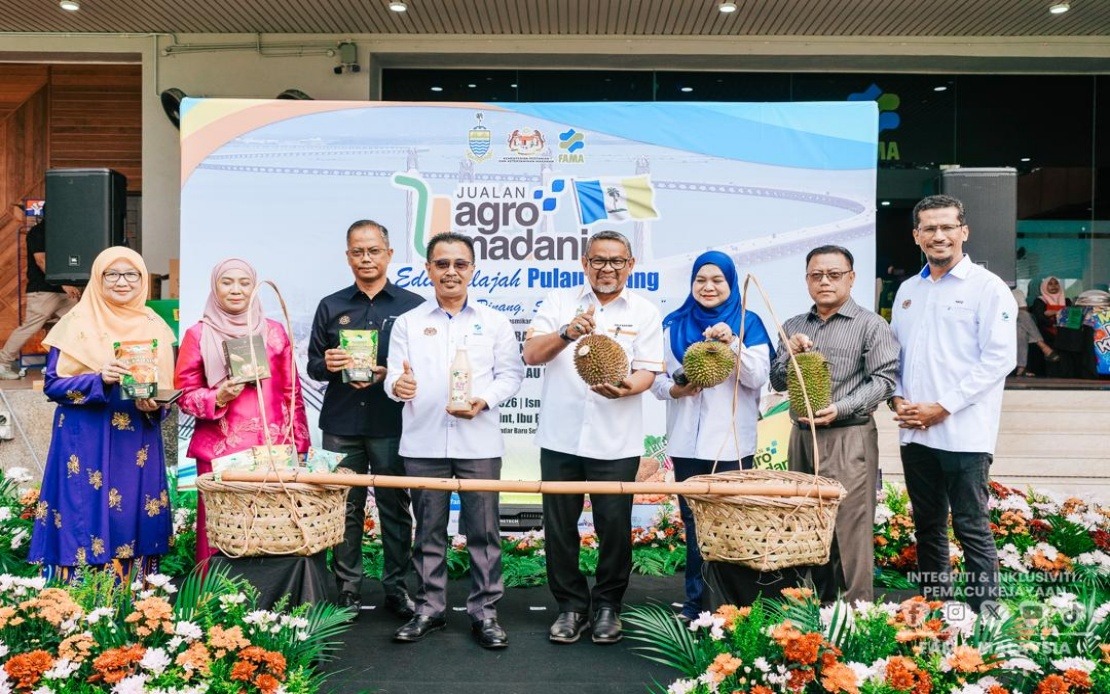
The Federal Agricultural Marketing Authority's flagship Agro MADANI Sales programme has emerged as a significant driver of agricultural commerce in Malaysia, generating RM46.72 million in revenue across 1,833 events conducted nationwide during the January to May period. The initiative represents a strategic approach to modernising the nation's agri-food sector by creating direct market channels that benefit both producers and consumers, bypassing traditional middlemen and creating tangible value throughout the supply chain.
FAMA officials characterise the programme as instrumental in fulfilling the agency's broader mandate to strengthen Malaysia's agri-food marketing infrastructure while simultaneously expanding entrepreneurial opportunities across the agricultural spectrum. By facilitating direct transactions between growers, producers, and end consumers, the platform addresses a persistent challenge in Southeast Asian agriculture: the difficulty small-scale operators face in achieving market penetration and maintaining profitability in an increasingly competitive environment. This approach aligns with regional trends toward farm-to-table models that emphasise transparency, sustainability, and fair pricing for all stakeholders involved.
The Penang edition, conducted in collaboration with the state government at FAMA's Selayang headquarters, exemplifies how the programme extends beyond major commercial centres to strengthen agricultural economies in regional states. By mobilising 45 sales lots involving 30 Penang-based entrepreneurs, the event demonstrated the scalability of FAMA's model across Malaysia's diverse geographic and economic landscape. The programme's projected target of attracting 2,000 visitors and achieving RM100,000 in sales underscores the consistent demand for quality, locally-sourced agricultural products among Malaysian consumers increasingly conscious of food origins and production standards.
The product range featured at the Penang iteration reflects the state's established reputation as a major agricultural producer, with premium offerings including Balik Pulau durians across multiple varieties—Black Thorn, Red Prawn, and Hor Lor—alongside Cempedak King and other specialty fruits commanding premium market positioning. This curated selection strategy distinguishes FAMA's approach from generic marketplace concepts; by emphasising provenance and quality differentiation, the programme elevates participating entrepreneurs beyond commodity-based competition and enables them to capture market segments willing to pay price premiums for authenticated, regionally-branded products.
The integration of culinary experiences, featuring iconic Penang delicacies such as nasi kandar, Penang laksa, char kuey teow, mee sotong, and air sarbat, represents a strategic value-addition mechanism that transforms the marketplace into an experiential destination rather than a transactional venue. This approach generates ancillary economic benefits for food service entrepreneurs while simultaneously strengthening emotional connections between consumers and regional agricultural identities. For Malaysian readers, particularly those in urban areas increasingly separated from agricultural production, such experiences reinforce awareness of the diverse food systems supporting their daily consumption.
The Penang Rural Development, Agrotechnology, Food Security and Cooperatives Committee's involvement through Exco Datuk Rashidi Zinol, alongside partnership with the Penang Bumiputera Development Council, illustrates how FAMA coordinates with state-level governance structures to amplify programme impact. This multi-agency approach addresses a critical gap in Malaysian agricultural development: the coordination challenge between federal marketing initiatives and state-level entrepreneurship support mechanisms. By aligning these efforts, the programme creates comprehensive support ecosystems that extend beyond sales facilitation to encompass business development and market strategy guidance.
The emphasis on Bumiputera entrepreneur development within the Penang framework reflects Malaysia's continued policy commitment to ensuring equitable economic participation, particularly within agricultural sectors where indigenous populations have historically maintained significant engagement. The joint entrepreneurship development initiative represents targeted infrastructure investment designed to overcome structural barriers that Bumiputera operators frequently encounter when attempting to scale operations or access established distribution networks. For Southeast Asian observers, this model demonstrates how targeted inclusive-growth policies can be operationalised through concrete marketplace mechanisms rather than remaining theoretical policy statements.
The achievement of RM46.72 million across five months projects an annualised revenue trajectory exceeding RM110 million, suggesting substantial economic circulation within Malaysia's agricultural entrepreneurship ecosystem. However, the true significance extends beyond gross sales figures to encompass market development, brand building, and network expansion that accrue to participating entrepreneurs through repeated event participation. Each marketplace iteration builds upon previous customer relationships and brand awareness, creating cumulative competitive advantages for local operators competing against larger, capital-intensive agricultural enterprises.
For Malaysian consumers, particularly those navigating inflationary pressures on food costs, the programme's explicit objective of maintaining product affordability while ensuring quality represents a direct intersection between macroeconomic policy and household purchasing power. By eliminating intermediary markups and reducing transportation distances between producer and consumer, the marketplace structure inherently constrains price escalation while maintaining producer margins. This efficiency gain addresses a persistent concern in Malaysian consumer discourse regarding agricultural pricing transparency and the distribution of value across supply chains.
The nationwide scope of 1,833 events across the five-month period indicates systematic expansion rather than concentrated initiative, suggesting FAMA has developed operational capacity to maintain consistent programme delivery across Malaysia's geographically dispersed agricultural zones. This logistical achievement carries implications for rural economic development, as repeated marketplace exposure attracts producer investment in quality improvement, packaging standardisation, and product innovation intended to capture consumer preferences revealed through direct marketplace interactions. The feedback mechanisms inherent in farmer-consumer engagement generate market intelligence that centralised import-dependent distribution systems cannot replicate.
Looking forward, the programme's trajectory suggests potential for regional expansion within Southeast Asia, where similar challenges regarding agricultural value capture and rural income stability persist across neighbouring countries. Malaysia's experience with FAMA's marketplace model could inform policy development in Indonesia, Thailand, and Vietnam, where agricultural modernisation initiatives seek to balance commercial efficiency with rural livelihood protection. The documented success in generating both sales volume and entrepreneur development outcomes provides evidence-based foundation for replicating such mechanisms across the region's diverse agricultural contexts and policy environments.

