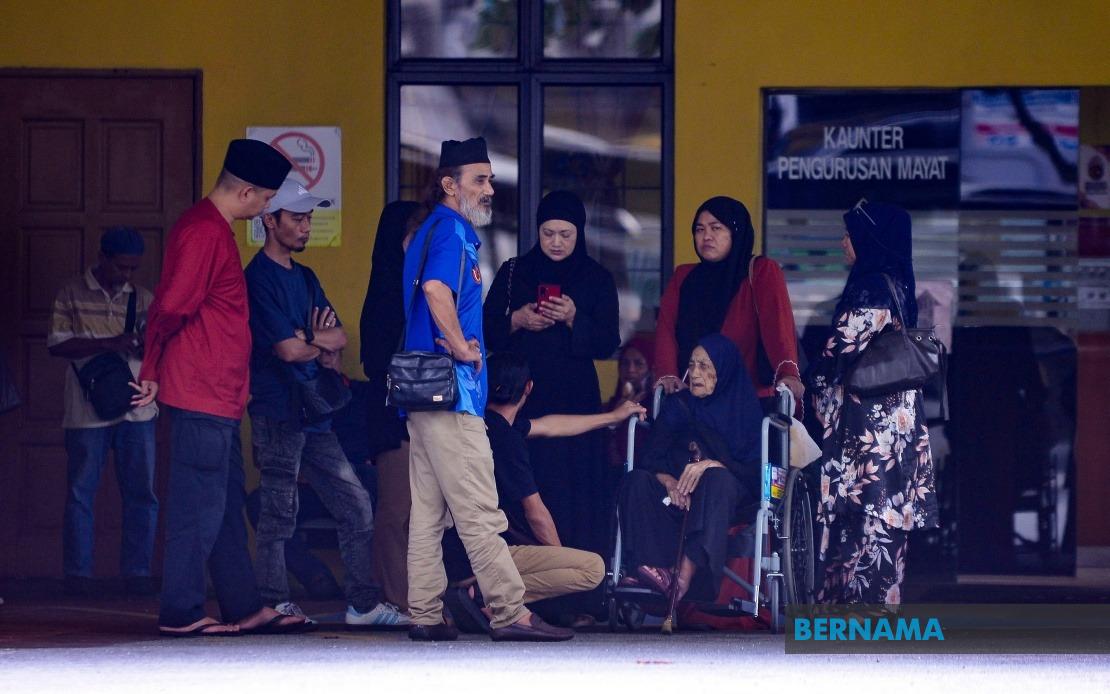
A grieving family member is pushing authorities to conduct a thorough and open investigation into a fatal traffic collision that claimed three lives at Maju Junction in the early hours of the morning, as questions mount over whether the Immigration Department lorry involved disregarded traffic signals at the intersection.
Mohd Nadzri Razali, 69, whose brother-in-law Shaik Mohd Firdaus Shaikh Yahya died in the incident, is insisting that justice demands a full accounting of what happened. Speaking from his home in Taman Aman Fasa 2, Mambang Di Awam, Mohd Nadzri expressed concerns about reports suggesting the lorry may have proceeded through a red light, a critical detail that could determine culpability in the crash.
The collision, which unfolded around 1 am near the Maju Junction intersection, has cast a shadow over the family's already strained circumstances. Shaik Mohd Firdaus, 53, perished along with his daughters Siti Nor Sazlin, 25, and Siti Darwisyah Auni, 12. His wife Norhayati Razali, 55, remains hospitalized in the Intensive Care Unit at Kuala Lumpur Hospital, where she is slowly recovering. The family, which resides in the same neighbourhood where Mohd Nadzri lives, has endured compounded trauma, having lost another relative just three months earlier on May 30.
According to witness accounts and preliminary findings, an empty Isuzu Black Maria lorry operated by the Immigration Department was navigating through the intersection on its way to Chow Kit to participate in an operation targeting undocumented migrants. The vehicle had originated from the Kuala Lumpur Immigration Office and had its beacon lights and siren activated. As the lorry entered the junction, a Proton Saga travelling on a perpendicular street with a green traffic signal struck the larger vehicle, unable to avoid the collision in the split seconds available.
The impact of the crash sent the Immigration Department lorry skidding violently out of control through the intersection. In its destructive path, the lorry struck down four pedestrians from the same family who were in the vicinity, along with an Inokom Matrix multi-purpose vehicle. The force of the collision proved fatal for the three members of the Shaik Mohd Firdaus household, while his wife sustained injuries severe enough to warrant intensive care admission. The tragic incident has raised broader concerns about safety protocols governing government vehicles operating in urban environments, particularly when conducting urgent operations.
Mohd Nadzri expressed hope that authorities would permit his sister Norhayati to be transferred to Hospital Ipoh or Teluk Intan for continued treatment, pending her medical condition and the discretion of her attending physicians. He revealed that she has regained consciousness following the crash, marking a positive development amid the tragedy, though her long-term prognosis remains uncertain at this stage.
The family has made preliminary arrangements to inter all three deceased members in a single grave at the Muslim Cemetery in Kampung Air Hitam Labu, Campar, a decision reflecting both cultural and practical considerations in their time of grief. Mohd Nadzri recalled seeing his sister and her family alive just two weeks before the collision, when they had travelled together to clean family graves at Teluk Bakong in Ayer Tawar, a routine observance that now carries profound poignancy.
The tragic circumstances surrounding the crash highlight the broader intersection of road safety, emergency vehicle operations, and pedestrian vulnerability in urban areas. When government vehicles activated with emergency equipment such as beacons and sirens traverse city streets, the assumption among other road users is that such vehicles will navigate intersections with heightened caution and adherence to traffic regulations, not disregard them. The allegation that the Immigration Department lorry proceeded through a red light suggests a potential breakdown in either driver judgment or operational protocols that may require systematic review across government fleet operations.
Police investigators have classified the incident under Section 41(1) of the Road Transport Act 1987, a provision dealing with rash or negligent acts that result in injury or death. The investigation will likely examine multiple variables including vehicle maintenance records, driver training and licensing status, visibility conditions at the scene, timing of traffic signals, activation and functioning of the lorry's emergency equipment, and adherence to operational procedures governing such vehicles during official duties. Each element carries significance in determining whether this represents a tragic accident or negligence warranting criminal accountability.
For the extended family and community observing this tragedy, the investigation carries implications extending beyond this single incident. Road accidents involving government vehicles demand particular scrutiny because they involve assets and personnel operating under official sanction and public authority. The transparency that Mohd Nadzri is advocating for serves not merely as balm for individual grief but as a safeguard for the broader public, signalling that accountability applies equally regardless of whether the vehicle involved is privately or government-owned.

