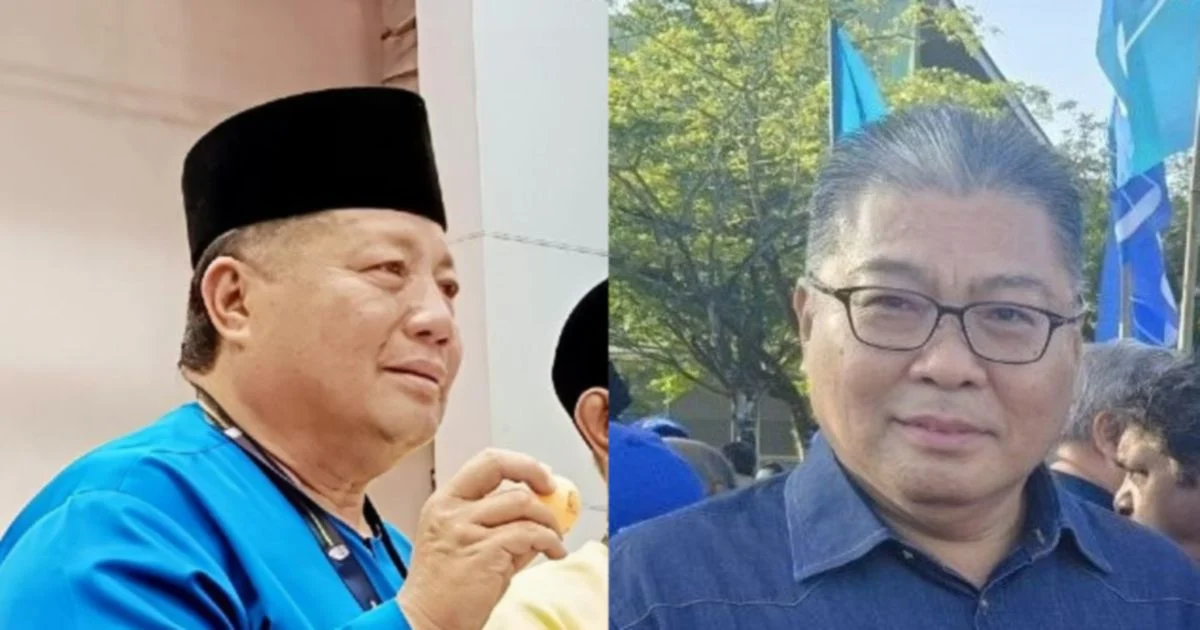
The Johor state election has crystallized one of Malaysia's enduring political tensions: the split loyalty between family bonds and partisan commitment. In Kahang, this dynamic takes on personal significance as Datuk Maulizan Bujang, the former chief of Tebrau's Umno division, publicly extended his best wishes to his younger sibling Mazlan, who is running as a Perikatan Nasional candidate in the same constituency. Their competing campaigns represent not just a local electoral struggle but also the broader realignment shaking Malaysian politics as Umno and PN navigate increasingly fraught territorial and ideological terrain.
Maulizan's gracious acknowledgment of Mazlan's candidacy underscores a reality that often escapes the heated rhetoric of electoral campaigns: kinship and political allegiance can coexist as separate—if occasionally conflicting—spheres of commitment. By wishing his brother well despite their differing organizational affiliations, Maulizan demonstrates that personal respect need not evaporate when politicians occupy opposite sides of the competitive divide. This gesture carries particular weight in Malaysian political culture, where family networks have historically functioned as foundational structures within party machinery, making inter-familial political divisions potentially more jarring than in contexts where politics remains more separated from kinship networks.
The Kahang contest itself sits within a broader struggle for dominance in Johor's political landscape. The state has witnessed significant realignments since the 2018 general election, with traditional Umno strongholds increasingly contested by PN-affiliated parties and other opposition groupings. Kahang, situated within this volatile terrain, exemplifies the competitive intensity characterizing state elections across Malaysia as the post-Muhyiddin political environment continues to unfold. Neither Umno nor PN can afford complacency in constituencies they previously controlled or aspired to capture, making every individual seat a potential turning point in state-level power calculations.
Maulizan's previous role as Tebrau division chief indicates his standing within Umno's organizational hierarchy. Former divisional leaders typically retain considerable influence and grassroots credibility long after stepping down from formal positions, potentially affecting campaign dynamics in surrounding areas. His public support for his brother, rather than remaining silent or endorsing alternative candidates, suggests a pragmatic recognition that family relationships transcend electoral outcomes. This approach contrasts sharply with instances elsewhere where political disagreements have strained or severed family connections, making his stance noteworthy within Malaysian political culture.
The dynamics of such sibling rivalry extend beyond personality or local ambition. Both Umno and PN are competing for electoral legitimacy and legitimacy among Johor voters, with each victory expanding their claim to represent community interests. When individual candidates happen to be brothers, the personal dimension inevitably intersects with these broader strategic calculations. Mazlan's PN candidacy suggests that Perikatan has identified Kahang as a winnable or vulnerable seat requiring competitive deployment of resources and candidates. Simultaneously, Umno's implicit challenge through its own candidate reflects the party's determination to retain or recapture ground it views as traditionally aligned with its political base.
Family-based political splits have become increasingly common across Malaysian electoral contests as traditional coalitional structures have fragmented. Where Barisan Nasional once dominated most constituencies with minimal serious challengers, contemporary elections frequently witness multiple candidates from different parties competing within single family units. This fragmentation reflects deeper tectonic shifts in Malaysian politics—the decline of monolithic party dominance, the emergence of new political vehicles like PN, and the growing willingness of voters to shift allegiances based on specific grievances or alternative visions of governance. Johor, as a large and electorally significant state, embodies these transformations acutely.
The Kahang constituency itself likely contains diverse voter preferences reflecting broader state-level patterns. Urban and rural sections may respond differently to Umno's developmental track record versus PN's reform messaging. Youth voters, particularly those in urban areas, may prioritize governance accountability or economic opportunity differently than older cohorts. Ethnic composition, religious demographics, and local infrastructure concerns all shape electoral calculations in ways transcending simple party loyalty. Within this complex landscape, Maulizan and Mazlan's respective campaigns must navigate constituent preferences that cannot be guaranteed through kinship networks or organizational heritage alone.
Maulizan's public goodwill toward Mazlan also reflects practical political wisdom. Contentious family disputes during campaigns can alienate voters who expect candidates to maintain dignity and restraint. By demonstrating magnanimity, Maulizan protects his own political reputation while potentially earning respect from voters across party lines who value civility and family values. This calculus differs from zero-sum competitive dynamics where personal attacks escalate and candidates demonize opponents. His approach suggests that electoral competition and personal civility need not be mutually exclusive, a lesson with broader resonance for Malaysian politics at a time when campaign discourse has occasionally descended into acrimony.
The broader implications of such familial political division warrant attention from observers tracking Malaysian electoral trends. If Johor's Kahang contest exemplifies patterns emerging across multiple constituencies, then future elections may feature increasingly frequent scenarios where kinship networks span partisan boundaries. This development could ultimately strengthen democratic resilience by deprioritizing tribal loyalty in favor of policy substance and performance evaluation. Conversely, it might create new vulnerabilities if family-based networks become vehicles for resource distribution or clientelist exchange across party lines, potentially compromising institutional integrity.
As Johor voters prepare to cast ballots in Kahang, they will ultimately decide which vision and candidate better represents their interests. The fraternal goodwill extended by Maulizan to Mazlan provides a humanizing context to electoral competition, reminding observers that even political rivalries occur within frameworks of personal relationship and shared background. Whether such civility prevails as campaigns intensify remains an open question, but the initial gesture demonstrates that Malaysian politics need not always be characterized by acrimony and irrevocable rupture.

