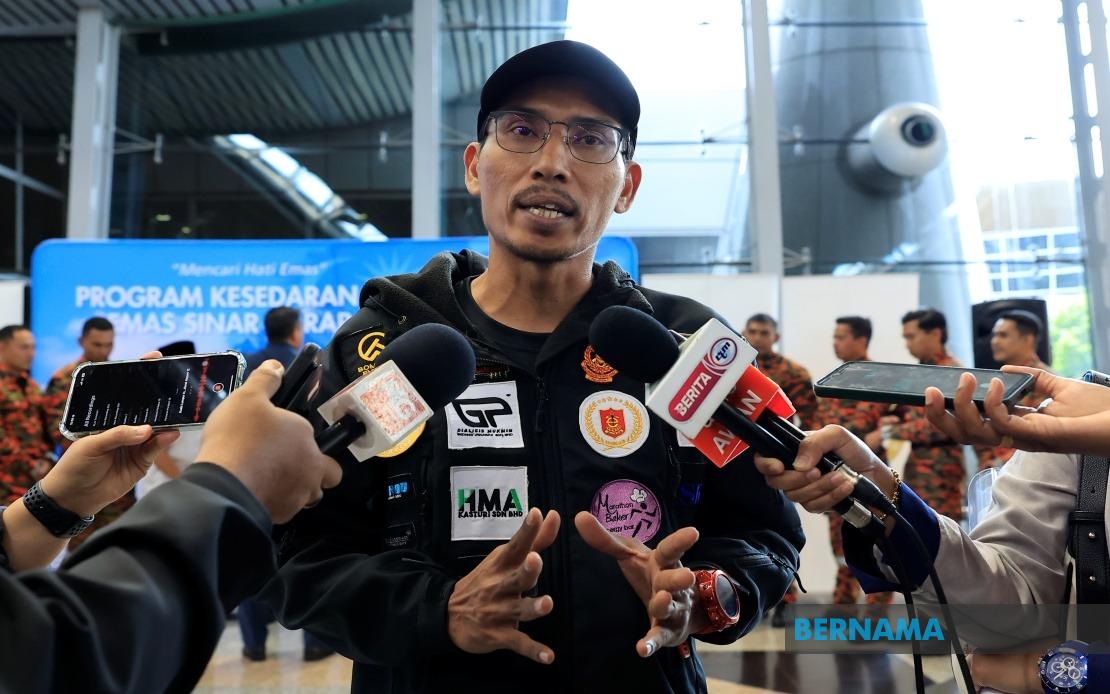
The family of Mohd Fakhrul Munir Mohd Isa, a 44-year-old member of Malaysia's Fire and Rescue Department's elite special forces unit, is clinging to hope that he and his climbing companions will emerge safely from the catastrophic flooding and landslides that struck Nepal's Rasuwa district. Despite communication falling silent since the disaster struck, relatives believe the communication blackout is simply a consequence of the natural disaster's severity rather than an indication of a tragic outcome.
Mohd Saiful Munir Mohd Isa, the missing firefighter's brother, conveyed the family's resolute optimism while acknowledging the gravity of their situation. Speaking to reporters near their home in Sik, the 46-year-old operations officer at Port Klang Fire and Rescue Station explained that the family has maintained a steady prayer vigil for his younger brother, known affectionately as Loe within climbing circles, and the nine other members of their expedition group. Saiful emphasised that despite maintaining hope, the family recognises the harsh reality that outcomes in such disasters can prove devastatingly unfavourable, and they are mentally and emotionally preparing themselves to accept whatever circumstances may ultimately unfold.
The missing firefighter's passion for mountaineering and outdoor pursuits is so deeply ingrained in his identity that his family views his regular expeditions to Nepal with equanimity rather than alarm. Saiful disclosed that his brother makes multiple trips to Nepal annually—typically between three and five journeys per year—pursuing climbing opportunities in the Himalayan nation, which has effectively become a second home base for him. Beyond mountaineering, Mohd Fakhrul Munir is an accomplished competitive cyclist, reflecting a lifestyle centred on physical challenge and adventure in remote natural environments. This extensive experience in high-altitude mountaineering and familiarity with Nepal's terrain had given the family confidence in his preparations and capabilities before his departure.
Contact with Mohd Fakhrul Munir ceased approximately one week before his family made public pleas for his safe recovery, coinciding with his departure from Malaysia for what was planned as a routine expedition towards Everest Base Camp. Saiful confirmed that his last conversation with his brother occurred during this departure window, and since then, no communication has been established. Based on the expedition's documented itinerary and planned route progression, the group was positioned within the valley regions of Rasuwa when the flash floods and associated landslides were triggered, effectively trapping the climbers in one of the disaster zone's most severely impacted areas.
The brother's characterisation of the situation emphasises the distinction between presumed tragedy and geographical isolation. Rather than fearing the worst, Saiful framed the scenario as one in which his brother and companions are fundamentally trapped by environmental catastrophe and lack the physical or technological means to communicate their status to the outside world. This interpretation suggests that rescue operations, if properly coordinated and resourced, retain potential for successful outcomes. Saiful expressed his commitment to relying exclusively on official communications from Malaysian authorities and international rescue coordination bodies, declining to speculate beyond the boundaries of verified information regarding his brother's location or circumstances.
The Malaysian Fire and Rescue Department has formally identified two of its personnel among the Malaysians whose fates remain undetermined following the Rasuwa disaster. Datuk Seri Nor Hisham Mohammad, serving as the department's director-general, confirmed that Mohd Sani Harul, a deputy director within the Planning and Research Division, and Mohd Fakhrul Munir Mohd Isa from the Central Region Academy, were both incorporated within the larger Malaysian expedition party targeting Everest Base Camp. Their professional positions within Malaysia's firefighting hierarchy underscore the tragedy's significance within institutional frameworks—both men held mid-to-senior leadership roles despite their individual involvement in high-risk recreational mountaineering.
The broader context of this incident extends beyond a single family's personal catastrophe. The expedition comprised a larger party of ten Malaysian nationals, most of whom had apparently established successful contact with authorities and organisations monitoring their welfare. The fact that exactly two fire and rescue department members remained uncontactable while other civilian mountaineers from the same group had reportedly communicated their status raises complex questions about the disaster's selective geographical impact and whether certain team members became separated or trapped in particularly devastated zones. Rasuwa district, located in Nepal's central highlands, experienced among the nation's most severe natural disasters in recent years, with flash flooding and cascading landslides destroying infrastructure, disrupting communication networks, and isolating remote mountain communities.
From a Malaysian perspective, this incident highlights the inherent risks associated with mountaineering expeditions to the Himalayas, even for experienced professionals from rescue services. The Fire and Rescue Department's engagement in such expeditions—whether as training, institutional development, or purely recreational activity—necessarily exposes personnel to significant environmental hazards beyond the controlled parameters of domestic fire and rescue operations. Nepal's monsoon season, which typically culminates in August, creates acute meteorological conditions that transform otherwise manageable mountain environments into zones of substantial geological instability. The timing of this disaster coincided with precisely these seasonal conditions, reminding adventure enthusiasts throughout Southeast Asia of nature's overwhelming force.
The family's public statements and the department's official acknowledgments reflect Malaysia's broader cultural and professional relationships with Nepal's mountaineering infrastructure. Decades of climbing activity by Malaysians in Nepal have established deep connections with Sherpa communities, guide services, and trekking operations. These networks, while generally reliable and professional, cannot insulate climbers from the fundamental risks of high-altitude mountaineering during hazardous weather conditions. The loss or incapacitation of experienced climbers—particularly those with professional emergency response backgrounds—underscores these universal vulnerabilities.
Research and information divisions within rescue services worldwide have recognised mountaineering expeditions as beneficial for institutional learning and employee development. However, this incident may prompt Malaysian authorities to reassess risk management protocols for personnel participation in such activities, particularly during seasons associated with elevated hazard levels. The involvement of a deputy director from the Planning and Research Division raises questions about whether such expeditions proceed under formal institutional sponsorship or represent personal leave activities, and whether departmental oversight mechanisms adequately account for the heightened risks that Nepal's monsoon season presents.
The Malaysian government and Fire and Rescue Department have presumably coordinated with Nepalese authorities and international mountain rescue organisations regarding search and recovery efforts. The Rasuwa district's remoteness and the scale of infrastructure damage from the disaster likely complicate rescue operations significantly. Terrain analysis, avalanche risk assessment, and the logistical challenges of deploying rescue personnel into freshly destabilised mountain environments create substantial operational difficulties. Nevertheless, international mountaineering rescue networks possess considerable expertise and resources for managing such emergencies, and Malaysian authorities have reportedly maintained engagement with these networks throughout the crisis.
The Mohd family's hope, while emotionally understandable and not unreasonable given communication blackout rather than confirmed fatalities, rests upon rescue personnel locating the group before environmental conditions further deteriorate or injuries become untreatable. As days pass and communication remains severed, the probability calculus shifts progressively toward increasingly tragic scenarios. Yet the family's insistence on maintaining hope and their deliberate avoidance of premature mourning reflects both the psychological resilience that personal catastrophes demand and the genuine uncertainty that surrounds any mountaineering disaster until definitive information emerges from rescue operations.

