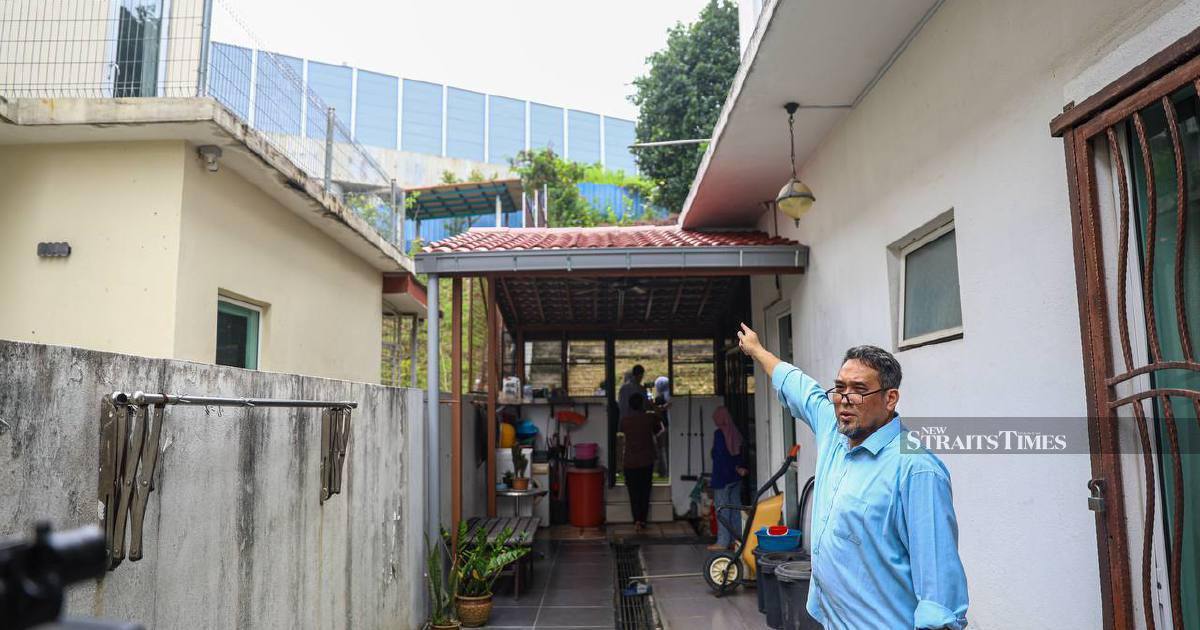
A Kuala Lumpur family has initiated legal action seeking RM1.33 million in compensation from three parties associated with the East Coast Rail Link (ECRL) project, contending that ongoing construction activities have rendered their residential property unsafe and structurally compromised.
The lawsuit highlights an emerging concern among residents whose homes lie in proximity to the ECRL corridor, one of Southeast Asia's most ambitious infrastructure initiatives. The mega-project, which aims to connect Port Klang in the west to Terengganu's port in the east, has traversed densely populated areas and raised questions about the adequacy of safety measures and compensation mechanisms for affected homeowners. The involvement of multiple parties in the case—construction contractors, project management firms, or other entities—underscores the complexity of assigning liability in large-scale infrastructure development.
Structural damage claims arising from construction projects are notoriously difficult to prove and adjudicate. Homeowners must demonstrate a direct causal link between specific construction activities and the deterioration of their properties, distinguishing between pre-existing defects and new damage caused by vibrations, excavation, pile-driving, or other industrial operations. Such litigation often requires extensive expert investigations, including geotechnical assessments, structural surveys, and acoustic monitoring records. The RM1.33 million claim suggests that the family has incurred substantial documented losses, potentially encompassing repair costs, temporary relocation expenses, and diminished property values.
The ECRL project, valued at approximately RM110 billion in its various phases, has been a source of both economic optimism and resident anxiety since its inception. While the infrastructure is expected to generate long-term economic benefits across the East Coast region, the immediate impact on neighbouring communities has sometimes proven disruptive. Construction sites require heavy machinery, extended working hours, and complex logistics that can disturb everyday life. Unlike major infrastructure projects in some developed countries where buffering distances or noise mitigation standards are rigorously enforced, Malaysian construction sites occasionally face criticism over inadequate safeguarding of neighbouring properties.
The composition of defendants in this case deserves attention. Infrastructure megaprojects typically involve a chain of entities—main contractors, subcontractors, consultants, and project supervisors—each with stipulated responsibilities. Determining which party bears primary liability requires examining contractual agreements, safety protocols, and the specific conduct of each entity. A family pursuing multiple defendants suggests either that liability appears distributed across several parties or that the family's legal representatives decided that naming multiple defendants increases recovery prospects should one be found jointly liable.
Malaysia's legal framework for construction-related disputes relies substantially on the Contract Act 1950 and the Occupiers' Liability Act 1957, which govern the duties of those undertaking hazardous works toward neighbouring properties. However, many observers contend that these statutes, while providing recourse, sometimes impose an undue burden of proof on residents. Expert witnesses must be engaged at considerable cost, and litigation timelines can extend over years. Meanwhile, residents continue inhabiting potentially unsafe dwellings or incur substantial expenses to secure alternative accommodation.
This lawsuit arrives at a moment when ECRL progress has accelerated following years of delay and financial restructuring. In recent months, construction activity has intensified across multiple segments of the line, particularly in urban and semi-urban zones where properties stand closest to the alignment. Residents and community groups have increasingly voiced concerns about dust, noise, traffic disruption, and structural impacts. This case may catalyze wider scrutiny of the project's community relations and safety protocols, particularly if discovery proceedings reveal inadequate monitoring or notification procedures.
The outcome of this litigation could establish important precedent within Malaysian construction law. Should the family succeed, it might embolden other affected residents to pursue similar claims, potentially exposing the ECRL project to broader financial exposure beyond budgeted contingencies. Conversely, dismissal or a significantly reduced award might discourage future claims, even among homeowners with legitimate grievances. Legal observers will monitor whether the court emphasises strict liability—requiring defendants to prove they did not cause harm—or a fault-based approach requiring the claimants to demonstrate negligence.
For residents and property owners across Malaysia who live adjacent to ongoing infrastructure megaprojects, this case underscores the vulnerability of their interests. Effective mitigation requires not only robust legal remedies but also proactive community consultation, transparent monitoring of construction impacts, and swift complaint resolution mechanisms. Several countries employ independent environmental and safety monitoring bodies to oversee major infrastructure projects and certify compliance with protective standards. Strengthening such oversight in Malaysia could reduce disputes while protecting both residents and project investors.
The ECRL project's ultimate success depends not only on technical completion and operational performance but also on maintaining public confidence and social licence among communities it affects. Unresolved property damage claims and safety concerns can fester into broader opposition, complicating future infrastructure initiatives. As this family's lawsuit proceeds through the courts, project authorities have an opportunity to examine whether existing safety practices and community engagement mechanisms meet contemporary standards and public expectations.

