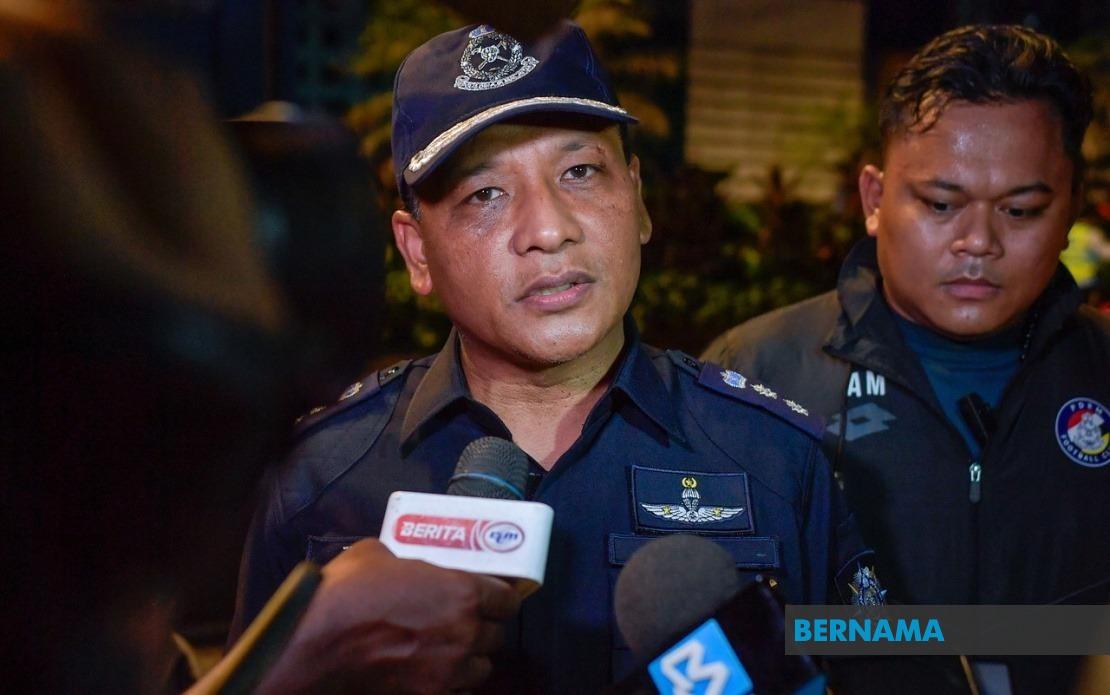
A fatal traffic collision in central Kuala Lumpur has triggered a formal legal process that will determine whether criminal charges will be filed against those involved. The investigation file detailing the early-morning crash between an Immigration Department vehicle and a private car will be forwarded to the Attorney General's Chambers tomorrow, marking a critical juncture in establishing accountability for an incident that claimed three lives and left a survivor fighting for recovery.
According to ACP Mohd Zamzuri Mohd Isa, the head of Kuala Lumpur's Traffic Investigation and Enforcement Department, the decision to refer the case reflects consultations with the city's Prosecution Director. This procedural step is standard practice when incidents involve potential charges under traffic and road safety legislation. The investigation team will present their findings to the Head of the General Crime and Public Order Division at the Attorney General's Chambers, where prosecutors and the investigating officer will jointly evaluate what charges, if any, should be pursued against the individuals detained in connection with the crash.
Police have secured a one-day remand order for two drivers: the operator of the Immigration Department truck and the driver of the Proton Saga that was struck during the collision. Both individuals are being investigated under Section 41(1) of the Road Transport Act 1987, which addresses dangerous or negligent driving that causes injury or death. This particular statute carries serious penalties and is typically invoked in traffic fatalities where culpability needs to be established.
The tragedy unfolded shortly after 1 am on Jalan Sultan Ismail when a Kuala Lumpur Immigration Department truck, colloquially known as a "Black Maria," entered a traffic junction against a red light while traveling toward Chow Kit for an enforcement operation targeting undocumented migrants. Although the official vehicle had its warning beacon and siren activated, it reportedly collided with a Proton Saga that was lawfully proceeding through the intersection on a green signal. The impact proved catastrophic: the truck lost control, crossed onto the roadway, struck the family members, and subsequently collided with a parked Inokom Matrix.
Three members of the same family perished in the collision. The deceased have been identified as Shaik Mohd Firdaus Shaikh Yahya, aged 53, and his two daughters, Siti Nor Sazlin, 25, and Siti Darwisyah Auni, 12. His wife, Norhayati Razali, 55, sustained severe injuries and remains hospitalized under intensive care at Kuala Lumpur Hospital. The loss of a parent and two children in a single incident has devastated the family and raised broader public concerns about the safety protocols surrounding emergency vehicle operations.
This incident highlights a recurring tension in urban traffic management across Malaysia and Southeast Asia: the operational necessity for government agencies to respond swiftly to enforcement priorities versus the paramount requirement to protect innocent civilians. Immigration enforcement operations often involve time-sensitive objectives, yet such urgency cannot supersede fundamental traffic safety principles. The apparent decision by the truck operator to proceed through a red light, despite having warning signals active, raises questions about judgment calls made during official duties and whether protocols adequately balance speed with caution.
The role of warning systems—beacons and sirens—in law enforcement and government vehicles remains contentious. While these signals are intended to alert other road users to the presence and movement of official vehicles, they do not confer an absolute right to disregard traffic signals. Malaysian traffic regulations, while permitting certain exemptions for emergency vehicles, still require operators to exercise reasonable care and ensure that their passage does not endanger other road users. The fact that the Proton Saga driver was traveling lawfully on a green light underscores the vulnerability of the public when official vehicles make aggressive maneuvers.
For Malaysia's broader road safety agenda, this collision serves as a sobering case study in the costs of inattention and risky decision-making. The nation has invested in various road safety campaigns and legislative reforms in recent years, yet traffic fatalities involving government vehicles occasionally escape the scrutiny given to private citizen accidents. The referral to the Attorney General's Chambers signals that authorities are treating this case with appropriate gravity, though observers will be watching closely to see whether outcomes match the severity of the losses suffered.
The investigation methodology and evidentiary standards applied to this case will likely influence how similar incidents are handled in future. If charges are filed and prosecuted to conviction, the precedent may strengthen accountability expectations for all road users, including those operating official vehicles. Conversely, if the case concludes without substantive charges, it may prompt legislative or regulatory reconsideration of how exemptions and operational practices are defined for government vehicles responding to enforcement needs.
The survivor's ongoing recovery in intensive care adds a personal dimension to the statistics. Norhayati Razali faces an uncertain medical trajectory while simultaneously processing the loss of her husband and daughters. Her family's experience mirrors the collateral human cost of traffic mishaps that extend far beyond the moments of collision, encompassing long-term physical rehabilitation, psychological trauma, and permanent family disruption.
As the Attorney General's Chambers receives the investigation file, Malaysia's legal system will grapple with establishing accountability in a case where institutional operations intersected with tragic consequences. The decision on charges will likely reflect not merely the technical legal interpretation of Section 41(1) of the Road Transport Act 1987, but also broader judicial perspectives on duty of care, operational necessity, and public safety standards expected of government agencies. For a nation working to improve road safety outcomes, the handling of this case will carry significance beyond the immediate parties involved.

