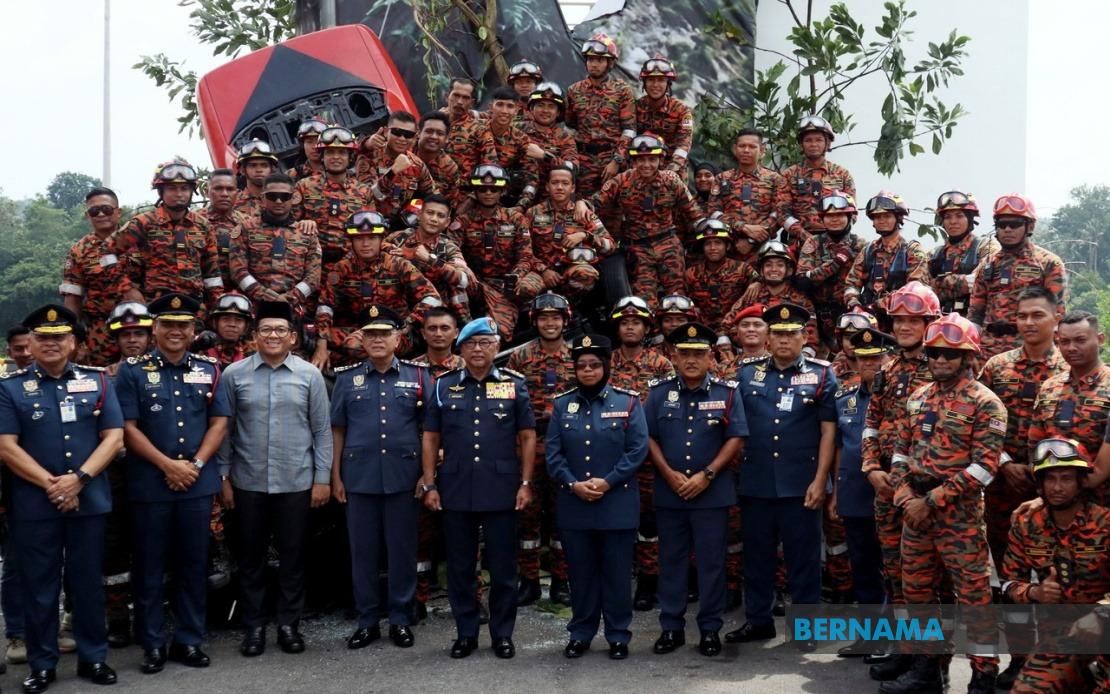
The Federal Government has endorsed an annual expenditure ceiling of RM278.9 million for the Malaysian Fire and Rescue Department (JBPM) to carry out 86 development initiatives during the First Rolling Plan phase of the 13th Malaysia Plan (13MP). This substantial investment comprises both fresh undertakings and initiatives already underway, reflecting the government's commitment to strengthening emergency response infrastructure across the nation.
Housing and Local Government deputy minister Datuk Aiman Athirah Sabu disclosed that this year's budget encompasses 27 newly initiated projects alongside 59 continuing efforts spanning the country. The allocation underscores a strategic approach to geographical distribution, ensuring that fire and rescue capabilities are enhanced at a pace that reflects demographic needs and infrastructure development timelines.
Pahang has emerged as a focal point for these investments, with seven facility development initiatives progressing concurrently under both the 12th Malaysia Plan (12MP) and the 13MP's First Rolling Plan. These endeavours span the acquisition of the Gohtong Jaya Fire and Rescue Station building and residential quarters, construction of new stations at Benta and Tioman with accompanying quarters, and restoration initiatives targeting the Bentong and Kuantan facilities. Additional work includes reconstructing the Triang station and commencing preliminary groundwork for the Tanjung Lumpur establishment.
The highlight of the Pahang development programme was the formal opening of the Sungai Lembing Fire and Rescue Station (BBP), which comes after an investment of RM6 million and occupies a seven-acre site. This facility represents the 29th fire and rescue station established in Pahang, signalling the state's rapid infrastructure expansion in emergency services. The station commenced operations on February 15 and is positioned to serve approximately 15,000 residents of Sungai Lembing and adjoining communities, substantially improving response times and service coverage in what had previously been an underserved locality.
Beyond traditional firefighting and emergency response capabilities, authorities envision the Sungai Lembing station functioning as a comprehensive community hub. The facility is designed to simultaneously operate as an education and training centre, disseminating knowledge and practical skills while cultivating public awareness regarding fire safety and disaster preparedness. This multifunctional approach aligns with contemporary emergency management philosophy, which increasingly emphasises community engagement and citizen resilience alongside conventional response infrastructure.
Deputy Economy Minister and Paya Besar Member of Parliament Datuk Mohd Shahar Abdullah contextualised the fire station's construction within broader regional development objectives. The Sungai Lembing area is undergoing comprehensive revitalisation efforts aimed at reestablishing its standing as a heritage destination. These parallel initiatives include restoration of the PCCL Cinema, development of ecotourism attractions, construction of a digital museum, modernisation of the Sungai Lembing Tunnel, and a dedicated campaign to secure UNESCO World Heritage Site designation for the locality.
The synergy between emergency services infrastructure and heritage preservation reflects an understanding that comprehensive regional development requires simultaneous attention to both safety and prosperity. Sungai Lembing's transformation into a modern heritage town necessitates not merely nostalgic preservation but also contemporary systems supporting safe public habitation and visitation. The fire and rescue station therefore occupies a pivotal role within this broader ecosystem, providing the operational foundation upon which cultural and economic activities can flourish securely.
Pahang Menteri Besar Datuk Seri Wan Rosdy Wan Ismail and State Legislative Assembly Speaker Datuk Seri Mohd Sharkar Shamsuddin participated in the opening ceremony, reflecting the station's significance within provincial governance priorities. The involvement of Sultan of Pahang Al-Sultan Abdullah Ri'ayatuddin Al-Mustafa Billah Shah in officiating the event further underscored the political and ceremonial importance attached to fire and rescue infrastructure expansion within the state.
For Malaysian observers, this allocation pattern demonstrates how the 13th Malaysia Plan channels resources toward balancing urban and rural service provision. The concentration of investments in Pahang, particularly in locations like Sungai Lembing, addresses historical disparities in emergency response capacity between developed urban centres and smaller towns. This prioritisation recognises that effective governance extends beyond major population centres to encompass communities whose safety and prosperity merit equivalent institutional investment.
The RM278.9 million commitment also carries implications for Malaysia's long-term disaster resilience trajectory. As climate change intensifies weather-related hazards and urbanisation increases building density and fire risk complexity, modern fire and rescue infrastructure becomes increasingly essential. By front-loading capital investment during the 13MP cycle, the government positions itself to respond more effectively to emerging emergency scenarios across the next decade.
Furthermore, the inclusion of both capital infrastructure and operational enhancement within the 13MP framework demonstrates integrated planning philosophy. New stations and upgraded facilities alone prove insufficient without corresponding training programmes, equipment procurement, and personnel development. The government's framing of these projects as comprehensive capacity-building initiatives suggests awareness that infrastructure installation represents merely the foundational element of effective emergency services provision.
For state governments and local authorities, these allocations establish benchmarks for sector investment and justify enhanced budgetary allocations within provincial development plans. Sungai Lembing's successful station development creates demonstration effects for other comparable towns seeking improved emergency services coverage. The visible investment signals government commitment to equitable infrastructure distribution, potentially enhancing public confidence in state institutions across peripheral regions.

