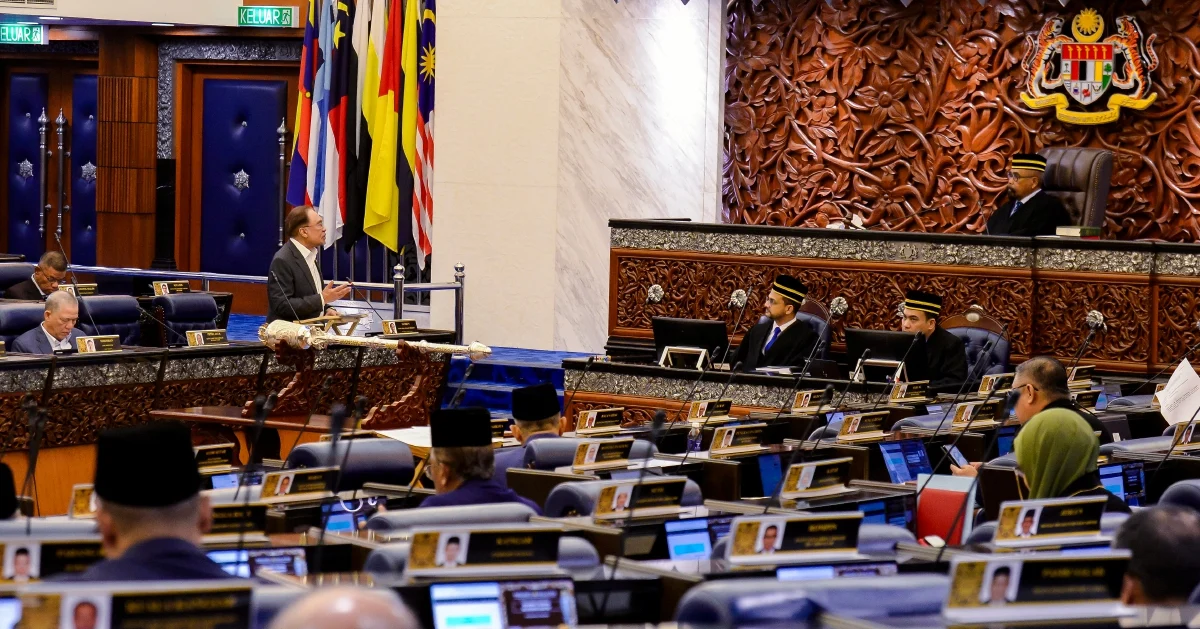
Prime Minister Datuk Seri Anwar Ibrahim has pushed back against the notion that the federal government should automatically absorb additional financial burdens resulting from decisions taken by state administrations, signalling a tougher approach to the contentious issue of federal-state fiscal relations in Malaysia.
The statement represents a significant clarification of boundaries between Putrajaya and state governments at a time when Malaysia's finances remain under pressure and there is growing scrutiny over how public funds are allocated across the federation. Anwar's position suggests the federal government intends to be more disciplined in endorsing state-level spending commitments that were not part of federal planning or budgetary allocations.
This issue touches on one of Malaysia's most persistent governance challenges: the division of financial responsibilities between the 14 states and the federal centre. While the Federal Constitution outlines which tier of government can levy certain taxes and implement specific policies, the practical application has often been muddier, with states regularly expecting federal assistance to cover shortfalls or new expenditures.
The Prime Minister's remarks appear designed to reset expectations, particularly as various state administrations pursue their own development agendas and policy initiatives that may incur costs not originally anticipated in federal budgets. By establishing this principle now, Anwar is effectively declaring that states must either fund their own decisions through their own revenue sources, seek prior federal approval before proceeding, or negotiate cost-sharing arrangements upfront rather than seeking bail-outs retroactively.
This stance has significant implications for Malaysian federalism. If consistently enforced, it could compel state governments to be more fiscally prudent and transparent about the true costs of their policies before implementation. It may also encourage states to develop their own revenue-generating mechanisms and improve their fiscal management, rather than defaulting to federal assistance when their initiatives prove more expensive than anticipated.
However, the practical implementation of such a policy will require clear guidelines and mechanisms. Without detailed protocols, disputes are likely to arise over which costs qualify as "state decisions" and which should reasonably be shared with the federal government, particularly in areas where federal and state responsibilities overlap—such as education, health, and infrastructure development that has national implications.
The statement also reflects the broader fiscal pressures facing Malaysia's federal government. With rising debt levels, commitments to social spending, and infrastructure projects, Putrajaya has limited room to absorb unexpected costs. By setting boundaries now, Anwar appears to be protecting federal fiscal space and signalling to ratings agencies and investors that the government is serious about expenditure discipline.
States with different political alignments will likely interpret this move differently. Those governed by opposition parties may view it as the federal government weaponising budget controls, while states aligned with the federal government may argue they deserve special consideration. This political dimension adds complexity to what appears to be a straightforward fiscal principle.
The timing of Anwar's statement is worth noting, coming at a point when Malaysia is attempting economic stabilisation and attracting foreign investment. International observers monitor how effectively governments manage their fiscal responsibilities, and a clear demarcation of federal-state financial boundaries could actually strengthen investor confidence by demonstrating principled fiscal governance.
For ordinary Malaysians, the implications are mixed. On one hand, it may lead to better-run state governments that cannot simply pass the bill to Putrajaya. On the other hand, it could mean some state-level services or initiatives face delays or cancellations if states cannot fund them independently and the federal government declines to support them.
Moving forward, this principle will likely shape federal-state relations for the foreseeable future. States planning major initiatives will need to conduct thorough financial assessments beforehand and identify sustainable funding mechanisms, rather than assuming federal government backing. This shift toward greater state fiscal autonomy and responsibility represents a meaningful change in Malaysia's approach to federalism, one that will test the government's resolve and the states' capacity to manage their own affairs independently.
The Prime Minister's remarks should serve as a wake-up call for state administrations across Malaysia: the era of automatically expecting federal funding for state-level decisions may be drawing to a close.

