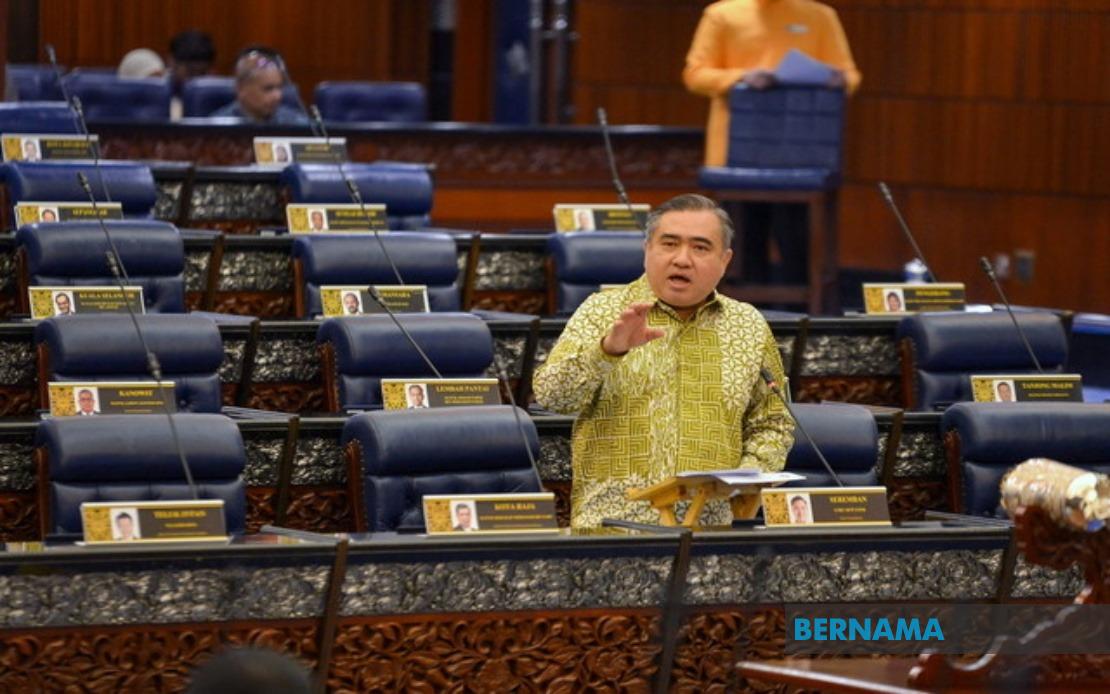
The Federal Government has committed to financing Johor's ambitious Elevated Autonomous Rapid Transit (E-ART) project, Transport Minister Anthony Loke confirmed in Parliament this week. While an appointed consortium will initially shoulder the project's costs, government assessments determined that relying entirely on private sector financing would render the mega-infrastructure initiative economically unviable, necessitating federal intervention to ensure the scheme proceeds.
Detailed financing arrangements, the precise scale of government financial commitment, and the repayment framework across the concession period remain under negotiation, Loke indicated during the Dewan Rakyat sitting. The minister stopped short of specifying whether the government would directly fund construction or employ a hybrid financing model blending public and private capital. These crucial details will be crystallised into formal terms that require Cabinet approval before the Concession Agreement is executed, he added.
Loke's announcement addresses longstanding concerns about the project's commercial reality. Public transit infrastructure in Southeast Asia frequently struggles to achieve financial self-sufficiency given operational costs, labour expenses, and political pressure to maintain affordable fares for commuters. The E-ART initiative, positioned as a transformative solution to Johor's mounting urban congestion, exemplifies this structural tension between infrastructure ambition and commercial sustainability. The decision to inject public funds signals the government's determination to prioritise transport development despite fiscal constraints.
The project is expected to reach completion within four years of receiving the Letter of Acceptance, positioning it to commence operations well after the Singapore-Johor Bahru Rapid Transit System Link begins service in January 2027. This timing creates an interesting interregnum period where the RTS Link will absorb cross-border commuter demand before E-ART becomes operational. Loke acknowledged this sequencing challenge and outlined complementary measures designed to manage traffic flow during the interim.
Recognising that E-ART alone cannot address Johor's congestion crisis, the Transport Ministry has collaborated with the Johor state government to devise a comprehensive traffic dispersal strategy. This approach expands the BAS.MY service network to 28 routes deploying 254 buses, including electric vehicles that align with Malaysia's sustainability commitments. The expansion represents a deliberate shift toward multi-modal transport rather than dependence on any single megaproject.
The Stage Bus Service Transformation 2.0 programme constitutes another pillar of this strategy. Beginning in early 2027, the initiative will dedicate 157 buses exclusively to the Johor Bahru Sentral and Bukit Chagar routes, timing that coincides with RTS Link operations. This coordination suggests government planners are attempting to orchestrate a seamless transition where multiple transport corridors activate sequentially rather than haphazardly. Such synchronisation, if executed effectively, could substantially improve passenger experience and system efficiency.
Rail capacity enhancements complement bus network expansion. The ministry is pursuing procurement of 12 additional KTM Komuter Southern train sets to augment existing capacity on key southern corridors. Pending formal approval, the government has already launched the Shuttle Selatan service, which operates between Kulai, Kempas, Johor Bahru, and Pasir Gudang with 14 daily trips. Though modest in scale, this interim service provides immediate relief while permanent infrastructure materialises.
Fare regulation emerged as a secondary but significant issue during parliamentary questioning. Loke confirmed that public transport fares across all government-supported projects remain subject to government control, acknowledging the political imperative to keep transit affordable for ordinary Malaysians. This price ceiling approach, however, necessarily requires ongoing government subsidisation because controlled fares inherently reduce revenue streams and diminish commercial competitiveness. The minister framed this as an acceptable trade-off, arguing that affordable public transport serves broader social objectives beyond simple profit maximisation.
The E-ART project's evolution reflects shifting transport policy philosophy in Malaysia. Rather than expecting private consortiums to fully finance and operate complex urban transit systems, the government increasingly recognises that sustainable public transport demands hybrid financing blending private expertise with public capital. This pragmatic approach mirrors patterns across developed Asian economies where governments directly fund or substantially subsidise metro systems, bus networks, and rail corridors recognised as essential social infrastructure.
For Malaysian readers, particularly in the Klang Valley and other congested urban centres, the Johor precedent suggests willingness to invest substantially in transport solutions despite significant fiscal commitments elsewhere. Whether this signals a broader national pivot toward prioritising urban mobility remains unclear. The success of E-ART and complementary Johor initiatives will substantially influence government appetite for comparable megaprojects in Selangor, Penang, and other growth regions grappling with chronic congestion.
Implementation challenges loom nonetheless. Four-year project timelines for complex transport infrastructure often slip due to procurement delays, contractor issues, or engineering complications. Cabinet approval, concession negotiations, and environmental clearances could extend planning phases. The government's ability to coordinate multiple programmes—bus expansion, rail procurement, RTS Link integration—simultaneously will test institutional capacity. Successful execution requires not merely funding commitment but also effective inter-agency coordination and disciplined project management.
For Southeast Asia's regional connectivity, Johor's transport transformation carries implications beyond state boundaries. As Malaysia's southern gateway to Singapore and Thailand, enhanced Johor transport systems facilitate regional trade, tourism, and labour mobility. The E-ART and RTS Link, operating in concert with improved domestic networks, could strengthen Johor's role as a regional logistics and commercial hub. This positioning ultimately serves Malaysian interests in an increasingly competitive Southeast Asian economy.

