FIFA president Gianni Infantino has pushed back against mounting criticism of the mandatory hydration breaks now being enforced at the World Cup, insisting that the governing body's decision stems entirely from considerations around player welfare and athletic performance rather than any desire to expand commercial opportunities during matches.
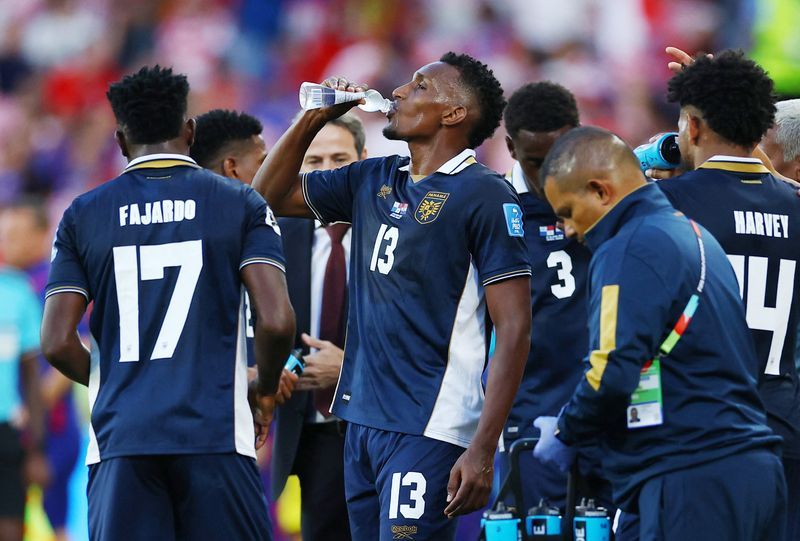
The three-minute stoppages, mandated in the 22nd and 67th minutes of each fixture, have become a flashpoint of controversy since the tournament's opening matches. The breaks were designed to help players manage the physical demands of performing in the elevated temperatures found across North America, the host region for this edition of the competition. However, the stoppages have created additional advertising windows for broadcasters, which has led to persistent speculation that commercial motives underpinned the policy decision. Viewers have expressed frustration at being subjected to advertising during these forced pauses, fuelling debate about whether the innovation genuinely serves the interests of the sport or merely prioritises revenue generation.
Infantino addressed these concerns directly in a statement released on Wednesday, categorically denying that FIFA stood to gain financially from the arrangement. He stressed that all commercial contracts covering the tournament had been negotiated and finalised well before the breaks were introduced, meaning the stoppages represented no additional income stream for the organisation. By framing the measure as a strictly sporting consideration, the FIFA chief attempted to position the breaks as a health and welfare initiative rather than a profit-driven mechanism.
The introduction of breaks does grant coaching staff precious opportunities to provide tactical guidance and make in-game adjustments without waiting for natural stoppages like throw-ins or goal kicks. Critics, however, argue that this represents a fundamental distortion of football's traditional structure. England manager Thomas Tuchel has voiced particular concern, describing the mandatory pauses as interruptions that alter the essential character of the match itself. Uruguay's Marcelo Bielsa has levelled a more conceptual objection, contending that fragmenting the game into artificially shortened segments strips away one of football's defining attributes—the continuous, uninterrupted flow of play that separates it from other sports.
Yet support for the initiative exists among some quarters of the global football community, particularly in recognition of genuine health risks posed by extreme heat. Spain manager Luis de la Fuente and Netherlands captain Virgil van Dijk have acknowledged the reasonable intention behind the rule when matches occur in genuinely hot conditions. These figures have, however, questioned whether such breaks remain necessary in cooler environments or when matches are staged in covered, climate-controlled venues, suggesting a more nuanced application might address both welfare concerns and sporting purists' objections.
Infantino offered a more expansive rationale for the breaks during his statement, moving beyond the straightforward heat argument. He highlighted the gruelling nature of World Cup competition, which spans 39 days with teams potentially playing as many as eight matches during that period. Within this compressed calendar, he argued, moments for recovery and tactical reset become genuinely important from a player welfare perspective, allowing athletes to maintain performance levels across an unusually demanding fixture list. The FIFA president positioned the breaks not as an interruption but as a necessary accommodation to the unique demands of the World Cup format.
Equally important to Infantino's reasoning was the principle of competitive fairness. He stressed that FIFA's priority was ensuring all teams faced identical conditions throughout the tournament, with every match played according to the same rules and parameters. The concern, he explained, was that without standardised breaks, coaches in hotter matches would gain tactical advantages through natural stoppages that their counterparts in cooler matches might not enjoy. Allowing breaks only in certain conditions would create an uneven playing field where the capacity to make in-game adjustments became dependent on chance weather variations rather than uniform tournament regulations.
The FIFA chief also addressed concerns that the breaks might diminish match intensity or reduce the quality of play. Infantino suggested that empirical observation from early tournament matches demonstrated that players had sustained high performance levels throughout contests despite the mandatory pauses. This claim stands in contrast to arguments that stopping the game necessarily disrupts momentum and rhythm, which are widely understood as crucial psychological and tactical elements in football.
The hydration break policy reflects broader tensions in modern football between traditionalist concerns about preserving the sport's fundamental character and pragmatic arguments for accommodating contemporary realities. Climate change and the expansion of World Cup participation to regions with diverse weather patterns have made heat management a legitimate concern for governing bodies. Yet the intersection of welfare measures with commercial broadcasting interests inevitably invites scepticism, particularly when the rule creates new opportunities for advertisers to reach global audiences.
For Malaysian and Southeast Asian observers, the debate carries particular resonance given the region's tropical climate and football's enormous popularity across the area. If international tournaments become increasingly common in hot climates, questions about player welfare and rule adaptations will likely intensify. The Infantino controversy also illustrates the broader governance challenge FIFA faces in balancing competing interests—player safety, sporting integrity, commercial viability, and the preservation of football's traditional identity—while maintaining credibility with stakeholders including coaches, players, fans, and broadcasters.