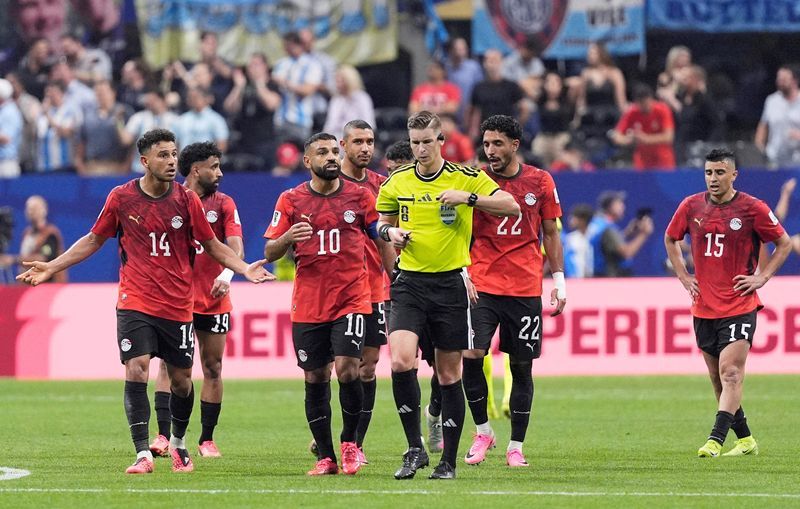
FIFA's chief of refereeing has moved to close the book on a contentious World Cup clash that left Egypt's football authorities questioning the integrity of the tournament's officiating. Pierluigi Collina defended the decisions that allowed Argentina to escape with a 3-2 round of 16 victory despite trailing 2-0, asserting that match officials acted with complete independence and dismissing what he characterised as unfounded allegations of prejudicial treatment.
The Egyptian Football Association had lodged formal objections to several key moments in the encounter, particularly the disallowed goal by Mostafa Zico in the second half and a non-penalty decision moments before Argentina's stoppage-time winner from Enzo Fernandez. Egypt's coach Hossam Hassan went further, suggesting the referee had been subjected to external pressure to keep the favoured South American nation in the tournament. These grievances reflected frustrations that had festered through the match and threatened to taint the legitimacy of World Cup proceedings.
Collina's intervention represented an authoritative statement on the matter, emphasising that critiques of refereeing decisions formed an inevitable component of the sport but that questioning officials' integrity crossed a line into unacceptable territory. The FIFA official underscored that such allegations carried serious consequences beyond the immediate controversy, potentially endangering match officials and their families through intimidation. His comments indicated that FIFA viewed the Egyptian complaints not merely as legitimate sporting debate but as threatening challenges to the foundational trust required for fair competition.
At the heart of the dispute lay the interpretation of a foul committed during the buildup to Zico's goal. The Video Assistant Referee system had recommended overturning the goal after detecting an infraction by Marwan Attia on Argentina defender Lisandro Martinez. Collina justified this intervention by articulating FIFA's fundamental principle that a foul remains a foul regardless of whether it appears obvious to the naked eye during live play. This meant that VAR's responsibility extended beyond egregious errors to encompass infractions that referees on the pitch might reasonably miss, though this expansive reading of VAR authority had itself become a source of dispute among football analysts and commentators globally.
The second controversial moment involved Mohamed Salah, Egypt's star forward, appearing to be fouled by Argentina midfielder Julian Alvarez in the build-up to the winning goal. The contact, which involved Alvarez's foot making contact with Salah's foot, was deemed routine football contact rather than a punishable offence. Collina explained the distinction that FIFA referees employed: deliberately stepping on an opponent's foot constitutes a foul, whereas a defender who makes contact with the ball first and then incidentally makes normal football contact has committed no transgression. This nuanced interpretation meant that the precise sequence of contact and whether the ball was touched first became determinative, a requirement that placed significant burden on officials to reconstruct fast-moving sequences accurately.
The Argentine comeback itself had surprised many observers, with the South American team overturning their deficit to secure passage through the tournament in dramatic fashion. The manner of victory, coupled with the controversial decisions that enabled their advance, inevitably invited scrutiny of whether the officiating framework favoured particular nations or teams. For Egypt, which had invested heavily in the tournament and possessed genuine aspirations, the elimination stung particularly sharply when compounded by perceptions of unfair treatment.
Collina's broader point extended beyond the individual match to encompass confidence in FIFA's refereeing systems. He asserted categorically that FIFA refereeing standards remained immune from external influence, emphasising that even FIFA president Gianni Infantino possessed no capacity to sway match officials' decisions. This declaration, while presumably intended to reassure stakeholders, also hinted at the persistent suspicion that tournaments at this scale might accommodate political or commercial considerations. The need for such explicit denials suggested that trust in refereeing impartiality remained fragile within international football, particularly among nations that perceived themselves as disadvantaged by tournament structures or media narratives.
Acknowledging that subjectivity would inevitably colour certain refereeing decisions, Collina contended that FIFA remained satisfied with the consistent application of VAR principles throughout the World Cup campaign. This framing positioned VAR not as a perfect arbiter of justice but as a tool that, properly deployed, enhanced the fairness of the competition relative to unaided human decision-making. The implicit argument suggested that no system of officiating could achieve complete objectivity, and that FIFA's framework represented a reasonable accommodation between perfect accuracy and the practical realities of live sport.
The episode revealed enduring tensions within international football between the desire for transparent, impartial competition and the practical challenges of achieving such standards. For Southeast Asian nations with aspirations to participate in future World Cups, the controversy underscored the importance of understanding how VAR protocols operated and how appeals mechanisms functioned. The incident also highlighted how perception could damage a tournament's credibility even when officials acted according to their mandates, suggesting that FIFA would require not merely correct decisions but also greater communication and clarity regarding controversial rulings to maintain confidence in the process.
Collina's defence signalled that FIFA would not revisit the decisions or entertain alternative interpretations of the crucial moments. The organisation had aligned itself fully with the match officials, suggesting that internal reviews had confirmed adherence to established protocols. For Egypt and other nations harbouring concerns about fair treatment in international competitions, this stance offered little recourse beyond accepting the outcomes and hoping that future tournaments would furnish fewer occasions for similar grievances.

