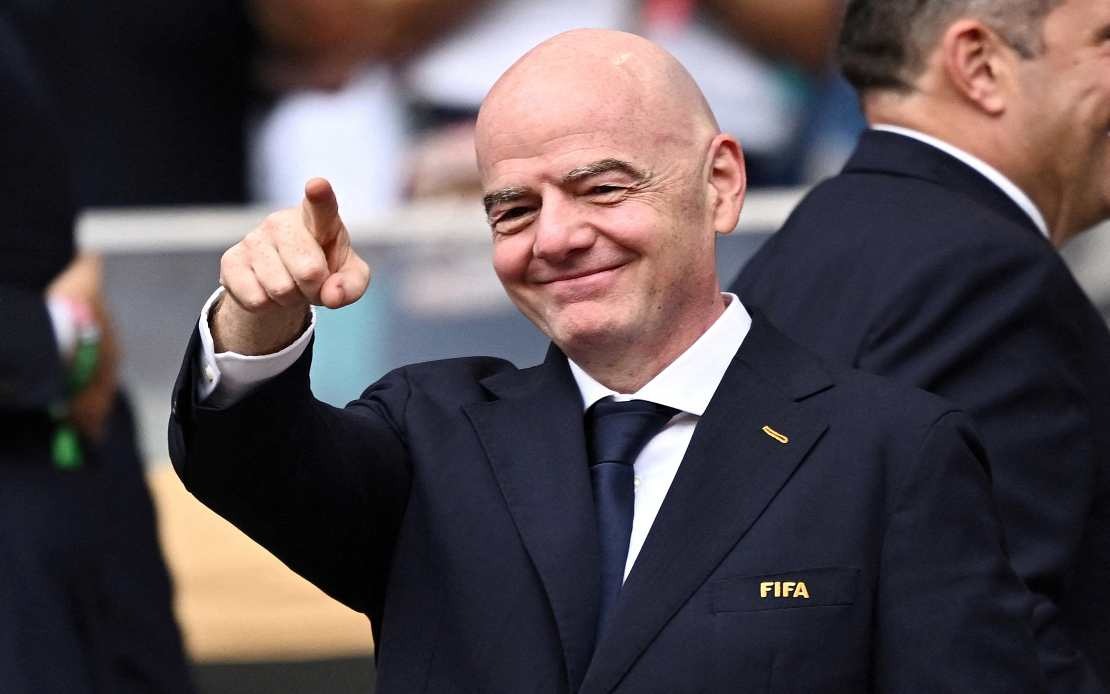
FIFA has dispatched pre-drafted letters to national football associations around the globe that praise Gianni Infantino's performance as the organisation's president, according to reports emerging from Moscow. The correspondence, distributed in advance of the World Cup in the United States, Mexico and Canada, came as Infantino prepares to seek another term. The letters emphasised his achievements in expanding sports infrastructure and advancing women's football throughout his time leading the world's largest football body.
While the letters contained identical messaging highlighting Infantino's tenure, a notable feature distinguished them from routine correspondence: the names and signatures of association presidents were pre-filled before dispatch. This approach meant that individual associations received documents already bearing their leadership's purported endorsement, without requiring a separate signature process. However, distribution was not universal, with some football associations not receiving the pre-written materials.
The timing of this initiative coincided with a period of significant financial manoeuvring at FIFA's top levels. In July, the organisation announced an ambitious plan to generate US$4.2 billion in capital through the sale of approximately 20 per cent equity in a newly created entity that would hold FIFA's media and commercial rights. These rights encompass broadcasting agreements and revenue streams tied to the World Cup tournament itself, making this a transaction of considerable magnitude for international football's governing structure.
Reports indicated that a private investment fund overseen by Joshua Kushner, brother of Jared Kushner and son-in-law of United States President Donald Trump, was being considered as a potential buyer for this strategic stake. The involvement of such a high-profile American investor in FIFA's commercial operations raised questions about governance, transparency, and the concentration of control over football's most lucrative assets.
The proposal to partially monetise FIFA's media rights sparked immediate and forceful resistance from Europe's football leadership. UEFA, the confederation governing football in Europe, responded by announcing that all member associations under its umbrella would boycott FIFA tournaments unless the proposal was completely withdrawn from consideration. This unified stance from Europe's 55 national associations represented a significant show of force that threatened to destabilise FIFA's competition calendar and revenue generation.
For Malaysian football fans and administrators, this dispute carries particular relevance. Malaysia, as a member of AFC (Asian Football Confederation), exists within a broader global football ecosystem where governance decisions made in Zurich reverberate across continental competitions and development programmes. The structural changes proposed at FIFA could ultimately affect how resources are distributed to Asian federations and how broadcasting rights for World Cup qualifiers are monetised across the region.
Against this backdrop of corporate restructuring and financial pressure, media outlets reported that Infantino faced mounting opposition from football associations across multiple continents. The accumulation of criticism concerning both his management style and the controversial commercial proposals created an environment of significant political uncertainty surrounding his future leadership. Some reports even suggested that resignation was being contemplated as a potential resolution to the escalating tensions.
The distribution of pre-written endorsement letters can be understood in this context as an attempt to demonstrate organisational unity and political support for Infantino's continuation in office. By circulating positive assessments of his tenure before the World Cup tournament in North America, FIFA sought to establish narrative momentum favouring his re-election campaign. The decision to pre-fill signatures, however, suggests organisational confidence that may not have reflected genuine grassroots sentiment among all football associations.
This episode illuminates deeper governance challenges within FIFA that have periodically surfaced throughout its modern history. The tension between FIFA's centralised leadership under Infantino and the distributed power held by national and continental football federations remains a defining feature of international football's political economy. Southeast Asian football administrators are watching closely how this dispute resolves, as the outcome will shape FIFA's investment priorities and competition structures in the years ahead.
The convergence of the commercial rights sale proposal, the European boycott threat, and the leadership uncertainty surrounding Infantino created a perfect storm that tested FIFA's institutional stability. Whether the pre-written letters represented a diplomatic gesture of solidarity or a calculated political manoeuvre remains open to interpretation. What is clear is that football's global governance mechanisms continue to grapple with balancing commercial imperatives against democratic legitimacy and equitable resource distribution across football's diverse membership.

