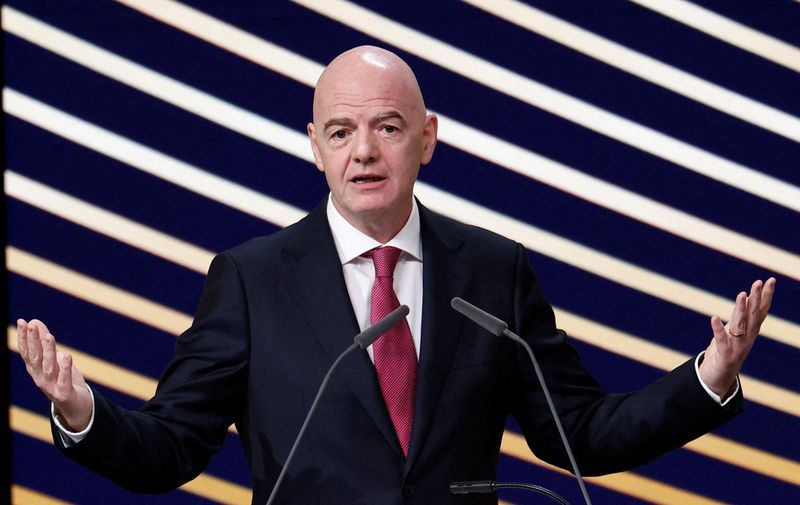
The stability of FIFA's leadership hangs in the balance as President Gianni Infantino confronts unprecedented resistance to his re-election campaign, triggered by a deeply controversial scheme to monetise the world's most prestigious sporting tournament through private investment. The proposal to sell a stake in the World Cup has fractured the global football governing body's traditionally fragmented power structure, with national confederations from Europe, Asia, and North America openly withdrawing backing for the incumbent administrator. This rupture has created a vacuum at the top of world football administration, prompting ambitious powerbrokers across the sport to position themselves as alternatives for the term commencing in 2027. The election will determine FIFA's direction during a period of significant commercial and political transformation in international football, with profound implications for how the sport manages its most lucrative assets and navigates relationships with major governments.
VICTOR MONTAGLIANI, the Canadian businessman leading CONCACAF, the confederation governing football across North America, Central America, and the Caribbean, has emerged as a serious contender. His organisation represents some of the world's wealthiest national federations, including the United States and Mexico, giving him substantial organisational resources and diplomatic leverage within FIFA's voting structures. While CONCACAF formally rejected Infantino's privatisation proposal, Montagliani deliberately stopped short of endorsing a complete boycott, a strategic calculation that positions him as a pragmatist capable of bridging ideological divides. This measured approach contrasts sharply with the stance adopted by European federations and suggests Montagliani may appeal to voters seeking continuity without Infantino's more aggressive commercial overhauls.
European football's figurehead, Slovenian administrator Aleksander Ceferin, has become perhaps the most visible symbol of organised resistance to Infantino's governance model. UEFA, the confederation governing European football across 55 nations, mounted a comprehensive boycott of the World Cup final in protest against FIFA leadership decisions, an extraordinary display of institutional displeasure rarely seen in international football diplomacy. Ceferin's willingness to mobilise UEFA's substantial voting power and financial influence against Infantino demonstrates both conviction and the capacity to command loyalty from Europe's wealthy federations. However, his candidacy would likely intensify north-south divisions within FIFA, potentially fracturing the organisation along continental lines if other regions perceive European dominance as a threat to their influence.
From Asia's perspective, Sheikh Salman bin Ibrahim Al Khalifa of Bahrain commands respect as a senior FIFA Council vice president and has steadily accumulated political capital through principled opposition to Infantino's most controversial initiatives. The AFC president's public criticism of FIFA's decision-making processes regarding World Cup expansion to 64 teams and, more recently, the private equity proposal signals an alternative vision rooted in procedural transparency and democratic consultation. His status as a regional power broker within Asia—home to nearly half the world's population—gives him access to approximately 47 national federation votes, a formidable bloc in FIFA's presidential election mechanics.
Qatar's Nasser Al-Khelaifi presents perhaps the most intriguing candidacy from a geopolitical perspective. The Paris Saint-Germain president combines credibility within European football circles with deep connections to Middle Eastern wealth and political networks. Recent reporting suggests European football officials are quietly coalescing around Al-Khelaifi as a leading alternative, viewing him as someone capable of modernising FIFA's operations while respecting existing power structures. His appointment would represent a significant moment in football governance, signalling acceptance of Middle Eastern influence at the sport's highest administrative levels, a development with profound consequences for tournament hosting decisions and commercial arrangements across the decade ahead.
Norway's Lise Klaveness occupies a singular position as perhaps the most prominent female voice in global football administration and emerged as one of the most articulate critics of Infantino's privatisation scheme. Her prominence in opposing the World Cup monetisation plan, coupled with her previous willingness to escalate disputes through ethics complaints regarding the handling of player disciplinary matters, demonstrates both moral conviction and administrative sophistication. Klaveness represents a generational shift within football governance and would signal FIFA's commitment to gender representation in its highest offices, an increasingly important consideration for a sporting body seeking to rebuild credibility among its diverse global constituencies.
The underlying crisis triggering this succession scramble extends beyond simple disagreement over commercial strategy. The private equity proposal exposed fundamental governance failures within FIFA's consultation mechanisms, causing confederations from Serbia, Sweden, and Wales to withdraw their endorsements of Infantino. These withdrawals represent a significant erosion of support, particularly from smaller federations whose votes are crucial in FIFA's electoral system. The concentration of decision-making power within Infantino's inner circle, combined with insufficient transparency in formulating strategy affecting the entire football ecosystem, has catalysed a broader movement demanding structural reform of FIFA's administrative culture.
Malaysian football administrators and Southeast Asian confederations should closely monitor this succession race, as the eventual winner will shape FIFA policy on tournament distribution, commercial rights management, and disciplinary procedures affecting regional football development for the next four years. The AFC's role in this election carries particular significance; should Al-Khalifa's AFC successfully coordinate voting patterns among Asian federations, the confederation could determine FIFA's presidential outcome. This concentration of power offers Southeast Asian nations an unexpected opportunity to influence global football governance, though exercising such influence requires sophisticated coalition-building and clear articulation of regional interests.
The March 18 election in Morocco will reveal whether FIFA's federations have fundamentally shifted their governance expectations or whether Infantino's organisational machinery remains sufficiently dominant to overcome current opposition. The candidates emerging from this crisis represent distinct visions for football administration: Montagliani offers North American pragmatism, Ceferin embodies European institutional solidarity, Salman champions transparent procedural reform, Al-Khelaifi represents Middle Eastern integration, and Klaveness symbolises generational change and gender equity. The outcome will reverberate far beyond FIFA's headquarters, influencing how the world's most popular sport manages its explosive growth, navigates relationships with political authorities, and distributes the extraordinary wealth generated by international football competitions.

