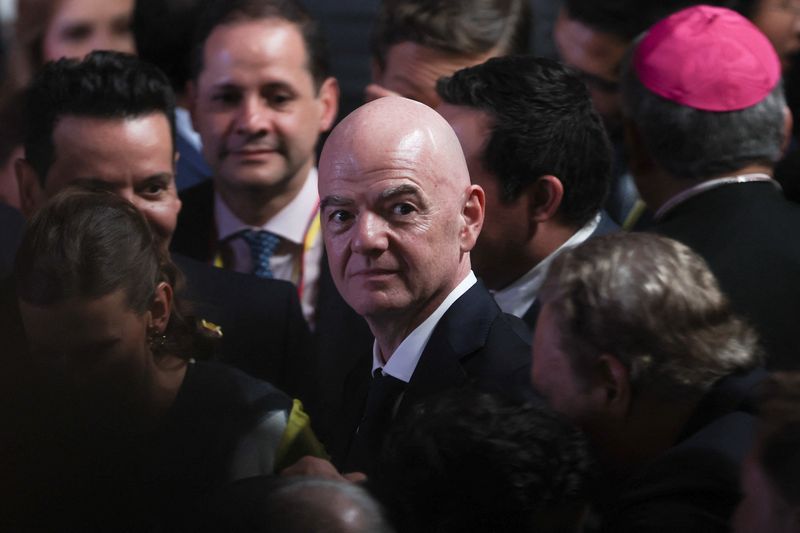
The future of FIFA president Gianni Infantino will ultimately rest in the hands of the organisation's 211 member associations, according to Confederation of African Football president Patrice Motsepe, who has publicly backed a democratic resolution to the leadership crisis engulfing world football's governing body. Speaking to Sky News, Motsepe defended the integrity of FIFA's electoral process as the appropriate venue for resolving the mounting pressure on Infantino, whose controversial stewardship has triggered extraordinary criticism from three major continental confederations.
Infantino's predicament stems largely from his shelved initiative to introduce private investment into FIFA competitions, an ambitious but ultimately abandoned restructuring that ignited coordinated dissent from UEFA, the Asian Football Confederation (AFC), and CONCACAF. The pushback from these heavyweight organisations has been unusually open and direct, with officials across these regions questioning his fitness to lead football's international governing body. Rather than capitulate to this organised opposition, Motsepe has chosen to emphasise the legitimacy of FIFA's formal mechanisms for leadership accountability and succession planning.
The CAF president's intervention signals a significant regional perspective on the unfolding governance debate, particularly given Africa's considerable voting weight within FIFA's membership structure. By framing the issue as one requiring democratic validation rather than backroom negotiation or pressure-induced resignation, Motsepe is essentially advocating for the leadership question to be settled through transparent constitutional procedures. The 77th FIFA Congress scheduled for Rabat, Morocco on March 18, 2027, will provide the formal stage for this decision, allowing any competing candidates to emerge and present their vision to the global football community.
Motsepe's public statements reveal a measured approach that balances accountability with procedural fairness. He explicitly acknowledged that leaders should indeed face scrutiny and that presidents cannot operate beyond legitimate oversight mechanisms. However, his underlying message emphasises that FIFA possesses established protocols for handling complaints and governance concerns, suggesting that disgruntled confederations should navigate these formal channels rather than attempt to engineer Infantino's removal through external pressure. This distinction between accountability and process carries particular weight in discussions of institutional governance across African sports and international organisations.
Crucially, Motsepe confirmed that the African confederation continues to support Infantino's candidacy, attributing this backing to the FIFA president's consistent commitment to advancing football development across the African continent. This endorsement provides Infantino with a substantial constituency heading into the election, as African member associations represent a meaningful proportion of FIFA's global voting bloc. The CAF leader's emphasis on Infantino's loyalty to African interests underscores how regional considerations often shape international football politics, a dynamic that Malaysian observers of Asian football governance will recognise as characteristic of AFC dynamics as well.
The philosophy articulated by Motsepe privileges process and legality as non-negotiable foundations for institutional legitimacy. His repeated invocation of these principles—due process, governance standards, and fair treatment for all parties—reflects a broader institutional conservatism that resists what might be characterised as extra-constitutional pressure campaigns. From this perspective, allowing confederations to informally campaign for a president's departure without submitting themselves to electoral competition undermines the democratic credibility that FIFA legitimacy ultimately requires. The contrast between this measured institutional approach and the more aggressive confrontationalism adopted by UEFA and others highlights genuine fault lines in how different global football regions view leadership accountability.
For Southeast Asian football stakeholders, including Malaysia's involvement within AFC structures, Motsepe's position offers insights into shifting global power dynamics within FIFA. The willingness of the African confederation to defend formal democratic processes—even when facing potential pressure from the more economically powerful European confederation—suggests that institutional solidarity around governance principles can transcend regional economic disparities. This has implications for how Asian confederations might navigate future FIFA governance challenges, particularly regarding the balance between reform demands and procedural legitimacy.
The upcoming election will certainly test whether Infantino's vision for FIFA's future resonates sufficiently with the global membership to secure re-election, or whether the confluence of criticisms from major confederations proves decisive in swaying enough votes. However, Motsepe's framing ensures that the decision will be made through FIFA's constitutional machinery rather than through capitulation to external demands. Should Infantino win re-election under these circumstances, his mandate would carry particular legitimacy precisely because it was secured through formal democratic means despite significant organised opposition.
Conversely, should the membership reject Infantino in favour of an alternative candidate, such an outcome would similarly reflect the authentic preferences of FIFA's constituent associations. By insisting on this electoral approach, Motsepe has essentially argued that whatever result emerges carries greater institutional legitimacy than any outcome achieved through pressure-driven resignation or negotiated removal. This institutional conservatism, while potentially frustrating to those seeking immediate change, reflects a sophisticated understanding of how governing bodies maintain credibility across diverse constituencies with competing interests and regional allegiances.

