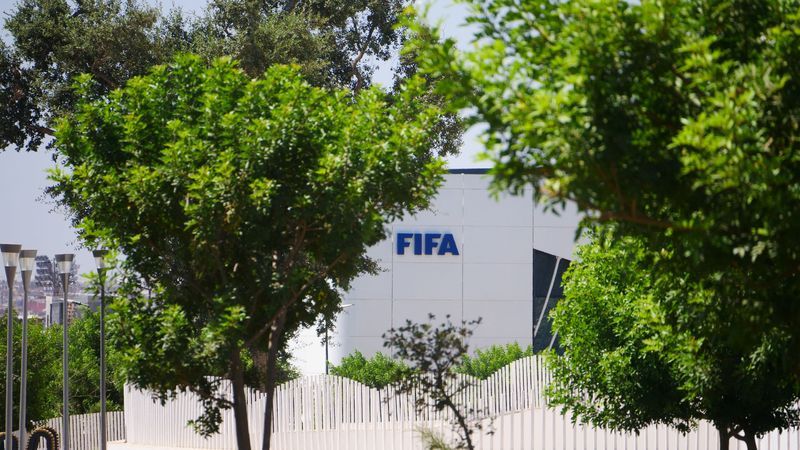
The leadership turmoil engulfing world football's governing body extends far beyond questions of individual personalities, according to the most senior voice representing players across Europe. David Terrier, president of FIFPRO Europe, has shifted the debate away from whether FIFA President Gianni Infantino should resign to demand comprehensive institutional reform of how the organisation functions. Speaking in Paris on Wednesday, Terrier characterised FIFA as locked in a "real war" stemming from the catastrophic mishandling of a proposal to sell off World Cup commercial rights, a blunder that has fractured relationships between FIFA's leadership and its member confederations.
The damage inflicted by Infantino's failed commercial initiative runs deeper than any single decision or announcement. The conflict has exposed fundamental fissures in trust between FIFA's executive and the confederations that comprise its power base, including UEFA, the Asian Football Confederation (AFC), and CONCACAF representing North and Central American nations. These three major regional bodies have openly criticised Infantino's conduct in recent weeks and demanded his resignation, a coordinated rebuke that itself signals the depth of institutional fracture. Yet Terrier's intervention suggests the real problem transcends the question of whether the 54-year-old Swiss administrator remains in office. Rather, the episode has illuminated systemic vulnerabilities in FIFA's governance architecture that persist regardless of who occupies the presidential chair.
Terrier articulated a pointed critique of the concentration of executive power within FIFA's structure. He argued that the current model vests excessive authority in the presidency, creating conditions where institutional safeguards fail to constrain individual decision-making. This observation carries particular weight given FIFA's troubled history. The organisation descended into severe reputational damage during Sepp Blatter's presidency, culminating in the corruption scandal of 2015 that forced Blatter's departure. Terrier warned that FIFA risks repeating those historical mistakes if fundamental reforms do not redistribute authority and create countervailing institutions capable of checking presidential power. The player union representative contended that the present situation represents an even worse crisis of confidence than existed when Blatter stepped down nearly a decade ago.
Following an emergency meeting convened in Morocco the previous week, FIFA issued a formal apology to all 211 member associations for mismanaging the commercial rights proposal. The organisation's leadership simultaneously reaffirmed collective support for Infantino, signalling that the confederation revolt had not translated into sufficient internal opposition to force his removal. FIFA also cautioned against further challenges to Infantino's authority, emphasising that any efforts to change leadership must follow the organisation's formal statutes and established democratic procedures. This defensive posture reflects the deep defensiveness characterised institutions under strain, yet it simultaneously underscores Terrier's central point: institutional processes themselves require fundamental renovation.
Terrier proposed that FIFA's governance model must distribute power more equitably among the president, administrative apparatus, and member confederations. Under his conception, the president would function as a guardian and coordinator of football interests rather than wielding concentrated authority. This structural recalibration would necessarily include creating independent mechanisms to scrutinise executive actions and enforce compliance with FIFA's own regulations. Critically, Terrier suggested that any FIFA president genuinely committed to institutional reform would need to demonstrate that commitment by accepting limits on their own authority, potentially even placing their continuation in office contingent upon successful implementation of reforms.
The impasse reflects a broader tension within international sports governance. FIFA, like comparable multinational organisations, must balance the authority required for coherent global administration against the risks inherent in concentrated power. The commercial rights debacle demonstrated how unchecked executive initiative, even if technically compliant with formal regulations, can generate loss of confidence among stakeholder organisations. FIFA's subsequent defence—that errors related to communication and process rather than substantive governance violations—rings hollow to confederations that question how such a significant initiative proceeded without adequate prior consultation and consensus-building.
Terrier identified the present moment as potentially FIFA's final realistic opportunity to implement transformative institutional change. This framing suggests that further failures to address structural vulnerabilities could precipitate more severe crises, potentially including schisms between confederations and FIFA's centre. For the Asian Football Confederation and other regional bodies with growing economic and political weight in international football, the concentration of power in FIFA's executive represents an unacceptable constraint on their legitimate interests. The alternative to systematic reform, Terrier implied, would likely involve protracted institutional conflict and possibly fundamental restructuring imposed through confrontation rather than negotiated reform.
The implications extend beyond FIFA's internal politics to the broader governance of international football. Confederations across Asia, Africa, Europe, and the Americas increasingly assert claims to shape football's future, particularly regarding commercial arrangements and tournament structures. A FIFA president exercising unconstrained authority cannot reliably accommodate these competing regional interests. Conversely, a genuinely reformed institution with distributed authority and robust internal checks would necessarily engage confederations as genuine partners in decision-making rather than passive recipients of executive directives. This shift aligns with broader trends in international organisations toward stakeholder governance models.
Infantino's status as seeking reelection in March injects temporal urgency into the debate. The presidential race provides a natural moment for the football community to recalibrate FIFA's governance framework. Yet Terrier's intervention suggests that merely replacing the incumbent, while potentially addressing immediate trust deficits, would not resolve underlying institutional deficiencies. This position potentially opens space for reform even if Infantino retains office, though it simultaneously raises questions about whether a president who has lost the explicit confidence of three major confederations could credibly drive institutional reform that would constrain his own authority.
The player union's prominent role in demanding governance reform carries particular significance. FIFPRO Europe represents the professional footballers whose labour generates the commercial value that FIFA monetises. By positioning players as central stakeholders in governance conversations, Terrier broadens the coalition seeking institutional change beyond merely confederation leadership. This multi-stakeholder approach strengthens the reform agenda's legitimacy while complicating FIFA's capacity to dismiss criticism as factional or political rather than structural.
For Southeast Asian football stakeholders, FIFA's governance crisis carries concrete implications. Regional confederations within AFC rely on FIFA's institutional predictability and equitable treatment. A FIFA paralysed by internal conflict or dominated by unchecked executive authority risks neglecting legitimate interests of smaller confederations. Conversely, reformed governance offering greater consultation and distributed decision-making would enhance smaller confederations' capacity to influence decisions affecting Asian football's development and commercial opportunities. The structural reforms Terrier advocates would therefore extend FIFA's institutional health directly into regional football ecosystems.

