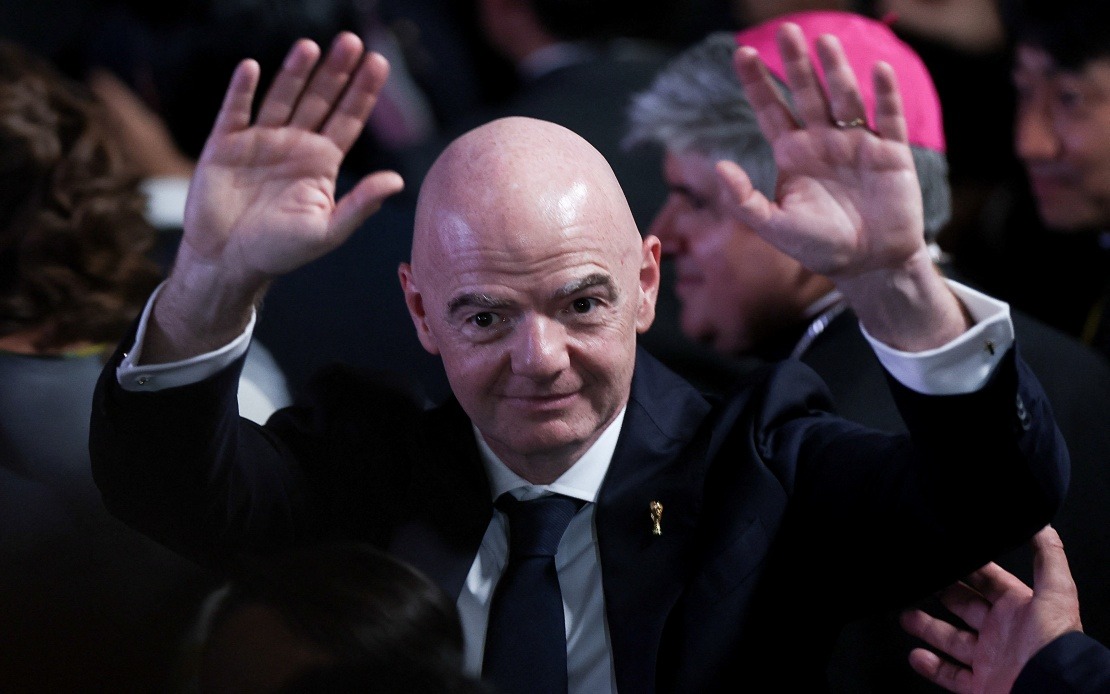
FIFA has moved to consolidate support for Gianni Infantino's continued leadership, issuing a statement from Istanbul that underscores the organisation's commitment to procedural propriety even as underlying tensions about his direction of world football intensify. The statement, released late Saturday, serves as both a reaffirmation of the Italian-Swiss administrator's legitimacy and a pointed warning to those who might question the mechanisms through which he retains power.
At the heart of FIFA's message is a defence of democratic process. The organisation explicitly stated that any attempt to stage a presidential election would need to comply strictly with its own statutes and established governance frameworks, effectively drawing a line around how challenges to Infantino's authority can be mounted. This appears designed to preempt alternative candidacies or procedural challenges that might emerge before the next formal election cycle, signalling that FIFA views deviation from its rulebook as inherently delegitimising.
The timing of this defence is significant, coming as Infantino signals his intention to seek a fourth consecutive term leading the world's largest sports federation. His previous re-election campaigns have faced criticism from various quarters, and the prospect of him continuing in office for potentially another four years has prompted debate within football's global governance structures. By anchoring his legitimacy in the consent of FIFA's 211 member associations, the organisation attempts to frame opposition as anti-democratic rather than substantive.
Supportive positions from major continental confederations appear to bolster this narrative. Both the South American Football Confederation (CONMEBOL) and the Confederation of African Football (CAF) have previously endorsed Infantino, and FIFA's invocation of their backing suggests a coalition of the willing among football's regional powerhouses. For member associations in Asia and Oceania, these alignments carry implications for how they might position themselves in forthcoming votes, as regional blocs increasingly exert coordinated influence within FIFA's decision-making structures.
FIFA's statement also contains an implicit critique of media scrutiny and external oversight. The organisation accused unnamed actors of attempting to undermine both FIFA and Infantino through what it characterises as unsubstantiated allegations and misinformation, suggesting that critical reporting represents a concerted campaign rather than legitimate inquiry. This framing raises questions about the distinction between defending against false claims and resisting accountability, a tension that has long plagued sports governance institutions globally.
Infantino's own record formed part of FIFA's defence, with the organisation highlighting his three decades in European and world football administration and his contribution to expanding resources and opportunities across the sport. His tenure has coincided with significant expansion of tournament formats, notably the expansion of the World Cup to 48 teams, and the controversial bilateral agreements with commercial partners. Whether these developments represent genuine globalisation of football opportunity or consolidation of commercial interests varies depending on one's perspective.
The substance of FIFA's accusation—that opponents are attempting through allegations what they cannot accomplish through democratic processes—raises interesting questions about the nature of FIFA's internal politics. It suggests that divisions within world football run deep enough that some stakeholders believe the current democratic mechanisms are inadequate or compromised, yet lack the votes to effect change through existing channels. This dynamic mirrors broader tensions within international sports governance between centralised authority and distributed power among member organisations.
For Southeast Asian football, the implications are complex. The region's national federations participate in FIFA's decision-making structures through the Asian Football Confederation (AFC), and any shifts in how FIFA is governed could affect resource allocation, tournament scheduling, and the region's voice in global football policy. The AFC's own positioning relative to established power blocs such as CONMEBOL and CAF will likely shape how Southeast Asian votes are cast on Infantino's future.
The statement's invocation of FIFA's "responsibility to its 211 Member Associations and to football around the world" attempts to reframe the debate from questions about Infantino's individual leadership to broader organisational mission and legitimacy. By emphasising commitment to member associations rather to external stakeholders or the sport's broader public, FIFA reasserts the primacy of its internal governance over external pressure, a stance that has both defenders and critics within the football community.
One notable aspect of FIFA's defence is its emphasis on distinguishing between legitimate scrutiny and what it views as organised undermining. The organisation explicitly stated it welcomes scrutiny, yet characterised recent criticism as involving distortion and the manufacture of distractions. This rhetorical stance attempts to occupy the middle ground between openness and defensiveness, though it may not satisfy those who believe FIFA's governance structures require fundamental reform rather than procedural management.
Looking ahead, the next FIFA presidential election will test whether the consensus apparently coalescing around Infantino holds firm or whether internal divisions surface more visibly during formal campaigning. The positioning of confederations and major member associations, particularly emerging football powers in Asia and Africa, will be crucial in determining whether Infantino's bid for a fourth term proceeds uncontested or faces genuine competition.

