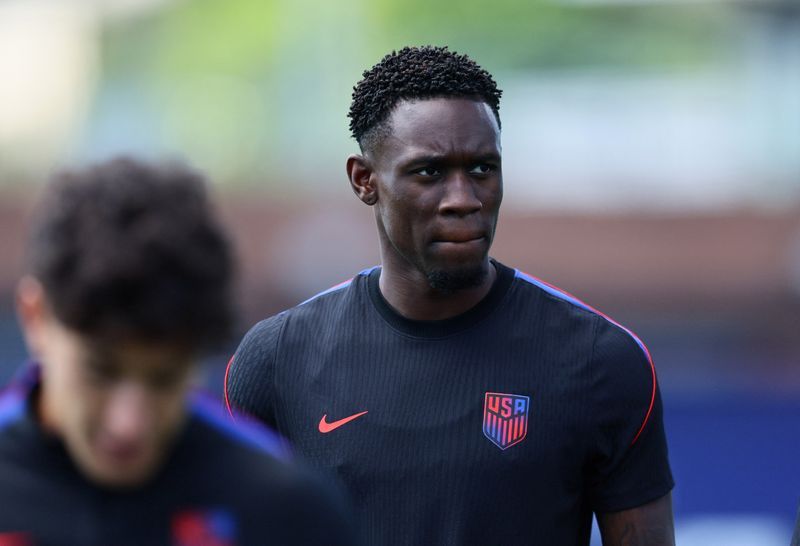
FIFA's controversial decision to suspend the automatic one-match ban imposed on United States striker Folarin Balogun has ignited a firestorm of criticism from European football associations, who argue the ruling fundamentally compromises the integrity of tournament play. The suspension came after U.S. President Donald Trump personally contacted FIFA President Gianni Infantino to request a review of the sending-off, which occurred during the World Cup last-16 round. By overturning the disciplinary consequence, FIFA has created a situation where the competition's foundational principles—the consistent application of rules—now hang in the balance, particularly as the tournament progresses and other nations find themselves operating under different standards.
The decision centres on an apparent collision between the FIFA Disciplinary Code's Article 27, which grants the FIFA Disciplinary Committee discretion to suspend enforcement of sanctions, and Article 66.4, which explicitly mandates an automatic suspension following any red card. European football bodies have seized on this contradiction as evidence that FIFA's interpretation of its own regulations lacks coherence. The Belgian Football Association pointed out that this same automatic suspension has been applied uniformly to all previous red-card incidents throughout the tournament, making the Balogun exception difficult to reconcile with established precedent. By treating one player differently from others who received identical disciplinary action, FIFA has opened itself to accusations of selective rule application based on political rather than sporting considerations.
German Football Association President Bernd Neuendorf articulated perhaps the most damaging aspect of the controversy: the explicit appearance of political interference in sporting governance. Neuendorf called for FIFA to issue an immediate clarification addressing claims that Trump's telephone conversation with Infantino directly preceded and influenced the reversal of the red card. The suggestion that a national leader can intervene to overturn tournament rules undermines the foundational premise that international sports competitions operate independently of governmental pressure. For regional observers, this development raises uncomfortable questions about whether FIFA's governance structure can withstand political pressure from major nations, or whether smaller football associations must now contemplate similar lobbying tactics to protect their own players.
The integrity concern extends beyond the immediate sporting fairness argument. When regulatory bodies lose credibility as neutral arbiters, they invite exactly the kind of intervention they are now receiving. If stakeholders believe rules are applied capriciously rather than consistently, they lose incentive to respect those rules and instead seek ways to circumvent them through political channels. FIFA's decision effectively signals that sufficient political influence can override disciplinary codes mid-tournament, a precedent that could reshape how international football governance functions. This is particularly concerning for tournament credibility at a global level, where millions of viewers invest emotional and financial resources based on the assumption that competition outcomes are determined by player skill and tactical acumen rather than diplomatic leverage.
Another dimension of the controversy involves the practical disadvantage created for other nations whose players have already served suspensions under the same rule. Multiple footballers from various countries have completed one-match bans following red cards during this tournament. Those individuals and their national associations now have legitimate grounds for complaint, as they operated under rules that apparently no longer apply uniformly. The absence of retroactive correction or compensation for these players and teams creates a perception of injustice that could fester throughout the competition. For Southeast Asian nations hoping to participate in future World Cup tournaments, this episode demonstrates that rule consistency cannot be taken for granted if a powerful nation's interests are at stake.
The political dimension of the controversy reveals how professional football, despite its pretensions toward governance independence, remains vulnerable to high-level state interference. The United States' willingness to deploy presidential authority to overturn a sporting decision illustrates that even established international sporting bodies lack sufficient insulation from governmental pressure when powerful nations have something to gain. This pattern raises implications for tournament integrity across all sports and all geographic regions. Southeast Asian football federations observing this situation must contemplate whether similar interventions might occur in tournaments affecting their own interests, and whether they possess comparable diplomatic resources to contest such decisions.
Critics have noted the uncomfortable irony of the situation: if the United States defeats Belgium in the subsequent match, that victory will forever carry the asterisk of the overturned suspension. The sporting achievement will be tainted by questions about whether the team won based on merit or administrative exception. Rather than serving American interests, the intervention may have actually diminished the credibility of any subsequent tournament success. International coaches and analysts have expressed dismay at the signal this sends, particularly regarding the consistency of rule application that forms the foundation of competitive fairness. The temporary nature of the suspension—placed on a probationary period rather than permanently lifted—suggests even FIFA recognized the fragility of its justification.
The European football associations have responded not merely with complaints but with fundamental critiques of FIFA's regulatory structure. By invoking Article 27 to override Article 66.4, FIFA has exposed ambiguities in its disciplinary code that call into question numerous other regulatory decisions. If the Committee can suspend automatic consequences through an interpretive reading of discretionary provisions, the entire framework of automatic punishments becomes subject to reexamination. This could invite similar challenges in future competitions, as national associations recognize that apparently mandatory rules contain interpretive flexibility. The Belgian association's detailed point-by-point refutation of FIFA's position demonstrates that the European football establishment will not accept this decision passively, potentially creating ongoing institutional tension within FIFA governance structures.
The incident also reflects broader anxieties about regulatory capture and the decline of institutional independence in international sports governance. FIFA has faced years of corruption scandals, governance questions, and accusations of operating according to the interests of powerful nations rather than universal sporting principles. Each decision that appears influenced by political rather than sporting considerations reinforces these perceptions and erodes faith in the organization's ability to serve as an impartial arbiter. For regions like Southeast Asia with emerging football programs and ambitions for greater international participation, the message is clear: access to resources and political influence matter significantly in international football governance, not merely on-field performance.
Looking forward, this decision will likely reshape how national federations approach disciplinary matters and interact with FIFA. If political intervention can overturn sporting decisions, coaches and players face new uncertainties about rule enforcement. The competitive equilibrium—supposed to depend entirely on athletic ability and tactical preparation—now appears contingent on diplomatic access and governmental support. This fundamentally alters the nature of international competition and raises questions about whether FIFA can maintain the legitimacy necessary to organize and regulate genuinely fair tournament play. The reverberations of the Balogun decision will extend far beyond this particular match, potentially influencing how other nations frame their own challenges to FIFA rulings and whether international football's governing structure can survive with credibility intact.

