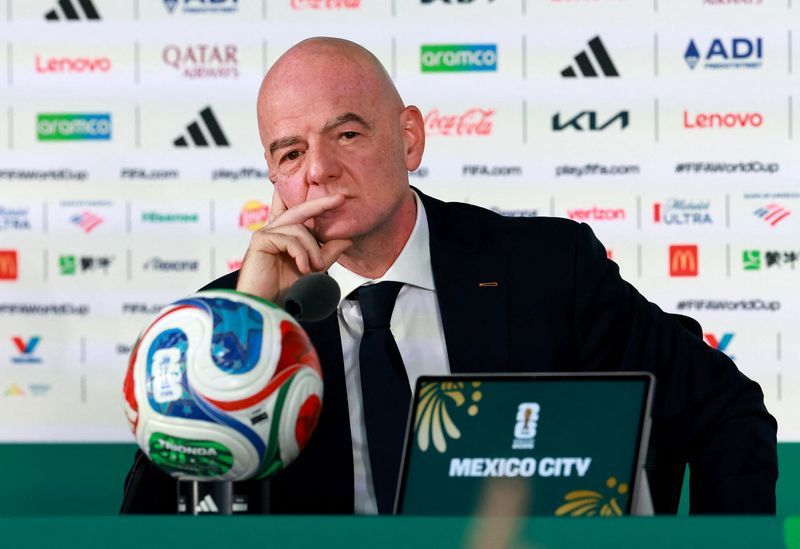
The largest institutional upheaval of Gianni Infantino's FIFA presidency appears to have reached a temporary ceasefire in Rabat, but the underlying fractures within world football's governing body suggest that questions about how decisions are made will persist long after the immediate political storm subsides. The world's leading soccer organization acknowledged missteps in its handling of a controversial proposal to sell future World Cup commercial rights, issuing a formal apology to its 211 member associations and pledging to examine the processes that led to the botched initiative. Yet the damage to FIFA's reputation extends far beyond the failed transaction itself, exposing systemic weaknesses in consultation and transparency that multiple influential stakeholders have now placed squarely on the agenda.
The abandoned commercial rights proposal triggered the most serious rebellion against Infantino's leadership since he assumed the presidency, with national federations openly expressing anger at being sidelined from deliberations on a matter that directly affected their financial interests. In its statement following Wednesday's meeting in the Moroccan capital, FIFA conceded that the proposal "should have been handled differently" and acknowledged that neither the FIFA Council nor member associations should have felt excluded from such consequential discussions. The organization framed the failures as procedural rather than regulatory, insisting that all actions technically complied with existing governance rules but that the manner of execution and communication fell short of expectations. This distinction matters less to those who felt steamrolled than to FIFA's legal defence, yet it reveals how the organization conflates procedural compliance with genuine stakeholder engagement.
Beyond the immediate crisis, the governance debate has broadened to encompass FIFA's entire approach to major strategic decisions. European Leagues, a body representing more than 1,300 professional clubs across the continent, has vocally criticized FIFA's compressed timeline for assessing a separate proposal to expand the 2030 World Cup from 48 to just four weeks, describing the assessment period as unrealistically brief for such a fundamental tournament modification. The league organization reinforced a pattern of complaints that FIFA routinely presents member associations and stakeholders with completed decisions rather than inviting genuine consultation during the formulation stage. This top-down approach, which may have functioned adequately during Infantino's earlier years, has become increasingly untenable as stakeholders across Europe, Asia, and North America have grown more assertive about their rights to meaningful participation in decisions affecting the sport's commercial and competitive structure.
For Infantino himself, the immediate objective in Rabat was political damage containment rather than substantive reform. The FIFA management board and Secretary General Mattias Grafstrom publicly endorsed the president during Wednesday's gathering, while Infantino reciprocated by praising the administration's work, creating a visual narrative of organizational unity at a critical juncture. The symbolism was reinforced when Infantino and Grafstrom were photographed together at a women's Africa Cup of Nations match in Rabat, smiling and giving a thumbs-up to photographers—a calculated gesture designed to suggest that any lingering tensions had been resolved. Yet Grafstrom's earlier internal memo to staff, which lamented the "sad and reproachable series of events" and cryptically noted that "individuals, unstable moments and unfortunate episodes come and go," suggests that behind closed doors, the organization's senior leadership remains acutely aware of the severity of the governance failures.
The backdrop to this temporary truce is Infantino's pursuit of a fourth term as FIFA president, with elections scheduled for March 2027 in Morocco. Infantino currently enjoys a commanding political position, with no credible challenger having emerged to contest his re-election and strong support among smaller associations, particularly across Africa and Asia, where FIFA development funding remains essential to national soccer programmes. His position within these regions provides him with a substantial voting advantage, and the absence of a meaningful opposition candidate suggests that his fourth term is likely assured unless the current governance crisis fundamentally undermines his political coalition. However, the controversy has undoubtedly accelerated the timeline for addressing institutional weaknesses that might otherwise have been postponed until after his re-election.
The criticism emanating from UEFA and other major confederations reflects a growing consensus that FIFA's governance structures require meaningful overhaul. UEFA has openly questioned Infantino's leadership style, while confederations including CONCACAF, which oversees soccer in North and Central America and the Caribbean, and the Asian Football Confederation have similarly voiced concerns about decision-making processes. These criticisms carry particular weight because they represent powerful blocs within FIFA's voting structure, and their public expressions of doubt signal that Infantino's political dominance may not extend to securing unanimous backing for all future proposals. The geopolitical dimension is crucial: while Infantino's support among smaller, less resourced associations remains solid, his relationship with wealthy European and North American confederations has deteriorated, creating a two-tier power structure that could constrain his ability to implement major strategic initiatives during his fourth term.
FIFA's warning that it will "no longer tolerate any attacks on its integrity, good governance and due process" represents a defensive posture rather than a genuine commitment to institutional reform. The statement deflects responsibility by characterizing legitimate criticism as attacks rather than acknowledging substantive governance deficiencies. This rhetorical stance risks reinforcing the perception among skeptical stakeholders that FIFA views transparency and accountability as optional rather than fundamental to its legitimacy. In reality, any major proposal involving commercial strategy, tournament expansion, or governance modifications is now virtually certain to encounter demands for extended consultation periods, transparent decision-making processes, and documented accountability measures. These expectations represent a significant constraint on FIFA's operational flexibility, though they may ultimately strengthen the organization's long-term institutional credibility.
The governance debate will inevitably extend beyond Infantino's immediate political horizon, becoming embedded in how FIFA conducts its business regardless of who occupies the presidency after 2027. The World Cup's quadrennial cycle means that tournament-related commercial and competitive decisions will repeatedly resurface, each time accompanied by expectations for more rigorous consultation with stakeholders. The 2030 World Cup expansion proposal, which has already sparked criticism over its compressed assessment timeline, exemplifies the type of decision that will generate sustained pressure for procedural reform. Member associations have tasted the potential power of collective resistance, and they are unlikely to revert to passive acceptance of decisions announced rather than negotiated. This shift in power dynamics, though gradual, represents a fundamental reordering of FIFA's internal politics that will persist well beyond Infantino's tenure.
Malaysian football stakeholders should regard these governance debates with close attention, as FIFA's decision-making processes directly influence the Asian Football Confederation's own priorities and resource allocation. Asia's growing economic clout within global soccer, combined with the continent's increasing influence within FIFA's electoral politics, positions the AFC and its member associations as consequential actors in negotiations over governance reform. The AFC's own concerns about consultation and transparency have been registered alongside those of UEFA and other confederations, suggesting that Asian football leaders recognize the strategic value of joining the broader coalition demanding accountability from FIFA's leadership. How these governance questions are resolved over the next two to three years will shape the institutional environment within which the AFC operates and the degree to which member associations like Malaysia can exercise influence over soccer's international governance architecture.

