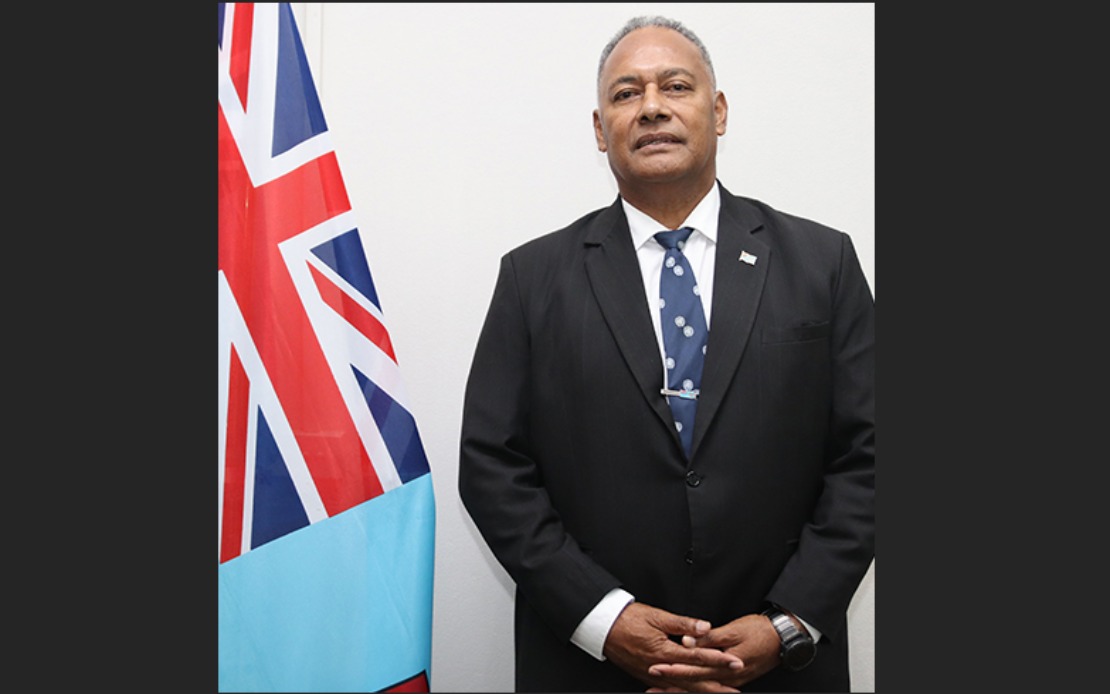
Fiji's Foreign and External Trade Minister, Sakiasi Raisevu Ditoka, is undertaking a working visit to Malaysia from Sunday through Wednesday, marking an effort to reinvigorate the bilateral relationship between the two nations and expand cooperation across multiple sectors. The visit, announced by Malaysia's Foreign Ministry, represents a significant diplomatic engagement that reflects both countries' commitment to strengthening ties in the Indo-Pacific region where economic interdependence and shared interests are increasingly important.
During his stay in Kuala Lumpur, Ditoka will hold substantive discussions with Malaysia's Foreign Minister Datuk Seri Mohamad Hasan, focusing on practical avenues for deepening bilateral cooperation. The agenda encompasses several priority areas that underline the diverse nature of the partnership: trade and investment opportunities, capacity building initiatives, forestry sector collaboration, renewable energy projects, and cultural exchanges. These discussions will also extend to broader geopolitical matters, allowing both ministers to align positions on regional and international issues of mutual concern and to explore how Malaysia and Fiji can coordinate efforts within forums involving Pacific Island nations.
A parallel meeting with Investment, Trade, and Industry Minister Datuk Seri Johari Abdul Ghani will focus specifically on economic dimensions of the relationship. This engagement signals Malaysia's recognition that sustainable bilateral ties must be anchored in tangible commercial benefits and mutually advantageous investment opportunities. By convening both foreign policy and economic ministers, Malaysia is signalling a comprehensive approach to the relationship that bridges diplomatic engagement with practical economic outcomes.
A ceremonial highlight of the visit will be the official reopening of Fiji's High Commission in Kuala Lumpur, an institutional commitment that underscores the importance both governments place on maintaining robust diplomatic representation. The reopening carries symbolic weight, demonstrating renewed dedication to direct engagement and streamlined communication. Simultaneously, the establishment of the Malaysia-Fiji Business Council represents an institutional innovation designed to facilitate private sector dialogue, foster trade relationships, and identify joint venture opportunities that can translate political goodwill into sustained economic activity.
Bilateral trade figures provide context for understanding the economic relationship's current scale and potential. In 2025, total bilateral trade reached RM880.01 million, equivalent to approximately US$206.2 million. Malaysia's trade posture is decidedly surplus-oriented, with exports valued at RM867.92 million against imports of merely RM12.09 million. This imbalance suggests several dynamics: Malaysian goods possess competitive advantages in Fijian markets, or existing trade patterns reflect colonial-era economic structures where Pacific island nations primarily export raw materials. The disparity indicates substantial room for rebalancing and deepening reciprocal trade flows, particularly if Fiji can develop export-oriented sectors in areas where it possesses natural competitive advantages.
For Malaysian policymakers and businesses, Fiji represents a gateway to the Pacific Island region, a geographically scattered but economically important collection of nations. The Pacific islands maintain strategic significance in global supply chains, possess substantial maritime exclusive economic zones, and host growing renewable energy potential. Malaysia's engagement with Fiji therefore extends beyond bilateral commerce; it positions Malaysia as a serious economic player in the Pacific sphere at a moment when major powers are intensifying their presence in the region.
The visit arrives at a juncture when Southeast Asian nations are consciously developing deeper relationships with Pacific partners. Climate change, maritime security, sustainable fisheries management, and infrastructure development represent shared challenges requiring coordinated approaches. Malaysia's emphasis on renewable energy cooperation with Fiji reflects global trends toward decarbonization, while forestry collaboration speaks to sustainable resource management imperatives that resonate across both regions.
The capacity-building dimension of planned cooperation deserves emphasis. Fijian officials and professionals stand to benefit from Malaysian expertise in governance, technical skills, and institutional development. Conversely, Fiji's experience managing island economies, tourism development, and climate resilience could offer valuable lessons for Malaysian policymakers. Such mutual learning arrangements strengthen relationships beyond transactional commerce, building human networks and institutional understanding that endure across political transitions.
Cultural exchanges mentioned in the visit agenda represent the softer dimensions of statecraft but carry meaningful importance. People-to-people connections, educational partnerships, and artistic collaborations create constituencies within both societies with vested interests in maintaining positive relations. These connections often prove more durable than purely commercial ties when economic circumstances fluctuate or political winds shift.
The timing of this visit reflects broader strategic calculations within Malaysian foreign policy. As regional powers jostle for influence in the Indo-Pacific, Malaysia is positioning itself as a reliable, development-focused partner to smaller nations. Unlike great power competition that often emphasizes strategic containment or geopolitical positioning, Malaysia's approach with Fiji emphasizes reciprocal benefits, institutional strengthening, and concrete economic opportunities.
Looking ahead, the establishment of the Malaysia-Fiji Business Council could prove catalytic. Private sector engagement often proceeds more swiftly than governmental channels, and businesspeople unencumbered by diplomatic constraints frequently identify innovative cooperation pathways. If the council facilitates meaningful commercial projects—whether in renewable energy, agricultural processing, tourism development, or light manufacturing—it could transform the relationship from one dominated by Malaysian exports into a more balanced partnership generating growth for both economies.
For Fiji, this engagement represents validation of its significance within regional networks and tangible investment in closer ties with a major Asian economy. For Malaysia, the visit reaffirms its commitment to constructive engagement across diverse regions and its role as a bridge between Asian and Pacific interests. The success of this visit will ultimately be measured not merely by statements issued but by implementation of announced initiatives and the emergence of concrete projects benefiting businesses and citizens in both nations.

