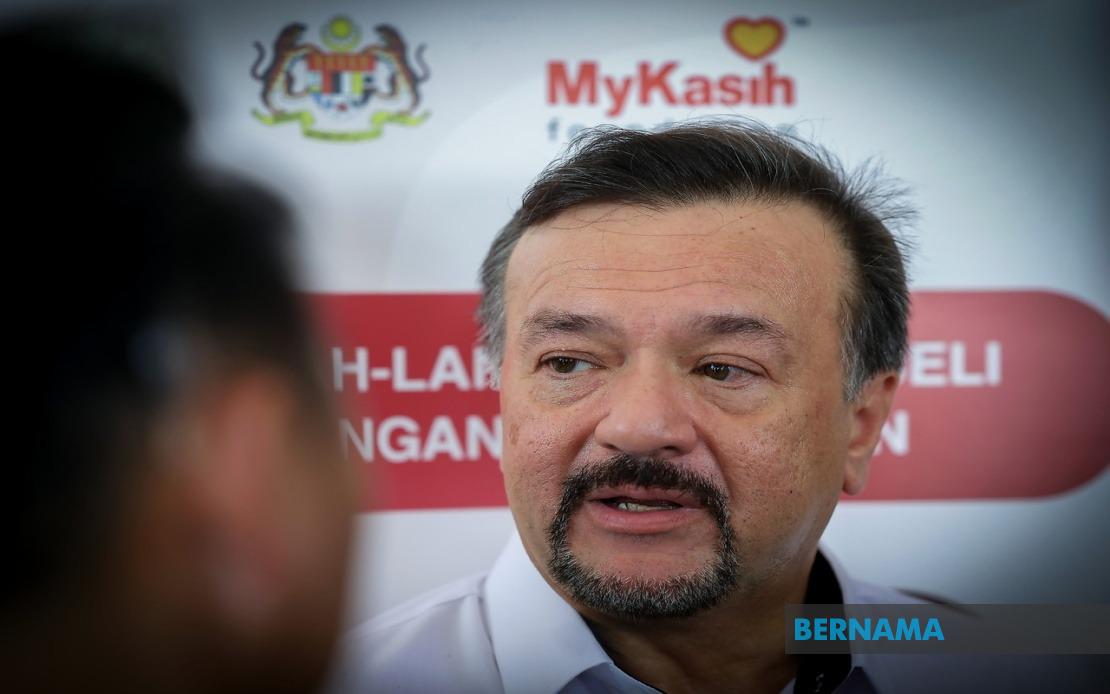
The Ministry of Finance has signalled flexibility in managing the BUDI MADANI Diesel subsidy scheme, with Finance Minister II Datuk Seri Amir Hamzah Azizan stating that the government will consider refinements to the programme based on empirical evidence gathered during its rollout. Speaking in Kuching on June 24, Amir Hamzah indicated that any modifications, including adjustments to fuel purchase quotas, would flow from analysis of actual user behaviour rather than speculative forecasts or initial feedback.
The BUDI Diesel initiative represents a continuation of Malaysia's shift toward targeted rather than blanket fuel subsidies, a policy direction the government has pursued to manage fiscal pressures while maintaining support for specific sectors. The programme caps diesel purchases for eligible users, and early implementation has already generated queries about whether the quota limits sufficiently accommodate genuine operational requirements across different user categories.
Amir Hamzah drew on concrete usage metrics to underpin the government's cautious approach. Data spanning January to May of this year revealed that only 0.76 per cent of programme participants exceeded the 200-litre threshold, a finding that provides empirical grounding for the Finance Ministry's reluctance to immediately raise quotas in response to complaints. The figure suggests that for the vast majority of users, current allocation levels remain adequate, though it simultaneously indicates that a meaningful minority—numbering in the thousands across the country—may face genuine supply constraints under the existing framework.
This data-driven methodology reflects lessons learned from previous targeted subsidy schemes. The e-hailing sector offers a particularly instructive parallel. When the government introduced a fuel subsidy programme specifically for ride-sharing drivers, early feedback indicated that allocated quotas were insufficient. Rather than implementing blanket increases, officials examined consumption records submitted by e-hailing platforms, creating a differentiated system that now offers drivers either 600 or 800 litres monthly depending on their documented fuel requirements.
The flexibility demonstrated through the e-hailing precedent has become the template for managing the BUDI Diesel programme going forward. Works Minister Datuk Seri Alexander Nanta Linggi's attendance at the Kuching media briefing underscored the interagency coordination required, given that transport infrastructure and fuel subsidies intersect across multiple portfolio responsibilities. The government's explicit acknowledgement that it harbours no ideological objection to programme revision—provided the case rests on verifiable consumption data—represents a pragmatic stance that balances fiscal discipline with operational reality.
For Malaysian businesses and sectors dependent on diesel, the announcement carries dual implications. On one hand, the government's openness to adjustment offers a pathway for legitimate claims of insufficient allocation. On the other, the emphasis on data-driven decision-making means that lobbying or anecdotal complaints will carry less weight than documented fuel consumption patterns. Operators seeking quota increases should prepare detailed records of their usage, with particular attention to demonstrating consistency and necessity.
The BUDI Diesel programme itself emerged as part of broader subsidy reforms aimed at reducing fiscal leakage and directing support more precisely toward sectors deemed economically or socially vital. Diesel, unlike petrol, carries particular significance for commercial transport, agriculture, and fishing—industries core to Malaysia's economic foundation. A poorly calibrated subsidy risks either straining public finances or leaving critical sectors unable to function efficiently.
The government's measured stance also reflects a learning curve from earlier subsidy administration. Blanket fuel supports historically generated windfall gains for unintended beneficiaries, black-market diversion, and cross-border smuggling. Targeted schemes require more sophisticated monitoring infrastructure but yield superior outcomes in terms of programme integrity and fiscal efficiency. The technology and administrative systems supporting BUDI Diesel enable the government to track individual usage patterns in real time, a capability absent in earlier eras of Malaysian subsidy policy.
Looking forward, the framework articulated by Amir Hamzah suggests that the BUDI Diesel programme will operate within a continuous feedback loop rather than as a static policy. Users who encounter genuine quota constraints should document their circumstances thoroughly, as future reviews will prioritize substantive evidence over volume of complaints. Equally, the government's signal that adjustments remain possible may preempt the kind of entrenched stakeholder conflicts that sometimes characterise subsidy disputes in Southeast Asia.
For the broader Malaysian economy, this approach demonstrates an attempt to marry fiscal prudence with operational responsiveness—a balance that often proves elusive in developing economies where subsidy programmes become politically calcified. By anchoring future modifications in empirical data rather than political pressure, the Finance Ministry hopes to insulate the BUDI Diesel scheme from the kind of mission creep and cost overruns that have plagued earlier initiatives. Whether that aspiration survives contact with sectoral lobbying remains an open question, but the government's current posture at least establishes that burden of proof.

