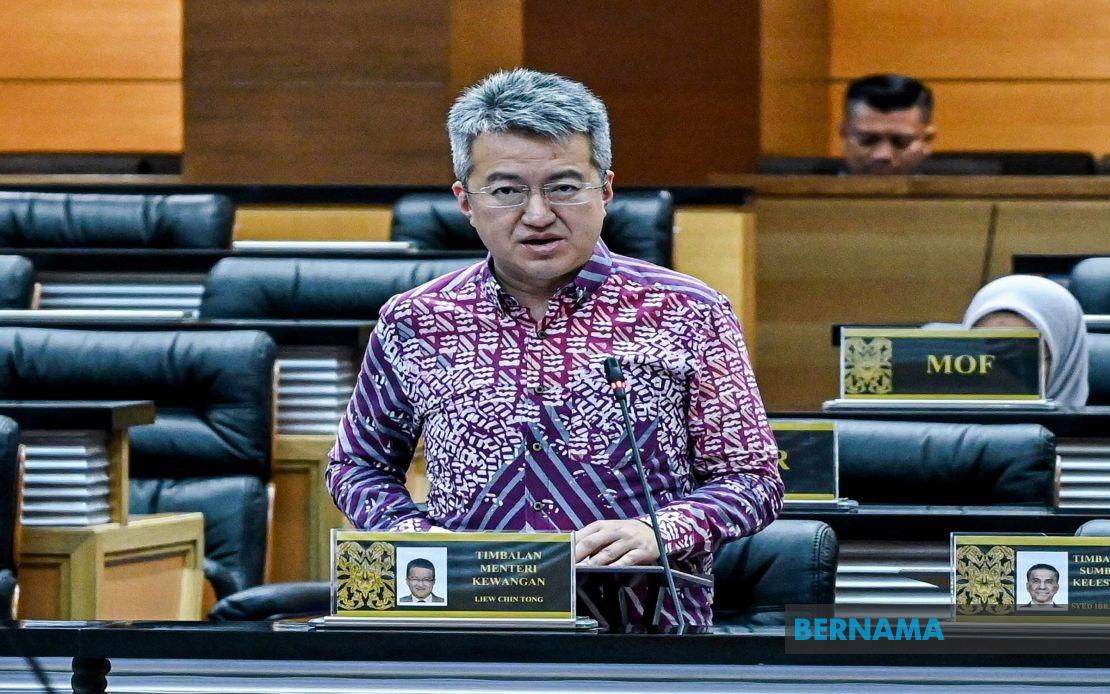
The Malaysian government is reviewing a proposal that could provide financial relief to families relying on elderly care services, with the Ministry of Finance and the Ministry of Women, Family and Community Development jointly assessing whether care centres should be exempted from the Sales and Service Tax. Deputy Finance Minister Liew Chin Tong outlined the government's position during a special parliamentary session on July 16, acknowledging widespread concerns that the eight per cent levy has intensified the financial pressures facing ordinary households seeking professional care for aging relatives.
The proposal gained parliamentary traction when Ipoh Timor MP Lee Chuan How raised the issue directly in the Dewan Rakyat, highlighting the concrete impact of the tax on families. He pointed to typical monthly fees at registered care facilities—often around RM2,500—which become substantially more expensive once the service tax is factored in. For middle-income and lower-income households already struggling with inflation and rising living costs, this additional charge represents a meaningful burden that could force difficult choices about the quality of care their elderly relatives receive. The emotional and practical weight of this issue resonates across Malaysia's increasingly aging population, where adult children must balance filial obligations with household finances.
Liew's response indicated genuine commitment to exploring relief mechanisms within the SST framework. The study will involve a detailed categorisation of elderly care services, distinguishing between facilities offering basic care and those providing premium services with enhanced amenities. This nuanced approach suggests the government recognises that a blanket exemption may not be necessary or fiscally prudent—instead, targeted relief could focus on essential care services where families have limited alternatives. The review process demonstrates awareness that policy design matters considerably when vulnerable populations are involved.
Beyond the initial study, Liew committed the Finance Ministry to conducting field visits to elderly care centres alongside officials from the women and social development ministry. These visits will shift the policy discussion from statistical analysis to direct observation and dialogue with industry operators. By engaging with care centre managers and owners, the government aims to develop a grounded understanding of how the SST impacts both facility operations and the families they serve. This fieldwork approach suggests the ministry seeks to base its final recommendation on real-world data rather than purely theoretical considerations.
The timing of this review reflects broader anxieties about Singapore's economic landscape and household finances. Malaysia has experienced sustained inflationary pressure affecting everything from food costs to housing and utilities. Against this backdrop, the SST—introduced in 2018 as a replacement for the Goods and Services Tax—has generated ongoing criticism from citizens who view it as an additional financial load on already stretched budgets. Services sectors, particularly those serving vulnerable populations, have repeatedly lobbied for exemptions or reductions, framing the tax as counterproductive to social welfare objectives.
Elderly care represents a particularly sensitive policy area for several reasons. Malaysia's population is aging, with projections indicating that the share of citizens over 65 will increase significantly in coming decades. Family structures are changing as well, with more adult children living in different cities or countries than their parents, making professional care arrangements increasingly necessary. When government policy makes such care more expensive, it risks pushing families toward informal arrangements with inadequate oversight or forcing elderly relatives into situations where they receive insufficient support. Exempting or reducing the tax on quality care services could be understood as a preventive public health investment.
The involvement of the Ministry of Women, Family and Community Development signals that this is framed as a social welfare matter rather than purely a revenue issue. That ministry oversees the Social Welfare Department's regulation of care centres, giving it institutional responsibility for ensuring adequate elderly care provision. By joining the Finance Ministry in the review, it reinforces the idea that tax policy decisions should account for social outcomes. This inter-ministerial collaboration, if it results in a concrete proposal, could serve as a template for how other service taxes affecting vulnerable populations are evaluated.
Parliamentary engagement on this issue has been unusually substantive. The special chamber session that hosted this discussion involved 63 motions tabled across the 16-day sitting, with participation from 18 different ministries. The structure allowed both government backbenchers and opposition members opportunities to raise local concerns and chair proceedings, creating a forum where issues affecting ordinary Malaysians could receive ministerial attention. In this context, Lee's intervention was one of many raising service delivery and cost-of-living concerns, suggesting these issues carry weight across the political spectrum.
The government's willingness to study an exemption, rather than dismissing it outright, indicates some sensitivity to the accumulated complaints about living costs in Malaysia. Inflation has eroded purchasing power, and households increasingly struggle with the cumulative effect of various taxes and charges. Whether this particular review leads to an exemption or some modified arrangement remains uncertain, but the process itself signals responsiveness to stakeholder concerns. For families currently managing elderly care costs, the outcome could meaningfully affect their financial situations.
Regionally, Malaysia's approach to this question may influence how other Southeast Asian nations balance revenue needs with social protection objectives. Several countries in the region have implemented or are considering consumption-based taxes, and decisions about which services—particularly those serving vulnerable populations—deserve exemptions or reduced rates shape the distributive effects of tax systems. Malaysia's findings and ultimate policy choice could inform broader regional discussions about progressive taxation and the appropriate tax treatment of essential services.
The pathway forward involves substantive work. Ministry officials will need to gather comprehensive data on care centre operations, pricing structures, and the demographic characteristics of families accessing services. They must also evaluate the revenue implications of various exemption scenarios and consider whether partial relief measures might achieve social objectives more efficiently than complete exemptions. Stakeholder consultations will be crucial for understanding practical implementation challenges. The commitment to visit facilities and engage operators directly suggests the review will be thorough rather than perfunctory, increasing the likelihood that whatever recommendation emerges will be grounded in evidence rather than ideology.

