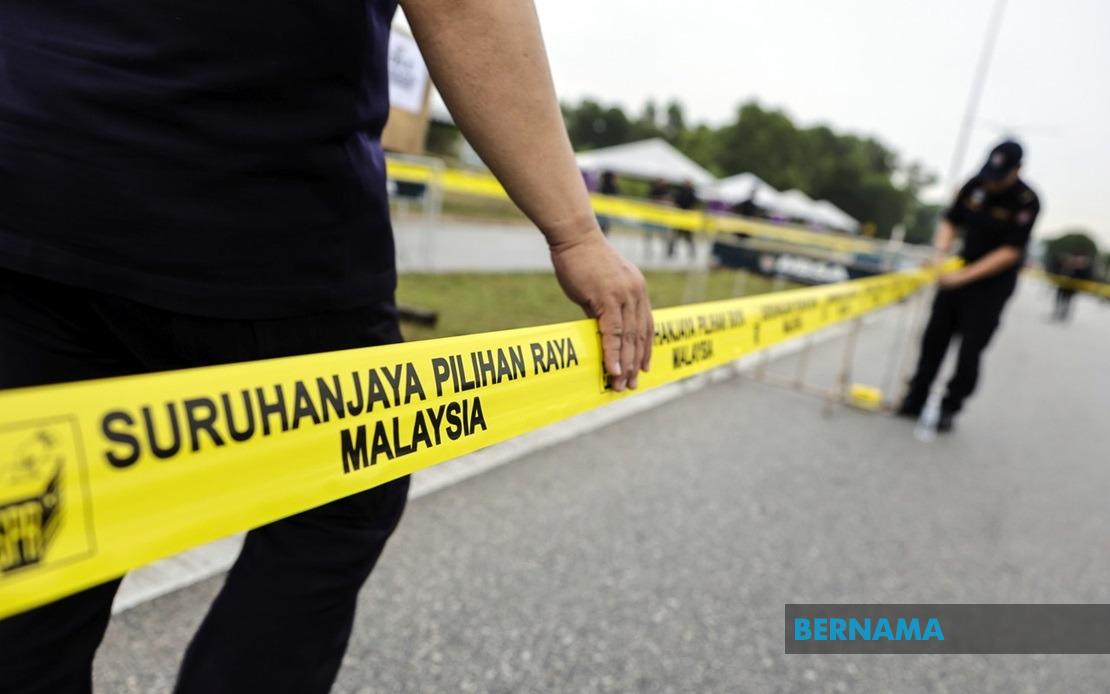
Negeri Sembilan voters and candidates preparing for the state's 16th election received a weather forecast that should ease logistics concerns for the crucial nomination day scheduled for July 18. The Malaysian Meteorological Department, through director-general Dr Mohd Hisham Mohd Anip, indicated that the morning hours would predominantly feature clear skies, providing a favourable window for the eight nomination centres operating from 9 am to 10 am across the state.
The meteorological forecast reveals a nuanced picture of conditions across different districts. Five districts—Jelebu, Jempol, Kuala Pilah, Rembau and Tampin—are anticipated to experience fine weather throughout the critical morning nomination period. However, the urban centres of Port Dickson and Seremban face a different scenario, with rainfall anticipated during the same timeframe. This variation in weather patterns across the state reflects the tropical monsoon climate characteristic of the west coast of Peninsular Malaysia, where localised precipitation is common even during brief periods.
The afternoon presents a more challenging meteorological picture, as Dr Mohd Hisham cautioned that thunderstorms are likely to develop across most districts. Such afternoon convective activity is typical for July in Negeri Sembilan, driven by solar heating and the interaction of local wind patterns. The timing of these storms—after the completion of the nomination process—minimises direct disruption to the electoral mechanics, though supporting cast members, campaign teams and election officials may face travel impediments as they disperse from nomination centres.
Crucially, the MetMalaysia projection downplayed concerns about severe rainfall disrupting the nomination process. Dr Mohd Hisham emphasised that anticipated precipitation would be temporary in nature and unlikely to reach significant volumes. The characterisation as "brief passing showers rather than prolonged heavy rainfall" suggests that even the areas expecting morning rain—Port Dickson and Seremban—should not experience conditions that would materially impede voter registration or candidacy submissions. This assessment carries particular weight given that nomination centre operations are confined to a single hour window.
Temperature conditions across the state were forecast within typical mid-year ranges for Negeri Sembilan. Minimum temperatures are expected to hover between 23 and 24 degrees Celsius, while daytime peaks should reach between 32 and 33 degrees Celsius. These temperature bands are consistent with July conditions in the state and pose no exceptional heat stress for the thousands of candidates, supporters, election commission staff and observers who will congregate at the eight nomination centres during the morning hours.
The weather outlook assumes particular significance given the unprecedented electoral landscape shaping up in Negeri Sembilan. The Pakatan Harapan coalition has committed to contesting all 36 state assembly seats, with the People's Justice Party fielding 16 candidates, the Democratic Action Party 11, and the National Trust Party nine. The Barisan Nasional grouping has declared 25 seats, distributed across the United Malays National Organisation with 16 seats, the Malaysian Chinese Association with seven, and the Indian Congress with two. Beyond these two major coalitions, Perikatan Nasional has announced eleven candidacies spanning five from the Pan-Malaysian Islamic Party, four from the National Vision Party, and one each from Gerakan and the Malaysian Indian People's Party.
Additional political forces are also entering the competitive fray. Three independent political entities—the Malaysia Orang Asli Party, the Socialist Party of Malaysia, and the Malay Islamic Jemaah Union Party—have each declared single candidates. The Pribumi Bersatu Malaysia party was expected to announce its candidate roster separately, indicating that the Negeri Sembilan election represents a fragmented political landscape with potentially dozens of candidates vying for representation. Weather conditions that smooth the nomination process thus become operationally significant for managing such a crowded field.
The nomination day procedures establish the formal framework within which candidates must file their documents and credentials. The eight nomination centres will operate exclusively between 9 am and 10 am, after which the returning officers will make official announcements of confirmed candidates. This compressed timeline leaves no flexibility for weather-related delays, making the meteorological forecast's emphasis on fine morning conditions in most districts particularly relevant. Any significant disruptions during this window could create logistical complications for candidates from outlying districts attempting to meet deadlines.
The broader electoral calendar provides context for the nomination day forecast. The Negeri Sembilan State Legislative Assembly, comprising 36 seats, was dissolved on June 5 following political developments within the state administration. The Election Commission subsequently set July 28 as the date for early voting and August 1 as polling day, creating a compressed campaign period of roughly two weeks following nomination. This abbreviated timeline intensifies the importance of a smooth nomination process, as candidates will have limited days to mobilise supporters and conduct grassroots campaigning.
The electoral roll compiled by the Election Commission encompasses 889,490 eligible voters across the state—a substantial electorate that will determine Negeri Sembilan's political direction for the next electoral cycle. Within this voter population, 867,151 are classified as ordinary voters, whilst 16,884 military personnel and their spouses and 5,455 police officers are eligible for early voting on July 28. The presence of military and police personnel in the electoral roll introduces a structural element that distinguishes Negeri Sembilan's voting process from civilian-only elections in some other states.
MetMalaysia director-general Dr Mohd Hisham advised the entire spectrum of election participants—candidates, party workers, election officials and observers—to monitor the meteorological department's website for updated forecasts as nomination day approaches. Such precautionary guidance reflects the dynamic nature of tropical weather systems, where conditions can shift between forecast issuance and actual event days. The availability of real-time weather monitoring allows campaign organisers and election officials to adjust logistical arrangements if conditions deteriorate beyond initial projections.
The weather forecast ultimately presents a moderately optimistic scenario for the operational execution of nomination day in Negeri Sembilan. While afternoon thunderstorms are anticipated and morning rain is expected in two districts, the overall assessment suggests conditions should permit the timely completion of nomination procedures across all eight centres. The convergence of manageable meteorological conditions with an unusually large field of competing candidates sets the stage for a complex but operationally feasible nomination process that should proceed substantially according to the election commission's scheduled timeline.

