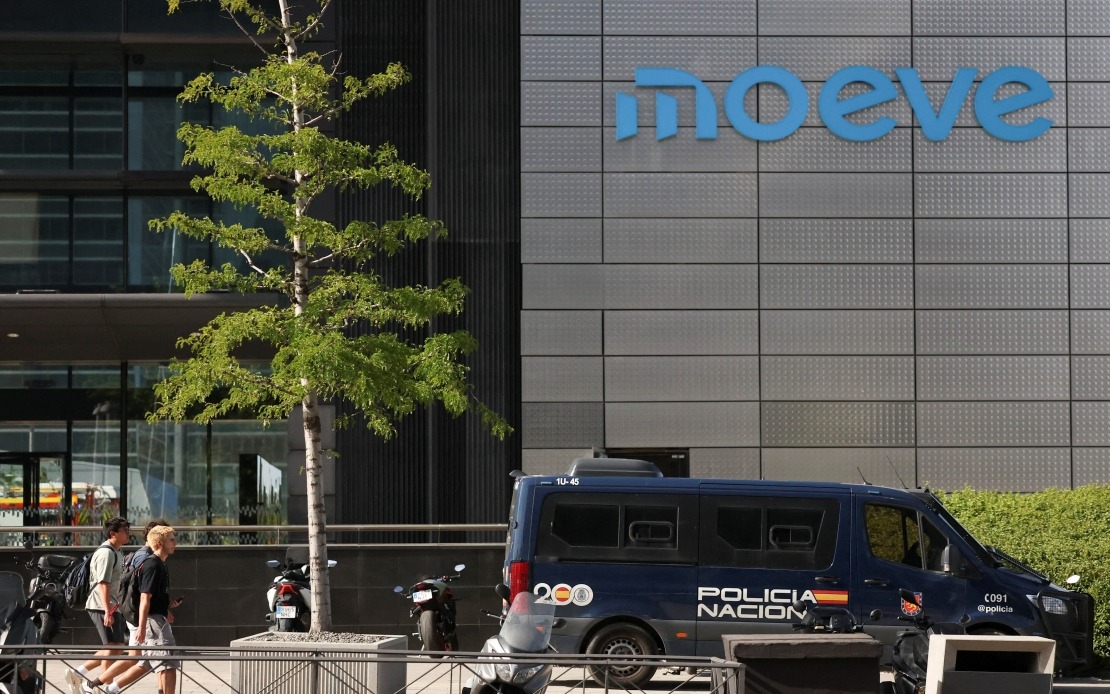
Madrid's iconic Torre Moeve, Spain's second-tallest building, became the site of a dramatic fire incident on Tuesday afternoon when an explosion triggered a blaze that sent thick plumes of smoke billowing across the city skyline. The incident, which occurred around 5.00 pm local time according to Spanish national broadcaster RTVE, prompted immediate emergency response protocols and the full evacuation of the structure as a precautionary measure. Authorities and emergency services swiftly mobilised to contain the situation, with the visible smoke serving as a stark reminder of the building's prominence in Madrid's urban landscape.
According to the Spanish government delegation in Madrid, the fire originated on the 25th floor, a section designated for technical rooms and mechanical systems rather than occupied office or residential spaces. This location proved significant in minimising potential casualties, as technical floors typically house fewer personnel than general office areas. The fact that the blaze started in these infrastructure areas rather than in busy work zones likely contributed to the favourable outcome in terms of human casualties. Understanding the building's layout and functions becomes crucial when analysing how such incidents are managed in modern high-rise structures across Europe.
Firefighters from the Madrid City Council responded decisively to the emergency, working to contain and suppress the flames. The professional response appears to have been swift and effective, with authorities declaring the fire extinguished following coordinated firefighting efforts. Following suppression of the flames, emergency personnel conducted thorough interior inspections to assess structural integrity, identify any lingering hazards, and ensure that the building was safe for eventual reoccupancy. Such detailed post-incident examination represents standard protocol in major metropolitan areas when significant fires occur in prominent buildings.
The human toll from this incident remained minimal, reflecting both the rapid response and fortunate circumstances surrounding the fire's location. Three individuals experienced health effects directly related to the emergency: two workers suffered mild smoke inhalation, while a passer-by outside the building experienced an anxiety attack triggered by the incident. Notably, all three received treatment at the scene and required no hospitalisation, indicating that their conditions remained manageable and non-serious. This outcome stands in sharp contrast to what could have occurred had the fire spread more extensively or ignited in heavily occupied areas of the tower.
The Torre Moeve explosion that preceded the fire raises questions about what triggered the initial blast. While Spanish national police were cited regarding the incident's timeline, the underlying cause of the explosion remained unclear in initial reports. Such preliminary phases of major incidents often involve investigations that take considerable time to complete, requiring experts to examine physical evidence, interview witnesses, and reconstruct the sequence of events. The distinction between the explosion and the subsequent fire suggests they may have been causally linked, with the blast either directly igniting materials or creating conditions conducive to combustion.
Madrid's emergency management and firefighting capabilities were tested and performed effectively during this incident. The city's infrastructure for managing high-rise emergencies, evacuation procedures, and firefighting resources demonstrated their value in containing what could have developed into a far more serious situation. For residents and workers in Madrid's central business district, the incident underscores both the inherent risks associated with tall buildings and the robust systems in place to manage such emergencies. The speed with which the fire was declared extinguished reflects the resources dedicated to protecting critical urban infrastructure.
The visibility of smoke plumes across Madrid throughout the incident would have drawn significant public attention and concern. Such visual signals of emergency in a major metropolitan area inevitably generate anxiety among residents and observers, particularly given contemporary sensitivities surrounding building safety and urban disasters. The fact that authorities could quickly communicate that no fatalities or injuries had occurred helped mitigate public alarm, though uncertainty during the initial hours of such incidents typically generates considerable worry. Media reporting of the incident's progression from explosion through fire to extinguishment would have shaped public understanding of events as they unfolded.
From a Southeast Asian perspective, incidents at major European landmarks and infrastructure serve as valuable case studies for understanding how developed economies manage urban emergencies. Malaysia and other regional nations continue to invest in high-rise development across Kuala Lumpur, George Town, Penang, and other urban centres. The Torre Moeve incident demonstrates the importance of robust building safety standards, well-trained emergency response teams, and clear evacuation procedures. Examining how Madrid handled this emergency provides insights into best practices that regional developers, building managers, and municipal authorities might consider implementing or refining within their own jurisdictions.
Building codes and safety regulations in Spain, governed by European Union standards, represent some of the world's most stringent requirements for high-rise construction and operation. The fact that a fire on the 25th floor of such a prominent structure resulted in no fatalities speaks to the effectiveness of these regulatory frameworks. Compartmentalisation, fire suppression systems, evacuation routes, and safety protocols embedded within modern European buildings reflect decades of learning from past incidents. As Malaysia continues to develop increasingly ambitious architectural projects, including supertall structures in Kuala Lumpur's skyline, adherence to rigorous international safety standards becomes ever more important for protecting residents and workers.
The Torre Moeve incident also highlights the unpredictability of emergencies in urban environments. Despite sophisticated modern engineering and safety systems, buildings remain subject to unexpected events including explosions, mechanical failures, and fires. The importance of maintaining vigilance, regular maintenance protocols, and comprehensive emergency preparedness cannot be overstated. Building operators, facility managers, and safety personnel must remain constantly prepared for scenarios that, while hopefully rare, carry significant consequences if not managed effectively. The Madrid fire serves as a timely reminder of these obligations for building management professionals across the region and globally.
Looking forward, Spanish authorities will likely conduct thorough investigations into the cause of the initial explosion, examining equipment, systems, and maintenance records to determine what went wrong. Such investigations often take weeks or months to complete, and findings ultimately contribute to evolving safety standards and practices. The incident will probably generate discussion within Madrid's building management community about lessons learned and any modifications needed to safety protocols. For international observers, including those in Southeast Asia developing similar infrastructure, monitoring the outcomes of such investigations provides valuable intelligence for improving safety standards in their own jurisdictions.