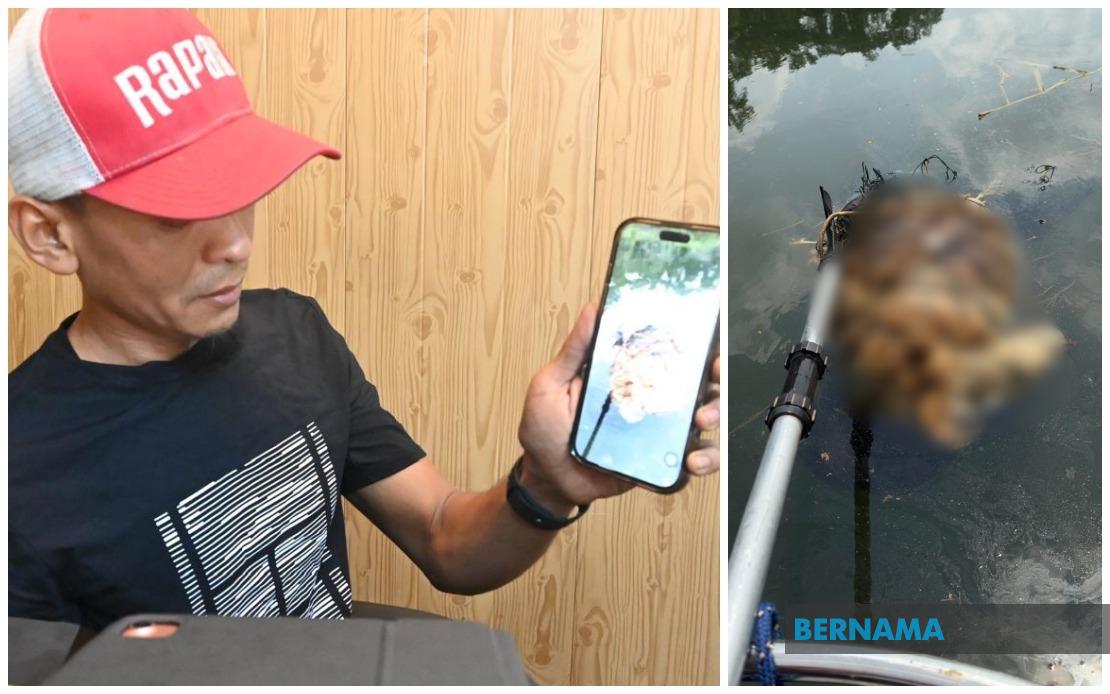
A macabre discovery in a Johor waterway has sparked a police investigation after a fisherman stumbled upon a body wrapped and secured with netting in Sungai Tanjung Sembrong at Parit Raja, Batu Pahat. The find, made on August 3, arose from what began as a routine attempt to capture social media content related to the man's long-standing fishing pursuit, underscoring how unexpected circumstances can thrust ordinary moments into criminal matters.
Muhamad Zul Fikri Borhanodin, 33, first noticed the floating object at approximately 11 am and initially dismissed it as an animal carcass—a fairly typical sight in the river given the frequency of such occurrences. His decades of experience on the water, spanning more than twenty years, might have led him to pass by without closer examination had circumstances been slightly different. Yet the overwhelming stench emanating from the bundle and the deliberate manner in which it had been wrapped and bound with netting aroused his suspicion enough to investigate further.
Upon spotting what appeared to be a pair of jeans protruding from the wrapping, Muhamad Zul Fikri's instincts shifted decisively toward a darker possibility. Rather than proceed alone, he prudently alerted a companion who was operating another vessel nearby before the authorities became involved. The decision to seek corroboration from his friend likely proved crucial in validating the discovery and ensuring that initial reports to police carried weight and credibility from multiple witnesses.
This discovery marked the second occasion on which Muhamad Zul Fikri has encountered human remains at this particular location. A previous incident several years ago involved someone who had fallen into the river, suggesting that Sungai Tanjung Sembrong may carry tragic currents beyond the typical waterway hazards. The pattern raises questions about whether the river has become a focal point for disposal of bodies or whether such discoveries simply reflect the reality of living waterways in densely populated areas where accidents and crimes intersect.
Police response came relatively swiftly, with authorities receiving notification of the discovery at approximately 12:30 pm on the same day. The investigation quickly expanded beyond the initial finding when officers connected the body to an existing missing persons case. The victim's wife had filed a report on July 29 indicating that her husband had disappeared from Mutiara Rini in Iskandar Puteri, establishing a timeline and geographical link that directed investigative efforts.
In a coordinated enforcement action, Johor's deputy police chief DCP Hoo Chuan Huat disclosed that three male suspects, ranging in age from 26 to 40 years old, were apprehended around the Batu Pahat vicinity on the day the body surfaced. Their detention served the investigative purpose of obtaining statements and clarifying their involvement or knowledge of the circumstances surrounding the death. The arrests suggest that preliminary leads or intelligence guided officers to these individuals relatively quickly following the discovery.
The methodical wrapping and binding of the body in netting indicates a deliberate effort to conceal the remains, distinguishing this case from a simple accident or unwitnessed drowning. The sophistication of concealment typically prompts investigators to explore theories involving premeditated action rather than spontaneous tragedy. The choice of a river as a disposal site reflects a common criminal calculation about how waterways might mask evidence through submersion and decomposition.
For Malaysian news observers, this incident exemplifies how civilian witnesses in ordinary circumstances—fishing enthusiasts capturing content, commuters crossing bridges, workers near rivers—continue to play pivotal roles in uncovering serious crimes. The contribution of Muhamad Zul Fikri and his companion demonstrates that many criminal discoveries rely not on sophisticated detective work but on the alertness of people simply going about their daily activities.
The Batu Pahat case also underscores the persistent challenge of disappearances and deaths involving waterways throughout Malaysia. Rivers crossing through populated regions of Johor remain scenes where missing persons occasionally surface in tragic conditions, generating distressing news cycles and straining families awaiting answers. This incident contributes to an ongoing narrative about personal safety, the risks posed by waterway environments, and the vulnerability of individuals who vanish into circumstances that eventually yield to discovery and investigation.
As authorities continue their inquiries into the circumstances of death and the involvement of the detained men, the case will likely proceed through standard criminal investigation protocols. Forensic examination, witness statements, and forensic evidence will determine whether this represents a homicide, manslaughter, or other classification under Malaysian law. The missing persons report filed by the victim's wife provides a crucial anchor point for establishing identity, timeline, and potential motive in what appears to be a case involving foul play rather than misfortune.

