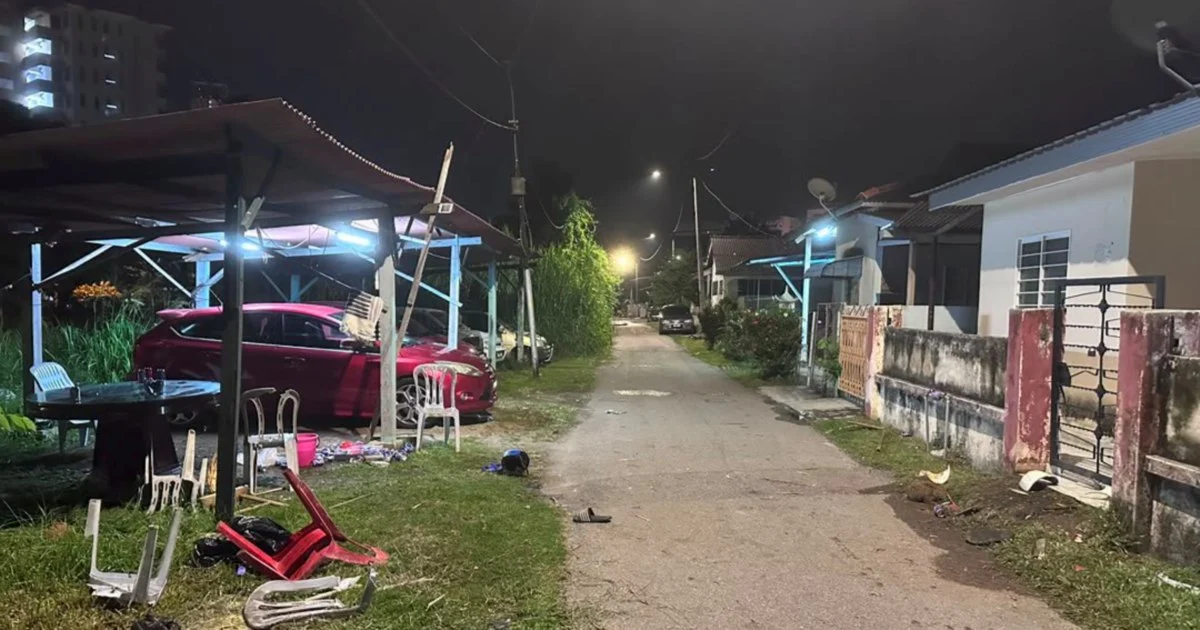
A violent assault in the early hours of today near Jalan Pengkalan in Kampung Pengkalan Rama Pantai, Melaka has resulted in five arrests and two victims hospitalised, one in critical condition. The incident unfolded when two men attended the location to collect a motorcycle, only to be set upon by a group of assailants in circumstances that remain under active investigation by the state's police force.
The victim left in critical condition suffered a fractured skull during the altercation, prompting immediate medical intervention and admission to hospital where he remains under close observation. His companion sustained additional injuries, though details regarding the severity and nature of these wounds have not been fully disclosed by authorities at this stage. Emergency services responded promptly to the scene following reports of the attack, transporting both men to medical facilities for urgent treatment.
The geographical context of this incident—occurring near a religious building in a residential area of Melaka—has sparked concern among local residents who frequent the neighbourhood. Jalan Pengkalan is a relatively busy thoroughfare connecting residential communities, and the temple in question serves as a focal point for the surrounding area. The timing of the assault, occurring in the pre-dawn hours when foot traffic is minimal, raises questions about visibility and police visibility in the region during late-night and early-morning periods.
Within hours of the attack, police operatives identified and apprehended five individuals suspected of involvement in the violence. The swift arrests suggest either eyewitness cooperation or security camera footage that aided in identifying the perpetrators. These detentions mark a notable police response in a jurisdiction that, like many Malaysian states, has seen periodic reports of gang-related violence and street crime. The nature of the charges these five individuals will face remains to be clarified as investigations progress.
The motivations behind the attack remain unclear at this juncture. Whether this was a random act of street violence, a targeted assault stemming from personal disputes, or an opportunistic crime remains undetermined. The fact that the victims were specifically present to retrieve a motorcycle introduces the possibility of a dispute related to the vehicle itself, though authorities have not confirmed any such connection. Gang-related violence in Malaysia occasionally manifests as seemingly sudden attacks that carry undercurrents of territorial or personal conflict.
Melaka, as a densely populated state with significant economic activity and tourism, experiences diverse crime categories ranging from petty theft to more serious violent offences. This incident adds to ongoing law-and-order concerns that periodically surface in the state and across Malaysia more broadly. The presence of temples and religious sites does not necessarily correlate with enhanced security, and many such locations, while generally peaceful, remain vulnerable to criminal activity if security measures are insufficient or absent.
The psychological impact of such incidents extends beyond the immediate victims and their families. Local residents, particularly those who frequent the temple or use surrounding roads at night, may experience heightened anxiety about personal safety in their neighbourhood. Religious communities often serve as anchors for social cohesion, and violence occurring in their vicinity can reverberate through those networks, prompting discussions about community safety and protective measures.
From a law-enforcement perspective, this case illustrates the reactive challenges Malaysian police face in responding to spontaneous violence. The presence of five assailants suggests either an organised group or multiple individuals acting in concert, complicating both the immediate intervention and subsequent investigation. Determining the hierarchy of involvement—identifying who inflicted the most serious injury, for instance—will influence how charges are structured and prosecuted.
The outcome of this case will partly depend on the recovery trajectory of the critically injured victim. His medical prognosis will influence the severity of charges prosecutors pursue against the five arrested individuals. In Malaysia, grievous injury cases involving fractures and critical hospitalisation typically invoke more serious provisions of the Penal Code, potentially resulting in substantial prison sentences for those convicted.
As investigations deepen, authorities will likely seek to establish whether the five arrested individuals have prior criminal records or known affiliations with organised groups. The weapon or implement used to inflict the fractured skull will also be significant to forensic analysis and corroborating evidence. Community cooperation in providing additional witness statements or footage will be crucial to solidifying the prosecution's case.
This incident underscores the broader issue of nighttime safety in Malaysian neighbourhoods. Residents and temple authorities may increasingly consider enhanced lighting, closed-circuit camera systems, or increased police patrols in the area. The arrest of five suspects within hours provides some reassurance that law enforcement can respond decisively, yet it also reminds the public that such violence, while hopefully rare, remains an occasional reality in urban and semi-urban Malaysian settings.

