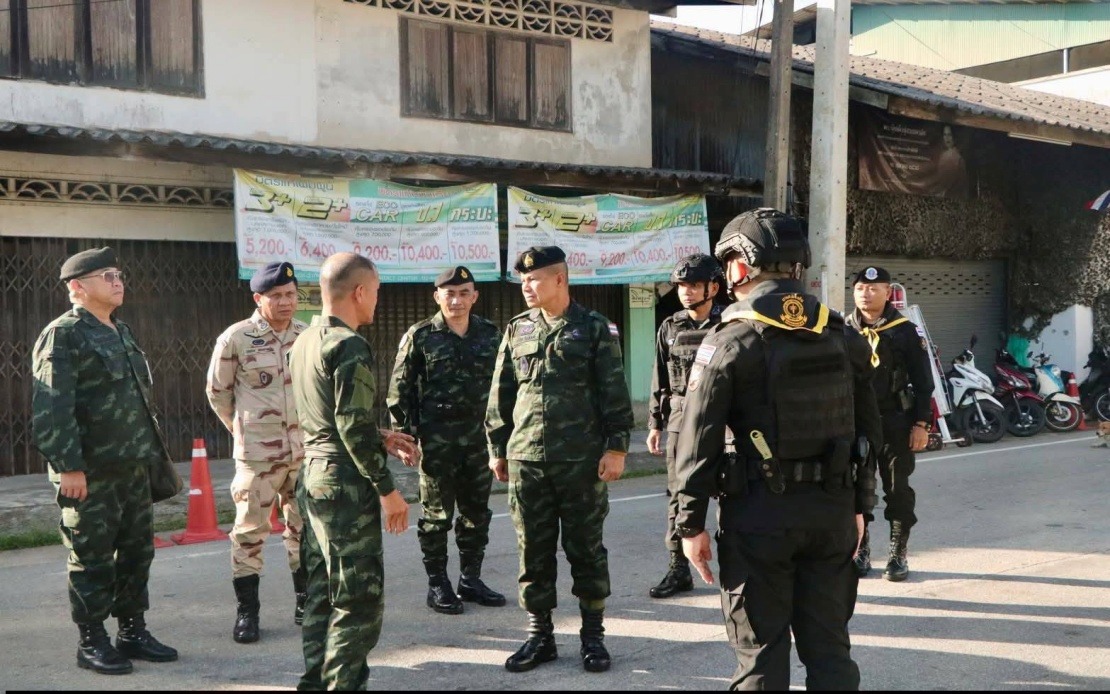
An armed assault on a security installation in Thailand's restive southern province of Narathiwat has resulted in the deaths of five ranger personnel and injuries to six civilians, marking another escalation in regional violence that carries implications for cross-border stability in Southeast Asia. The attack unfolded on Wednesday evening at approximately 6:45 pm local time, targeting the 4509 Ranger Company checkpoint positioned on Sami Hill in Rangae District, a strategically significant location that forms part of Thailand's security infrastructure in the troubled southern region.
According to Lieutenant General Norathip Phoyanok, commander of the Fourth Army Region and director of the Internal Security Operations Command Region 4, the assault was executed by more than six individuals wearing dark clothing and face coverings. The attackers deployed both conventional firearms and improvised explosive devices, specifically pipe bombs, in what appeared to be a coordinated operation designed to overwhelm the checkpoint's defensive capabilities. The tactical sophistication evident in the simultaneous use of firearms and explosives suggests careful planning and suggests the involvement of elements with combat experience or formal training.
The civilian toll underscores the indiscriminate nature of the violence afflicting the area. Among those injured were a three-year-old girl and an elderly person, indicating that the assault's impact extended beyond military personnel to encompass vulnerable members of the local community. This pattern of civilian casualties has become increasingly common in the southern Thailand conflict, where the distinction between military and civilian spaces has become increasingly blurred, creating a climate of pervasive insecurity that affects ordinary residents attempting to conduct normal daily activities.
Investigators have determined that the perpetrators made their escape using a black four-wheel-drive vehicle, though no immediate apprehensions were reported. The choice of vehicle and the apparent planning evidenced by the group's ability to execute the assault and withdraw suggests involvement by an organized militant network rather than spontaneous or opportunistic violence. The masked identities of the attackers and their disciplined execution of the operation point toward a cell-based structure typical of established insurgent organizations operating in the region.
Narathiwat Governor Boonchuai Hormyamyen responded to the incident by instituting enhanced security measures across the province. These measures encompass coordination between police forces, military units, and civilian administrative authorities, with particular emphasis on hardening security along the porous Malaysia-Thailand border and throughout the twelve districts comprising Narathiwat. The focus on border security reflects longstanding concerns about cross-border movement of weapons, personnel, and logistical support that may facilitate militant operations in the southern provinces.
For Malaysian readers and policymakers, this incident carries direct relevance given the proximity of Narathiwat to the Malaysian border and the shared security challenges confronting both nations in managing militant networks that operate across jurisdictional boundaries. The borderlands between Thailand and Malaysia have historically served as sanctuary and transit corridors for various militant factions, a reality that necessitates sustained intelligence cooperation and coordinated enforcement operations between Bangkok and Kuala Lumpur.
The scene of the attack has been cordoned off to facilitate forensic investigations and evidence collection, a procedural step that may yield important intelligence regarding the attackers' identities, capabilities, and potential organizational affiliations. Investigators are simultaneously pursuing inquiries aimed at identifying the individuals and entities responsible for planning and directing the operation, though such investigations typically prove lengthy and complex in an environment where obtaining reliable witness testimony and physical evidence remains challenging.
The Narathiwat attack reflects the broader context of persistent insurgency in Thailand's southernmost provinces, where various militant groups have conducted intermittent campaigns of violence against military and civilian targets for years. These organizations, which have evolved in capability and sophistication since the early 2000s, continue to pose a strategic challenge to Thai authorities despite sustained military and counterinsurgency operations. The checkpoint assault represents a deliberate demonstration of continued operational capacity and willingness to inflict casualties on security forces.
For Southeast Asia more broadly, incidents such as this underscore the vulnerability of border regions where state authority remains contested and militant networks exploit porous boundaries and rugged terrain. The cross-border implications extend to Malaysia's security establishment, which monitors developments in southern Thailand closely given potential spillover risks and the possibility of militants transiting through Malaysian territory to conduct operations or seek refuge. Enhanced regional intelligence sharing and coordinated border operations remain essential components of the broader security framework that both nations employ to address these persistent challenges.
The heightened state of alert across Narathiwat reflects a security posture that will likely remain in effect until authorities determine whether the checkpoint attack represents an isolated incident or signals the beginning of a new cycle of intensified militant activity. Such determinations require careful analysis of intelligence indicators, witness accounts, and forensic evidence, processes that unfold over extended periods. Meanwhile, the security forces' enhanced presence across the province serves both as a deterrent to further attacks and as a reassurance mechanism for civilian populations endeavoring to maintain normal patterns of life despite the surrounding dangers.

