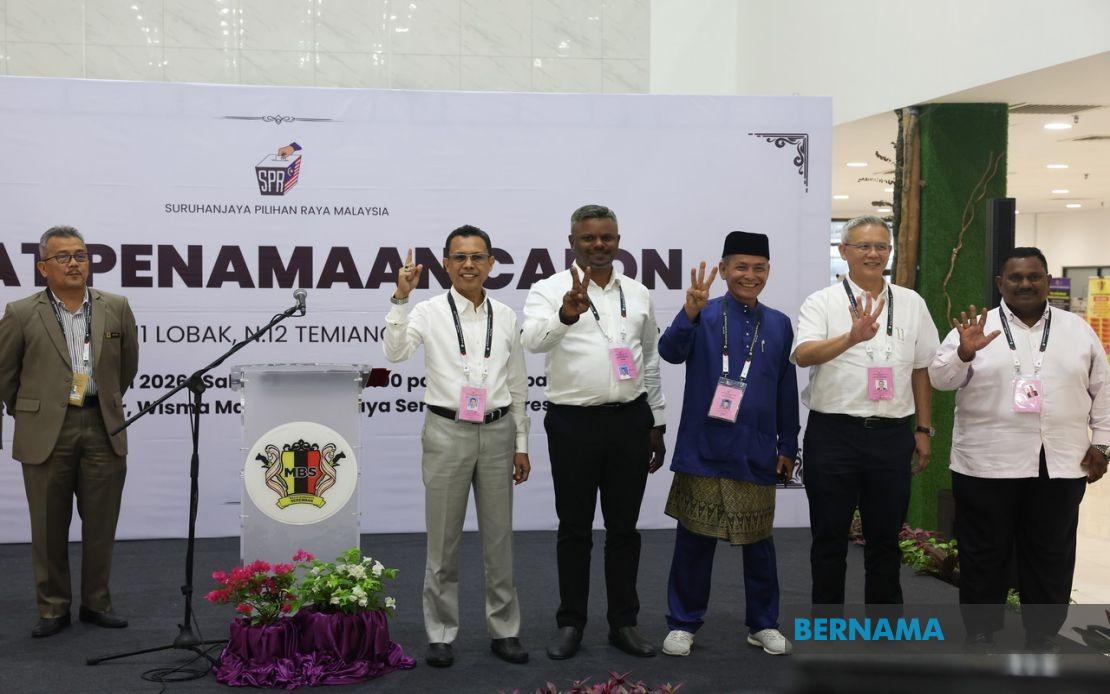
The Nilai state assembly seat has emerged as one of the most contested races in the forthcoming 16th Negeri Sembilan election, with incumbent DAP National vice chairman J. Arul Kumar facing an unexpectedly crowded field of five candidates. The nomination process, which concluded on July 18 at Wisma Bandaraya Seremban, formalised a genuinely competitive battleground that reflects the complex political landscape across the state and signals the extent to which multiple blocs are willing to invest resources in what has traditionally been regarded as a Pakatan Harapan stronghold.
Arul Kumar's challengers represent a diverse cross-section of Malaysia's political ecosystem. Zamani Ibrahim stands as Berjasa's nominee, bringing the Islamic populist party's credentials to bear in the contest. The Barisan Nasional ticket is carried by Datuk Lai Chien Kong, representing the coalition's continued determination to claw back ground in a state where it has struggled in recent electoral cycles. Datuk V. Saravana Kumar represents Bersatu, the splinter outfit that has significantly complicated the political arithmetic across multiple constituencies. Completing the lineup is independent candidate Omar Mohd Isa, indicating that grassroots frustration or personal ambition has motivated at least one political entrepreneur to contest outside the established party framework.
The multiplication of candidates in Nilai carries particular significance given Arul Kumar's seniority within DAP structures. His position as National vice chairman underscores the party's commitment to retaining this seat, yet the crowded contest suggests that other parties, particularly Bersatu, view the constituency as vulnerable terrain where voter fragmentation might work to their advantage. The five-way split means that victory margins could prove razor-thin, and coalition partner strategies regarding vote concentration and tactical voting will likely prove decisive.
Elsewhere across the 36-seat state assembly, the electoral contests display varying degrees of competition. The Sikamat seat presents a three-way contest where Nor Azman Mohamad, who functions as political secretary to the Menteri Besar, will defend the PH colours against PN's Datuk Razali Abu Samah and Bersatu's Datuk Tun Faisal Ismail Aziz. An independent candidate, Bujang Abu, withdrew at the final moment, potentially indicating either tactical consideration or internal pressure regarding vote-splitting concerns. This withdrawal pattern may repeat elsewhere, as candidates and party strategists calibrate their positions based on early momentum.
The Lenggeng constituency presents a three-candidate contest featuring PH's Zarinna Abu Zarin attempting to unseat BN incumbent Datuk Mohd Asna Amin, with Bersatu's Zool Amali Hussin complicating the equation. In contrast, Lobak has crystallised into a direct bilateral confrontation between incumbent Chew Seh Yong of PH and PN challenger Dr P. Kumar, suggesting either that neither opposition coalition saw sufficient traction to field candidates or that strategic considerations led competing parties to cede territory. Such disparities across constituencies often reflect differential party strength in different localities and the degree to which parties believe they can mount credible campaigns.
The Temiang seat unfolds as a three-cornered affair, with PH's Ho Weng Wah, who holds the position of political secretary to the Transport Minister, squaring against BN's Datuk Leaw Kok Chan and Bersatu's Fazly Hamid. The presence of a sitting ministerial aide among PH candidates indicates the party's strategic deployment of federal figures to contest state seats, a tactic employed across Malaysian electoral cycles to leverage incumbent influence. Similarly, in Ampangan, Muhammad Nazri Kassim, who directs Yayasan Negeri Sembilan, stands as the PH representative facing PN's Datuk Dr Mohamad Rafie Malek and Bersatu's Noor'azah Harun.
The overall configuration across these contests reveals several underlying patterns worth noting for Malaysian political observers. Bersatu's presence across multiple constituencies indicates that the party is mounting a comprehensive challenge to both PH and BN, potentially drawing votes from disaffected sections of each coalition. The relatively limited participation of PN as a distinct force outside the Sikamat and Lobak contests suggests variable coordination within the Perikatan framework, or that PN has strategically focused its resources on select battlegrounds. BN's consistent fielding of candidates across diverse seats demonstrates organisational capacity, even as the coalition grapples with reduced electoral fortunes compared to earlier electoral cycles.
The Negeri Sembilan state assembly's dissolution on June 5 set the stage for this comprehensive electoral reckoning. The Election Commission's scheduling of early voting on July 28 and polling day for August 1 provides an accelerated timeline that may advantage parties with superior ground organisation and volunteer mobilisation capacity. The compressed campaign period, typically characterised by intense activity over three weeks or less, often sees advantage accrue to incumbent parties with established machinery and name recognition.
For Malaysian observers, particularly those tracking coalition politics in non-federal elections, Negeri Sembilan's contests illuminate broader questions about PH's capacity to maintain 2023 momentum without the additional pull factors of federal leadership, the extent to which Bersatu has consolidated itself as a genuine third force, and whether BN's steady presence across constituencies translates into electoral recovery. The crowded Nilai contest epitomises these tensions, suggesting that no single bloc can afford complacency even in traditionally secure seats.
The state election assumes added significance because Negeri Sembilan functions as a bellwether for sentiment in states with mixed urban-rural demographics. Voting patterns here often foreshadow dynamics in other swing states, making the campaign dynamics and eventual results matters of genuine national importance. The 16th state election will provide important signals about whether 2023's political realignment has stabilised or whether further shifts remain in prospect.

