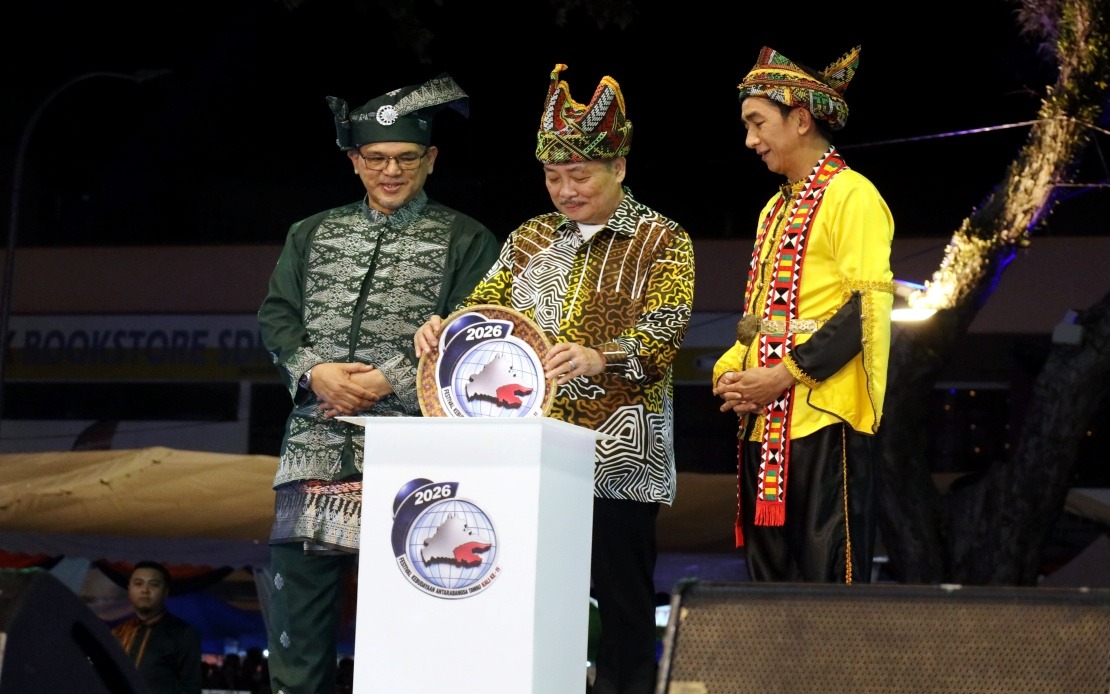
The 11th International Tawau Cultural Festival (FKAT) is establishing the southeastern Sabah town as a significant destination for cultural tourism, according to Sabah Chief Minister Datuk Seri Hajiji Noor. Speaking at the festival's opening ceremony, Hajiji underscored how FKAT serves as a vital showcase for the rich cultural traditions maintained by Sabah's diverse ethnic communities, drawing sustained interest from both domestic and international visitors seeking authentic cultural experiences.
Hajiji framed the festival as more than a celebration of historical legacy, positioning culture as a living economic asset that requires active stewardship and investment. He expressed confidence that FKAT's expansion and continued success would generate measurable benefits across Tawau's tourism sector and broader economic activities, helping to diversify income sources beyond the region's traditional economic drivers. This perspective reflects a growing regional understanding that cultural preservation and economic development need not be competing priorities—rather, they can reinforce each other when properly managed.
The festival's significance extends beyond entertainment and heritage display. Hajiji emphasised FKAT's role as a unifying force within Sabah's multi-ethnic society, where the celebration of distinct cultural identities simultaneously strengthens social cohesion and mutual understanding among different communities. Rather than fragmenting along cultural lines, the festival framework allows each group to assert its unique identity while participating in a collective expression of Sabahan diversity. This model carries implications for other Malaysian states seeking to balance pluralism with social harmony.
Tawau's geographical position as a border town amplifies the festival's regional significance. Hajiji highlighted the participation of international delegations from Kazakhstan, Uzbekistan, Cambodia, and Indonesia, noting that this cross-border engagement extends beyond tourism into the realm of cultural diplomacy and bilateral cooperation. Such networks can facilitate knowledge exchange, strengthen people-to-people connections, and create informal channels for regional dialogue—benefits that transcend typical festival metrics and contribute to broader Southeast Asian cohesion.
The economic spillover effects of FKAT extend directly to local communities and small-scale entrepreneurs. Hajiji identified homestay operators, artists, craftspeople, and street traders as primary beneficiaries of increased tourist footfall, suggesting that festival success creates tangible livelihood opportunities for residents who might otherwise have limited access to the tourism economy. This inclusive approach to tourism development contrasts with models that concentrate benefits among large corporate operators and external investors.
The timing of FKAT within the broader Visit Malaysia Year 2026 and Visit Sabah Year 2027 initiatives reflects strategic coordination at both federal and state levels. These coordinated campaigns aim to leverage cultural events as anchors for wider tourism promotions, creating complementary marketing efforts that amplify each initiative's reach. For Tawau specifically, positioning itself as a cultural destination during these national tourism years provides a window to establish brand recognition and attract visitor segments seeking deeper cultural engagement rather than conventional beach or resort experiences.
Sabah's government has committed to intensifying promotional activities and community-based tourism initiatives that encourage international visitors to venture beyond Malaysia's established tourist corridors. These efforts involve strengthening campaign messaging that highlights the authenticity and accessibility of Sabahan cultural experiences, particularly emphasizing opportunities for visitors to interact directly with local communities and artisans. Such grassroots tourism models can generate more equitable wealth distribution than centralised tourist infrastructure.
The state government's stated commitment to supporting ethnic organisations in preserving and managing their respective cultural heritages suggests a policy framework that recognises indigenous communities and ethnic groups as custodians rather than merely performers of culture. This distinction matters significantly—it implies that cultural preservation initiatives will be designed with community input and agency, potentially leading to more sustainable and respectful cultural tourism practices than externally-imposed models.
Looking forward, FKAT's evolution demonstrates how Malaysian regions are adapting to competitive global tourism markets by developing distinctive cultural propositions. Tawau's multi-ethnic composition and strategic location provide unique advantages that, if properly developed, could differentiate it from other Malaysian destinations. However, success will depend on balancing tourism growth with community interests, ensuring that cultural commodification does not erode the authentic traditions that attract visitors in the first place.
For Malaysia's broader tourism ambitions, FKAT exemplifies how festivals and cultural programming can serve dual purposes—generating immediate economic returns while building long-term destination branding and regional soft power. As Southeast Asia increasingly competes for high-value, culturally-conscious tourists, Tawau's investment in festival infrastructure and community engagement positions it favourably within regional hierarchies of tourism destinations.

