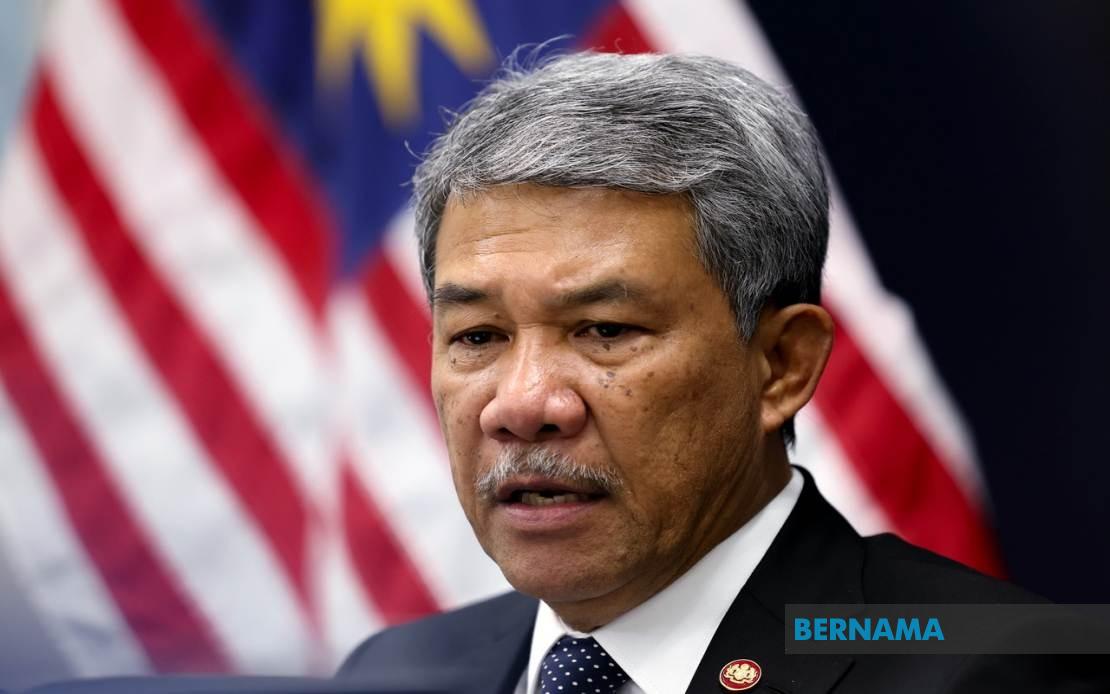
Malaysia's Foreign Minister Datuk Seri Mohamad Hasan touched down in Manila on July 20 to lead his country's delegation at the 59th ASEAN Foreign Ministers' Meeting (AMM), alongside an array of related conferences scheduled through Thursday. He was received at Ninoy Aquino International Airport by the Philippines' Department of Foreign Affairs Assistant Secretary and Chief of Protocol Ariel Rodelas Peñaranda, with Malaysian Ambassador to the Philippines Datuk Abdul Malik Melvin Castelino Anthony also attending the ceremonial welcome.
The convergence of diplomatic forums underscores the intricate coordination required to maintain regional stability amid shifting geopolitical tensions. The Philippines holds the rotating ASEAN Chairmanship for 2026, anchoring these high-level meetings under the organising theme "Navigating Our Future, Together" — a phrase that resonates deeply given the mounting pressures bearing down on Southeast Asia from beyond the region's borders.
The escalating situation in West Asia looms large over these proceedings. While official statements typically frame such meetings in measured diplomatic language, the deliberate inclusion of West Asia as a central topic reflects ASEAN's growing awareness that instability thousands of kilometres away can reverberate through regional supply chains, security calculus, and the livelihoods of Southeast Asian nations. Malaysia's position as a significant stakeholder in Middle Eastern affairs — both culturally and economically — positions Mohamad as a key voice in these deliberations.
Equal prominence will be given to Myanmar's deteriorating humanitarian and political crisis, which continues to fray the fabric of regional consensus. Mohamad will participate in an extended informal consultation regarding implementation of the Five-Point Consensus (5PC), a framework ASEAN adopted to guide its approach to Myanmar's military coup and subsequent conflict. The focus will centre on recommendations emerging from the last ASEAN Leaders' Review, indicating that earlier diplomatic efforts have yielded limited tangible progress and that member states remain committed to finding pathways forward even as conditions worsen on the ground.
Beyond these headline concerns, the Malaysian delegation faces a crowded schedule that reflects ASEAN's layered security architecture. Mohamad will attend sessions with the ASEAN Intergovernmental Commission on Human Rights (AICHR), signalling Malaysia's engagement with transnational rights frameworks, and participate in consultations of the Southeast Asia Nuclear Weapon-Free Zone (SEANWFZ) Commission. These forums, though less visible than geopolitical crises, establish the institutional scaffolding through which regional states manage disputes over values and norms.
Malaysia's particular significance at this gathering stems from its role as country coordinator for ASEAN-China Dialogue Relations through 2027. On Wednesday, Mohamad will co-chair the Post Ministerial Conference (PMC) with Chinese Foreign Minister Wang Yi, a responsibility carrying strategic weight given the complexity of ASEAN-China relations. As Beijing extends its economic and diplomatic reach across Southeast Asia, Malaysia's coordination position shapes how ASEAN collectively interfaces with China — neither capitulating to Beijing's preferences nor unnecessarily antagonising a major trading partner.
The broader conference architecture incorporates dialogue partners representing the full spectrum of global powers. The PMCs scheduled with Australia, Canada, China, the European Union, India, Japan, New Zealand, the Republic of Korea, the Russian Federation, the United Kingdom, and the United States reveal how ASEAN has positioned itself as a nexus point in great power competition. Each dialogue partner relationship carries distinct implications for Malaysia, from India's growing security footprint in the Indian Ocean to Washington's strategic pivot toward the Indo-Pacific.
Malaysia's delegation will also engage with a specialised forum addressing Palestinian concerns. The fifth Conference on Cooperation among East Asian Countries for Palestinian Development (CEAPAD) reflects ASEAN solidarity with causes championed across the Islamic world, while also demonstrating how Southeast Asian nations navigate their humanitarian commitments within frameworks involving major economic powers with competing Middle East policies.
The 27th ASEAN Plus Three Foreign Ministers' Meeting (APT FMM), comprising ASEAN plus China, Japan, and South Korea, offers a venue for deepening cooperation in one of the world's most dynamic economic regions. Concurrently, the 33rd ASEAN Regional Forum (ARF) serves as the institution through which ASEAN engages Russia and other major powers on security matters, while the 16th East Asia Summit Foreign Ministers' Meeting (EAS FMM) encompasses the broadest coalition, including India, Australia, and the United States alongside the established players.
The bilateral meetings Mohamad will conduct on the sidelines often prove more consequential than the formal plenary sessions. These private encounters allow for candid discussions of bilateral concerns and the negotiation of quiet compromises that would be difficult to achieve in multilateral settings. For Malaysia, such opportunities to align with fellow ASEAN partners or convey messages to dialogue partners carry substantial diplomatic weight.
The gathering demonstrates ASEAN's enduring relevance as a forum for processing regional and global tensions, despite criticism that the organisation sometimes struggles to enforce consensus or compel compliance from members facing domestic pressures. Malaysia's participation underscores its stake in maintaining ASEAN mechanisms even as member states grapple with divergent priorities and constraints. The outcomes of these meetings will likely prove incremental rather than transformative, yet they establish the diplomatic language and frameworks through which Southeast Asia continues negotiating its position in an increasingly contested world.

