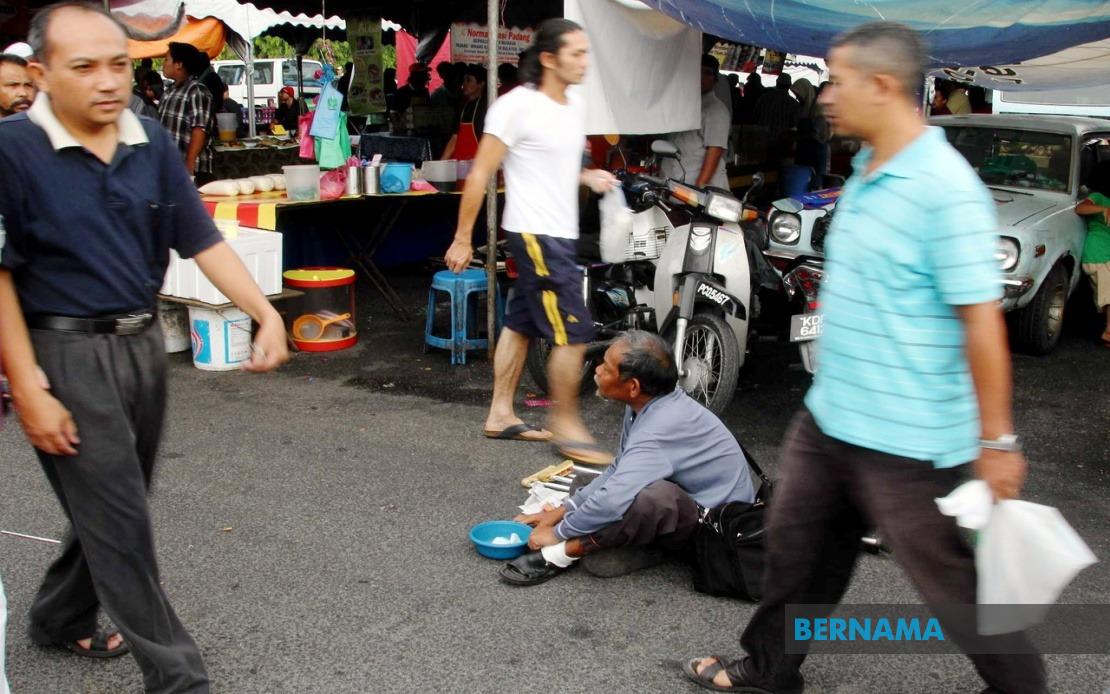
Begging activities conducted by foreign nationals in Malaysia, particularly those exploiting children, are suspected of being orchestrated by criminal syndicates rather than independent survival efforts, the Ministry of Home Affairs revealed this week in response to parliamentary questioning. This disclosure underscores growing official concern about the structural nature of street begging in major urban centres and the manipulation of vulnerable populations for financial gain by organised networks.
The Immigration Department's enforcement campaign between January and the end of May this year demonstrates the scale of the challenge facing Malaysian authorities. During this five-month period, officials conducted 836 separate operations focused on Kuala Lumpur and its surrounding municipalities, screening a total of 10,609 individuals across the capital region. Among those processed, 5,411 foreign nationals were apprehended for various immigration violations, with 42 specifically identified as engaged in begging activities. These figures suggest that while begging represents a subset of immigration breaches, the involvement of organised actors elevates the issue beyond petty offences to potential human trafficking and labour exploitation.
The ministry's investigation strategy extends beyond pursuing foreign nationals involved in street begging. Authorities are simultaneously conducting inquiries targeting Malaysian citizens suspected of facilitating these operations, whether as protectors safeguarding the beggars, organisers coordinating daily activities and locations, or financial beneficiaries collecting proceeds from the syndicate's operations. This multi-directional approach acknowledges that dismantling such networks requires identifying and prosecuting both the immediate operators and the higher-level orchestrators who remain removed from street-level activity. The focus on local complicity reflects the reality that such operations cannot function without domestic support infrastructure.
Parliamentary pressure prompted this official acknowledgement, with Fong Kui Lun, the representative for Bukit Bintang, specifically inquiring about the effectiveness of enforcement efforts targeting begging in high-profile tourist precincts. The areas highlighted—Bukit Bintang, Jalan Alor, and Changkat Bukit Bintang—are precisely where foreign visitors and affluent local shoppers congregate, making these locations ideal hunting grounds for beggars positioned to extract contributions from individuals with disposable income and limited street awareness. The ministry's response indicated determination to address what it framed as a reputational concern for the nation, suggesting that foreign begging in tourist zones directly undermines Malaysia's image as an orderly, safe destination.
To strengthen its operational capacity, the Immigration Department has expanded collaborative arrangements with the Royal Malaysia Police and Kuala Lumpur City Hall, recognising that immigration enforcement alone cannot address the full scope of the problem. Enhanced intelligence sharing and analytical work now feed into efforts to map syndicate networks, identify recurring modus operandi, and pinpoint emerging begging hotspots before they become entrenched. This intelligence-led approach replaces ad hoc patrols with targeted interventions designed to disrupt specific criminal operations rather than simply cycling through detentions and releases.
The establishment of the KL Strike Force represents the formal institutionalisation of multi-agency coordination against foreign begging and related street-level offences. Comprising representatives from Immigration, the police, city authorities, the Department of Social Welfare, and additional enforcement bodies, the Strike Force meets regularly to synchronise operations, share public complaints and intelligence, conduct unscheduled raids on identified hotspots, and implement continuous monitoring to prevent re-emergence of activity in cleared areas. This working committee structure ensures that gaps in coordination—a traditional vulnerability in enforcement efforts—are minimised and that lessons from successful interventions are rapidly disseminated across participating agencies.
The involvement of the Department of Social Welfare signals recognition that begging syndicates exploit vulnerable individuals, potentially including trafficking victims unable to resist coercion. By including social welfare officials in the Strike Force, the government signals intent to move beyond purely punitive approaches and incorporate victim identification and support mechanisms into enforcement operations. This is particularly significant given the ministry's emphasis on child exploitation, as children involved in organised begging require trauma-informed interventions and alternative care pathways, not simply detention and deportation.
The second parliamentary response addressing foreign worker quotas appears tangential to the begging issue but reflects broader Home Ministry concerns about labour market integrity. Of 1,919 applications submitted during a special extended window from mid-January through March this year, only 314 employers received quota recommendations. This exceptionally low approval rate—approximately 16 percent—suggests the government is imposing stringent standards on new foreign worker recruitment, possibly reflecting concerns that informal or underdocumented labour arrangements facilitate exploitation networks including begging syndicates. The extended application period itself indicates that employers sought additional time to comply with tighter requirements, implying a policy shift toward stricter regulation.
For Malaysian society, the emerging picture of organised foreign begging represents a complex security and social welfare challenge that extends well beyond street-level nuisance. The involvement of criminal syndicates implies potential connections to broader human trafficking networks, labour exploitation, and money laundering through cash-based street economies. The ministry's framing of the issue in terms of national image and reputation, while pragmatically important for tourism and foreign investment, somewhat obscures the more fundamental humanitarian dimensions—that vulnerable foreign nationals and children are being systematically exploited on Malaysian streets.
The multi-agency enforcement architecture being deployed reflects the government's seriousness in addressing the issue, yet success will depend on sustained political commitment and adequate resource allocation. Syndicates adapt quickly to increased enforcement pressure, shifting locations and tactics. The KL Strike Force model, if genuinely empowered and sustained, could serve as a template for other major Malaysian cities grappling with similar challenges. However, the relatively small number of beggars detained—42 among 5,411 detained foreigners—suggests that begging represents only a visible fraction of the exploited foreign population in Malaysia, with other forms of labour and sexual exploitation likely occurring in less visible settings beyond the tourism zones that prompted this investigation.

