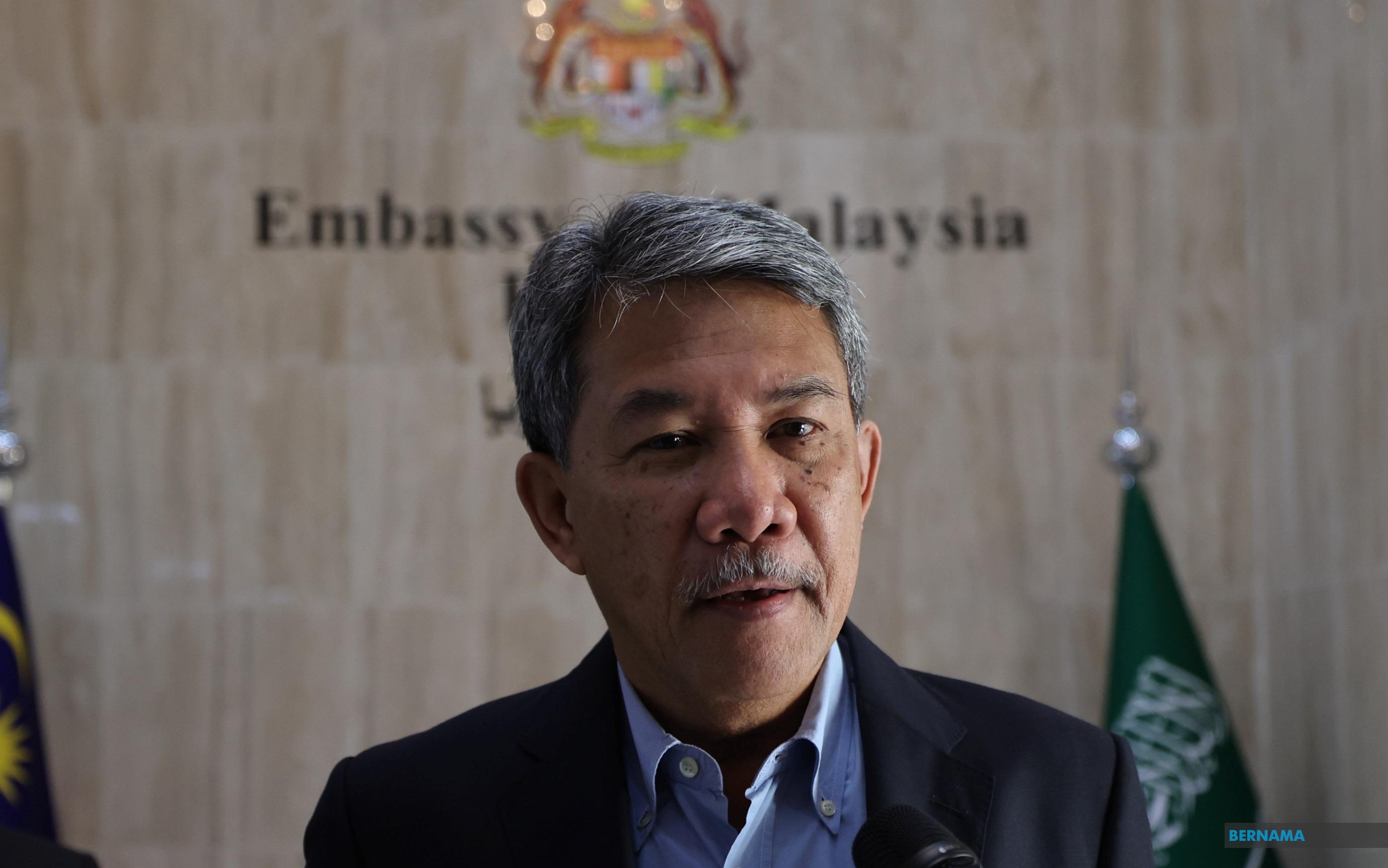
Foreign Minister Datuk Seri Mohamad Hasan touched down in Jeddah on August 26 to participate in an extraordinary session of the Organisation of Islamic Cooperation's Council of Foreign Ministers, set to convene the following day. Upon arrival at King Abdulaziz International Airport at 5.45 pm, he was received by Malaysian Ambassador to Saudi Arabia Datuk Syed Bakri Syed Abdul Rahman, marking the beginning of Malaysia's diplomatic engagement on one of the most pressing geopolitical issues in the Islamic world.
The one-day extraordinary meeting represents a critical moment for collective Islamic diplomacy, bringing foreign ministers together to assess and respond to escalating tensions in the Palestinian territories. The agenda encompasses the deteriorating humanitarian situation in Gaza, ongoing developments in the West Bank, and the persistent expansion of Israeli settlements that the international community characterises as illegal under international law. For Malaysia, participation in such forums serves not merely as ceremonial attendance but as a platform to amplify Southeast Asian perspectives on Middle Eastern conflicts.
According to Ambassador Syed Bakri, Malaysia's involvement in the gathering holds particular significance as it provides the nation an opportunity to reaffirm its principled stance regarding Israeli military operations and territorial expansion. The diplomatic mission centres on translating Malaysia's longstanding commitment to Palestinian self-determination into concrete statements and coordinated action within the OIC framework. By attending such meetings, Malaysia positions itself alongside other Muslim-majority nations in demonstrating solidarity with the Palestinian cause, an issue that resonates deeply across Malaysian society and the broader Islamic world.
During the meeting, Foreign Minister Mohamad will deliver Malaysia's National Statement, a formal address that will emphasise the country's consistent and unwavering backing for the Palestinian people's legitimate aspirations for independence and sovereignty. The statement will explicitly reference Malaysia's support for establishing a Palestinian state within the pre-1967 borders, a position grounded in international law principles and UN resolutions. This articulation of Malaysia's stance serves multiple purposes: it affirms the nation's values to its domestic audience, particularly the Muslim-majority population for whom Palestinian rights hold profound significance, while simultaneously contributing to OIC consensus-building on Middle Eastern affairs.
The emphasis on pre-1967 borders represents a critical reference point in international discussions about Palestinian statehood. These boundaries demarcate the territories that Palestinian nationalists and much of the international community view as the legitimate foundation for an independent Palestinian state, distinct from areas subsequently occupied during the 1967 Six-Day War. Malaysia's explicit commitment to this framework demonstrates alignment with mainstream international law positions and reflects decades of consistent policy direction on this matter.
Beyond the formal session dedicated to Palestinian issues, Foreign Minister Mohamad's visit encompasses a broader diplomatic agenda that extends to bilateral engagements with counterparts from multiple countries. These one-on-one and multilateral discussions will explore avenues for deepening Malaysia's international partnerships, with particular focus on expanding economic ties through trade, investment, and business collaboration. For a nation seeking to diversify its economic partnerships and strengthen regional influence, such gatherings provide invaluable networking opportunities that can yield tangible commercial and strategic benefits.
The timing of this extraordinary OIC meeting reflects the urgency with which the Islamic world perceives current developments in Palestine. Rather than scheduling discussions through regular council sessions, the decision to convene an extraordinary meeting underscores the gravity of the situation and the need for swift, coordinated responses from member states. Malaysia's high-level delegation, led by the Foreign Minister himself, signals the country's commitment to engaging substantively with these critical issues rather than treating them as peripheral concerns.
From a Southeast Asian perspective, Malaysia's active participation in OIC affairs reinforces the region's connection to broader Islamic world concerns while demonstrating that Middle Eastern issues intersect with the interests and values of Muslim-majority nations across Asia. The diplomatic engagement also reinforces Malaysia's role as a significant voice within the OIC, an organisation comprising 57 member states and representing nearly two billion Muslims globally. Through participation in such forums, Malaysia contributes to shaping collective Islamic responses to international conflicts and humanitarian crises.
The visit also reflects Malaysia's consistent diplomatic approach of balancing principled positions on human rights and self-determination with pragmatic engagement in international affairs. By attending OIC meetings focused on Palestine while maintaining relations with multiple nations globally, Malaysia demonstrates the nuanced diplomacy required of nations operating within complex international systems. The country's position on Palestinian statehood and Israeli settlements remains unchanged, yet Malaysia continues engaging constructively across the diplomatic landscape.
As Malaysia prepares to deliver its National Statement and engage with fellow foreign ministers, the delegation carries the expectations of Malaysian society and the broader Islamic community. The outcomes of such meetings often extend beyond formal resolutions, shaping diplomatic relationships, building consensus among Islamic states, and contributing to ongoing international conversations about conflict resolution, territorial integrity, and self-determination. Through Foreign Minister Mohamad's attendance and the delegation's active participation, Malaysia continues asserting its commitment to these foundational principles while seeking to strengthen partnerships that advance national interests across multiple domains.

