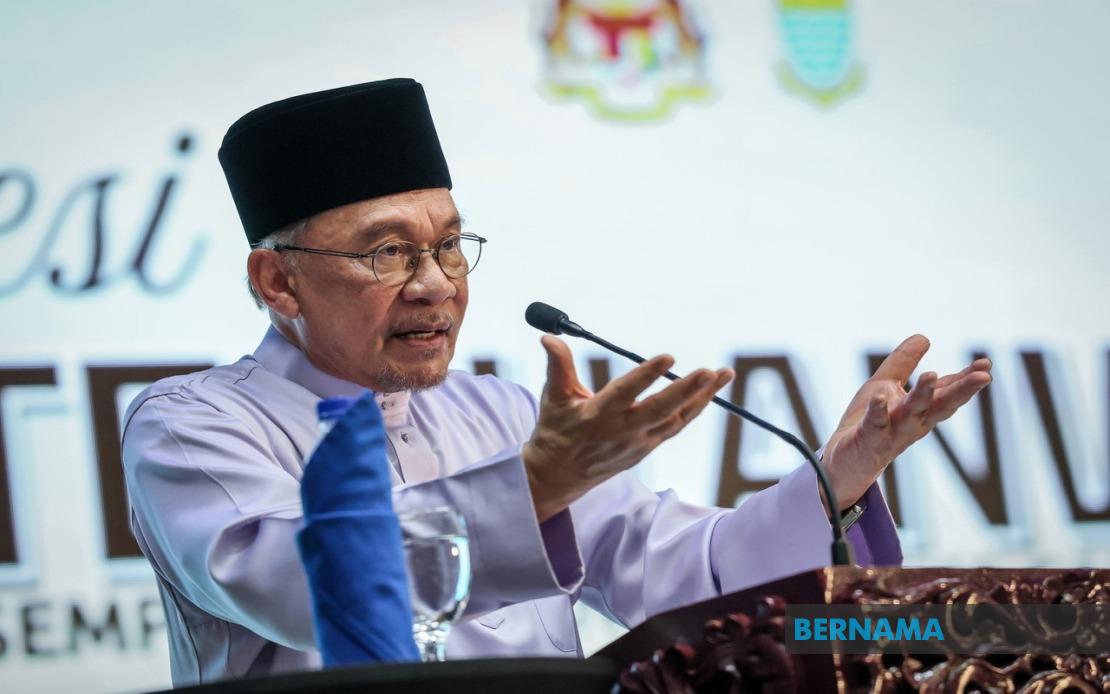
Prime Minister Datuk Seri Anwar Ibrahim has announced that the government will introduce an allowance programme for Form Six students as part of Budget 2027, which parliament will consider in October. Speaking at a MADANI dialogue event at the Tuanku Bainun Teacher Education Institute in Bukit Mertajam, Anwar—who concurrently serves as Finance Minister—confirmed the commitment following consultations with pre-university students about systemic inequities in the current assistance framework.
The decision reflects a recognition that Malaysia's education support structure contains a significant inconsistency. Currently, the government provides allowances to students progressing through primary school and secondary levels up to Form Five, and separately maintains assistance programmes for university-level learners. Form Six students, however, occupy an administrative limbo where they receive no direct financial support despite being engaged in critical pre-tertiary studies. This gap has become increasingly visible as the government has expanded other educational assistance schemes, making the exclusion of Form Six more glaring to stakeholders.
Anwar elaborated on the rationale during his address, noting the asymmetry that had emerged through direct engagement with students. He described the allowance announcement as redressing a clear oversight in the welfare framework rather than introducing an entirely novel policy. The Prime Minister acknowledged that students pursuing pre-university qualifications face genuine financial pressures, particularly those from lower-income households whose families must balance education costs against household needs. By extending assistance to this cohort, the government signals commitment to reducing financial barriers across the educational pipeline.
However, Anwar stopped short of committing to specific funding amounts, indicating that the precise allocation would depend on the government's fiscal position at the time of budget finalisation. This cautious approach reflects the broader economic constraints Malaysia faces, with global uncertainties and domestic fiscal pressures requiring careful prioritisation of expenditures. The decision to table the full proposal in October provides a window for Treasury officials to conduct detailed costing and determine the programme's scope, whether it will be universal or means-tested, and how it might integrate with existing student support mechanisms.
Education Minister Datuk Seri Fadhlina Sidek, present at the event, framed the allowance initiative within a broader reform agenda. She disclosed that the Form Six allowance was among twelve resolutions emerging from the MADANI Pre-University Congress held in Klang earlier that morning. This suggests the announcement was not merely a ministerial gesture but reflects structured consultation with student representatives and education stakeholders, lending credibility to the policy process. The congress model represents an effort to embed youth voice into policymaking, contrasting with top-down approaches that have sometimes characterised Malaysian education administration.
Fadhlina indicated that the Education Ministry has committed to reviewing all twelve congress resolutions comprehensively and identifying implementation pathways. This institutional response suggests the government is treating the proposals seriously rather than offering performative acknowledgment. The breadth of resolutions—twelve in total—indicates that Form Six allowance, while significant, addresses only one facet of student concerns. Other resolutions likely encompass curriculum matters, mental health support, facilities enhancement, or examination reform. The ministry's promise to study each proposal for incremental improvements signals an iterative approach to education policy rather than wholesale restructuring.
For Malaysian families with Form Six-aged children, particularly those in middle and lower-income brackets, this pledge carries material significance. An allowance programme could translate into improved household cash flow during a critical educational phase, potentially reducing pressure on parents to curtail their children's studies or seek part-time employment that might compromise academic performance. Southeast Asian contexts generally see Form Six as a decisive juncture where educational trajectories solidify, making financial support at this stage potentially consequential for upward mobility and tertiary access.
The announcement also reflects broader government positioning toward education investment during an era of fiscal constraints. Malaysia, alongside regional peers, has grappled with balancing recurrent expenditures against capital investments and debt servicing. By targeting Form Six allowances, the government emphasises support for a relatively smaller, clearly defined cohort compared to primary or secondary populations. This strategic focus may signal efficiency in resource deployment, though critics might counter that universal primary school allowances, for instance, reach proportionally larger and more vulnerable populations.
From a comparative regional perspective, allowance programmes for Form Six students remain inconsistent across Southeast Asia. Some neighbouring countries offer more comprehensive pre-tertiary support, while others maintain tighter welfare eligibility criteria. Malaysia's move to formalise Form Six assistance could influence regional policy discussions and position the country as responsive to youth welfare concerns. This carries diplomatic soft power implications, particularly given Malaysia's aspirations to enhance education quality and competitiveness in attracting talent retention.
The October timeline for Budget 2027 provides parliament and the public approximately two months to digest the proposal before formal tabling. This period allows for refinement of implementation details and parliamentary deliberation. Opposition members and education NGOs will likely scrutinise the quantum of funding, eligibility criteria, and delivery mechanisms, potentially demanding clarification on whether the allowance complements or supplements existing schemes. Civil society engagement during this interval could meaningfully shape the programme's final design.
Anwar's handling of the announcement—combining firmness on the commitment with flexibility regarding quantum—demonstrates pragmatism about budgetary realities while maintaining political credibility. By publicly declaring the intention during a high-visibility event, he creates accountability pressure on himself and the finance ministry to actualise the pledge. Simultaneously, the caveat about final amounts being determined by fiscal capacity provides escape clauses should economic conditions deteriorate unexpectedly.
Looking forward, the Form Six allowance initiative appears positioned as the opening component of a broader education welfare expansion under the MADANI framework. The government's apparent receptiveness to student congress resolutions suggests a consultative policy development process that, if sustained, could differentiate its education approach from previous administrations. Whether the full constellation of twelve resolutions receives similar budget treatment, and whether the Form Six allowance materialises with meaningful quantum, will be crucial indicators of government commitment to education sector reform and youth-centred policymaking.

