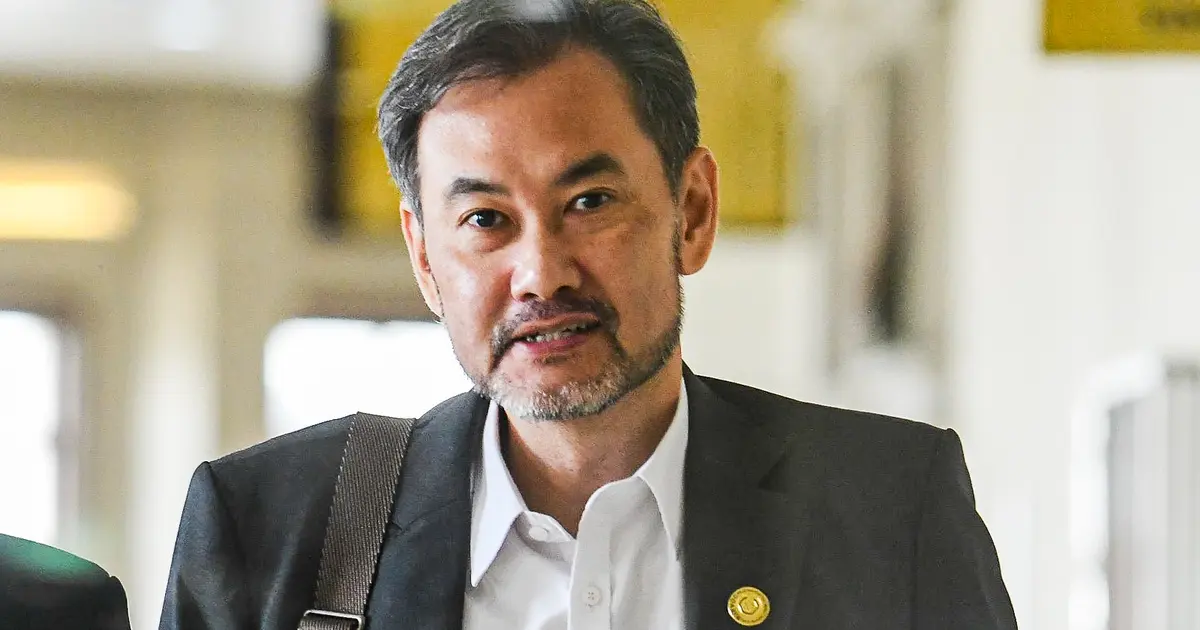
Shahrol Azral Ibrahim Halmi, the former chief executive of 1Malaysia Development Berhad, has sought to clarify his relationship with controversial financier Jho Low, rejecting characterisations that he treated the fugitive businessman as a de facto prime minister. The distinction matters considerably in the context of Malaysia's 1MDB scandal, one of the world's largest financial frauds, which unravelled under the Najib Razak administration and continues to shape political accountability discussions across Southeast Asia.
During proceedings related to the sprawling 1MDB investigation, Shahrol acknowledged that communication with then-prime minister Najib Razak frequently occurred through unconventional pathways rather than formal government channels. These informal routes included interactions involving Jho Low, the Malaysian-born financier who orchestrated the massive embezzlement scheme and remains at large despite international arrest warrants. The admission speaks to the opaque decision-making structures that characterised 1MDB's operations during the critical years when billions in fund assets were siphoned away.
The former CEO's testimony represents a crucial moment in ongoing efforts to establish the precise mechanics of how 1MDB became corrupted at the highest levels. Understanding whether Jho Low wielded authority equivalent to a serving prime minister goes to the heart of culpability questions: specifically, whether Najib Razak operated as a willing participant in the theft or whether he was himself manipulated by a more dominant force. Legal and political observers across Malaysia and the region have long debated this distinction, with implications for how history ultimately judges the scandal.
Shahrol's clarification suggests a more nuanced picture than popular narratives sometimes permit. Rather than Jho Low functioning as an alternative power centre with supreme authority, the evidence points toward a more byzantine arrangement where multiple actors maintained influence through overlapping channels. The former CEO's access to Najib occurred both through conventional mechanisms and through the financier's network, indicating a system where formal hierarchies had been substantially compromised but not entirely replaced by shadow governance.
The 1MDB affair remains profoundly significant for Malaysian politics and governance standards. The fund was established ostensibly to drive economic development and attract global investment, backed by the full authority of the prime minister's office and national prestige. Instead, it became a vehicle for theft on a scale that devastated Malaysia's international reputation and triggered multiple criminal prosecutions, including of Najib himself. The mechanisms by which such large-scale corruption escaped detection for years continue to preoccupy investigators, prosecutors, and policymakers.
For regional observers, the 1MDB case represents a cautionary study in how institutional safeguards can erode under concentrated executive power. Malaysia's experience influenced broader Southeast Asian discussions about sovereign wealth fund governance, board independence, and audit procedures. Several neighbouring countries subsequently reviewed their own investment fund structures following the scandal's exposure, concerned that similar vulnerabilities might exist in their own institutional frameworks.
Jho Low's continuing freedom, despite Interpol red notices and substantial international pressure, underscores the challenges of cross-border financial crime enforcement even in an era of enhanced cooperation agreements. The financier's ability to evade capture while his alleged crimes are documented in court proceedings across multiple jurisdictions illustrates the complications facing regional law enforcement when dealing with sophisticated financial criminals operating across borders.
Shahrol's testimony contributes valuable detail to the historical record of how 1MDB functioned during its period of corruption. His clarifications about communication patterns help investigators and analysts reconstruct the decision-making processes that enabled theft. The acknowledgment that informal channels existed through Jho Low confirms suspicions long held by financial crime specialists about how the scheme operated at senior levels.
The broader implications for Malaysian governance remain substantial. The 1MDB scandal triggered significant institutional reforms, including enhanced oversight mechanisms for sovereign wealth funds and strengthened requirements for ministerial reporting. However, critics argue that structural vulnerabilities—particularly the concentration of executive authority over financial institutions—persist in various forms across Malaysia's government. The case continues to inform debates about checks and balances in Malaysian politics.
Jho Low's international status as a fugitive financier has added another dimension to Malaysia's relationship with foreign law enforcement agencies. His alleged activities extended beyond Malaysia, with investigations implicating institutions and individuals across multiple countries. The complexity of prosecuting transnational financial crime has meant that despite the evidence presented in Malaysian courts, bringing Jho Low to face justice remains an ongoing challenge for authorities.
The former 1MDB CEO's clarifications, while significant for legal proceedings, also serve a public education function. As Malaysians and regional observers seek to understand how such large-scale institutional failure occurred, detailed testimony about communication patterns and decision-making structures provides essential context. The distinction Shahrol draws between treating Jho Low as having supreme authority versus recognising his influence through informal channels illustrates the grey zones that characterised 1MDB's governance collapse.
Moving forward, the 1MDB case continues to resonate in Malaysian political discourse and Southeast Asian governance discussions. Each new testimony, clarification, or legal development adds layers to the understanding of how financial institutions can be compromised at the highest levels. Shahrol's recent statements represent another chapter in the comprehensive documentation of what many analysts consider a watershed moment in modern Malaysian history, one whose lessons extend well beyond the nation's borders to the broader region grappling with similar challenges.

